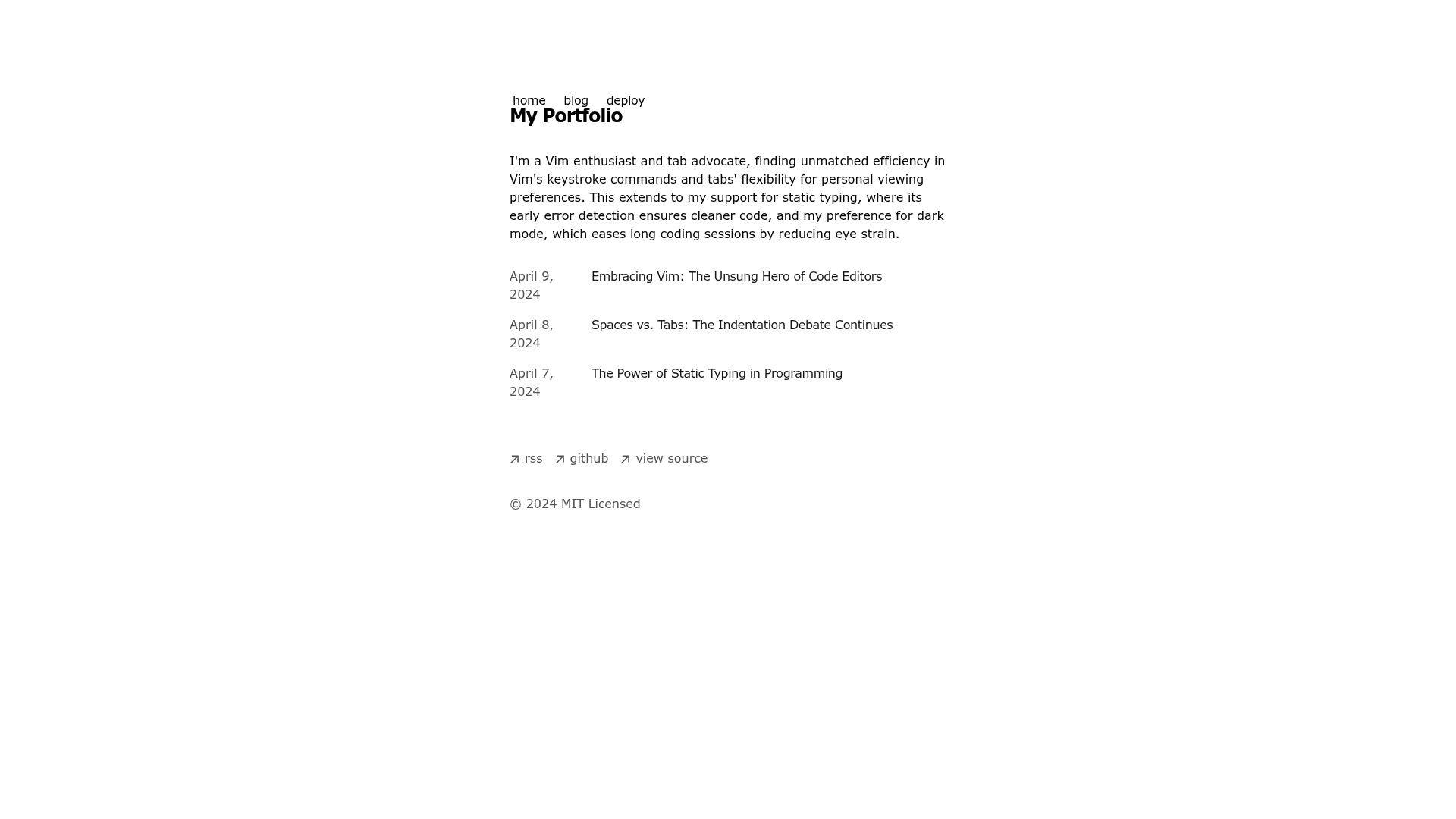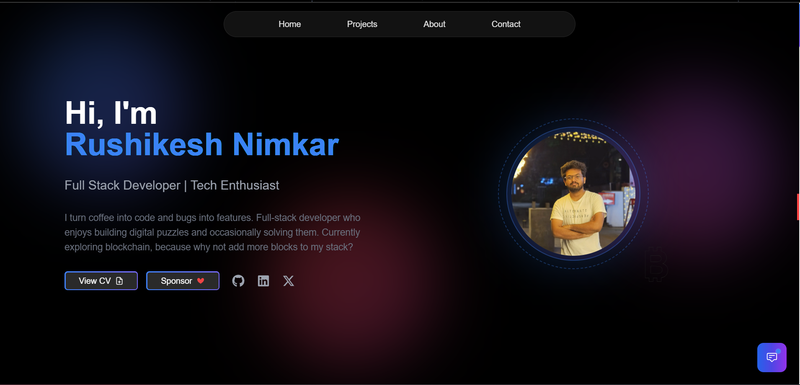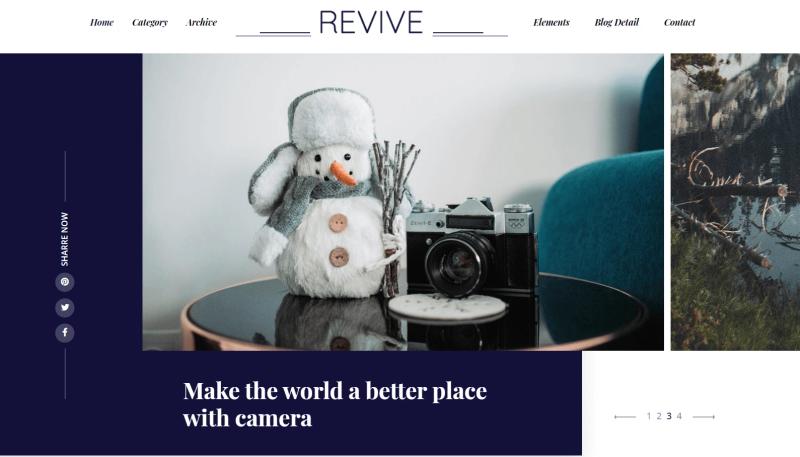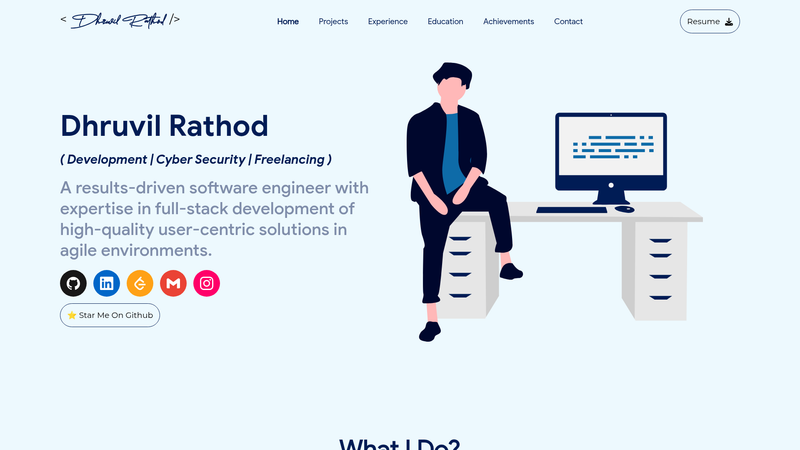
Portfolio Blog Starter is a Next.js template from Vercel's official examples collection that pairs a personal portfolio with a blog, supporting Markdown and MDX for content. This template comes pre-configured with SEO features (sitemap, robots, JSON-LD schema), an RSS feed, dynamic Open Graph images, syntax highlighting, Tailwind v4, and Vercel's Geist font. It is designed for deployment on Vercel and is part of a repository with over 5,000 GitHub stars.
What is the Portfolio Blog Starter?
The Portfolio Blog Starter is a portfolio site template complete with a blog, built by the Vercel examples team. It takes Markdown and MDX files as input and generates a fully styled static site with SEO meta tags, RSS feed, and dynamic Open Graph images. The template runs on Next.js and is designed to be deployed on Vercel, using Tailwind v4 for styling and the Geist font family.
Key Features
- MDX and Markdown support — Write content in either Markdown (.md) or MDX (.mdx) files, with built-in syntax highlighting for code blocks.
- SEO optimization — The site includes a sitemap, robots.txt, and JSON-LD structured data to improve search engine visibility.
- RSS Feed — An automatically generated RSS feed lets readers subscribe to your latest blog posts.
- Dynamic OG images — Social sharing previews are generated on the fly for each page, so links look good when shared.
- Tailwind v4 — Utility-first CSS framework is preconfigured for styling any component without writing custom CSS.
- Geist font — Vercel's Geist typeface is set as the default font, providing a modern, consistent look.
- Vercel Speed Insights / Web Analytics — Performance monitoring and analytics are integrated, activating automatically on deployment.
- One-click deployment — A "Deploy with Vercel" button is available in the repository to create a live version instantly.
Who is it for?
- Developers who want a ready-to-use portfolio and blog built on the Next.js App Router, saving hours of setup.
- Independent creators and freelancers looking for a fast, SEO-friendly personal website with a built-in blog.
- Technical writers who want to publish content using Markdown/MDX without setting up a CMS or custom build pipeline.
What can you do with it?
- Create a professional portfolio — Display your projects and experience using the provided layout and Tailwind styling.
- Publish a blog — Write posts in Markdown or MDX; syntax highlighting is included for code snippets.
- Launch quickly — Use the one-click Vercel deployment or bootstrap locally with
pnpm create next-app --exampleand start editing content right away.
How does it work?
The repository offers two workflows. For a quick launch, you can click the "Deploy with Vercel" button on the GitHub page to clone the example into a new Vercel project and deploy it. For local development, you run pnpm create next-app --example https://github.com/vercel/examples/tree/main/solutions/blog blog, then pnpm dev to start a development server. Once you're ready, deploy to Vercel using the standard Next.js deployment process.
FAQ
Is the Portfolio Blog Starter free?
Yes, the template is part of the open-source Vercel examples repository on GitHub, so it is free to use, modify, and deploy. No pricing information is provided in the source.
What stack does the template use?
It uses Next.js as the React framework, Tailwind CSS v4 for styling, and Geist as the font. It also integrates with Vercel Speed Insights and Web Analytics.
Can I use MDX and Markdown for content?
Yes, the template supports both Markdown and MDX files. You can write blog posts and portfolio content using either format, and code syntax highlighting is built in.
How do I deploy it to Vercel?
You can either use the "Deploy with Vercel" button in the repository for a one-click deploy, or clone the repo, push it to a Git provider, and import it into Vercel. The README also mentions following the Next.js deployment documentation.
Does the template generate an RSS feed?
Yes, an RSS feed is included in the SEO features, along with sitemap, robots.txt, and JSON-LD schema.