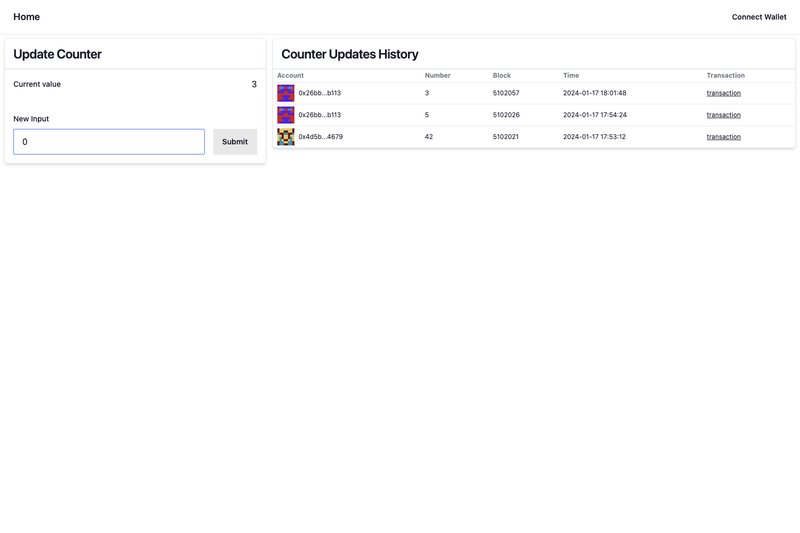
Purple Stack v4 is a serverless monorepo boilerplate from the Purple Apps team, built in SST v3, that scaffolds a full-stack AWS application with Next.js and automates deployment through GitHub Actions. It is distributed as a GitHub template repository, so you clone it, rename the project, and deploy to your own AWS account.
What is Purple Stack v4?
Purple Stack v4 is a serverless stack application template written in SST v3, the framework that builds and deploys apps to AWS. It takes a new GitHub repository from the template and produces a deployable full-stack monorepo with a Next.js frontend, AWS Lambda functions, and a GitHub Actions pipeline. The template is maintained by Purple Apps and is described as "the serverless monorepo stack powering all Purple Apps and your apps."
Key Features
- SST v3 serverless framework — Built on SST v3, which compiles your app to AWS resources like Lambda and API Gateway, and tags every resource for easy management.
- Monorepo layout — The project is structured as a monorepo, with instructions in the docs for setting up a monorepo in SST (linked to sst.dev/docs/set-up-a-monorepo).
- Next.js frontend — The default application is built with Next.js, which is included in the repository metadata topics.
- GitHub Actions deployment — The template includes a
.github/actions/configure_aws_credentialsworkflow that you configure with your own IAM role ARN for CI/CD deploys. - Mise tooling — Uses Mise (mise.jdx.dev) to manage global tools like Node and PNPM, plus tasks and environment variables, with a
mise.local.toml.examplefile for local overrides. - File rename script — Provides a one-liner using
replace-in-fileto rename everypurple-stackoccurrence to your app name across the entire repo. - Local AWS profile support — The local config lets you set
AWS_PROFILEto specify which AWS profile should be used for deployment.
Who is it for?
Purple Stack v4 is for developers who want to start a new serverless full-stack project on AWS without wiring up the boilerplate themselves. It fits teams that are already using or learning SST v3 and want a tested reference monorepo, and for Next.js developers who need a deployment pipeline to AWS out of the box. This is also useful for anyone building multiple AWS apps from the same foundation, since the template is designed to be copied and renamed.
What can you do with it?
- Start a serverless app: Copy the template to a new repo, rename the files, and run
pnpm installfollowed bypnpm run sst:deployto push your app to AWS. - Set up CI/CD: Edit the GitHub Actions role in
.github/actions/configure_aws_credentialsand let Actions deploy on push instead of deploying from your local machine. - Manage local tooling: Run
mise installto install Node, PNPM, and other tools pinned by the project, and setAWS_PROFILEinmise.local.tomlto select the AWS account for deployment.
How does it work?
The template's get-started flow is explicit. First, create a new repository from the template on GitHub and clone it. Second, run npx replace-in-file '/purple-stack/g' 'MY_APP' '**/*.*' --verbose to rename all project references from purple-stack to your app name. Third, copy mise.local.toml.example to mise.local.toml, update AWS_PROFILE to your local AWS profile, then run mise install and mise trust to set up global tools. Finally, run pnpm install and pnpm run sst:deploy to deploy.
FAQ
Is Purple Stack v4 free to use?
The template is published as a public GitHub repository, so you can create your own repo from it and deploy it to your AWS account. There is no license or pricing information in the content, so it can be used freely as a starting point.
What stack does it include?
The stack is built on SST v3, AWS Lambda, and Next.js, with a monorepo layout. It also uses PNPM as the package manager and Mise for tooling and environment management. The topics list also includes AWS and serverless.
How do I rename the project?
Run the provided replace-in-file script with your app name as the replacement, for example npx replace-in-file '/purple-stack/g' 'myapp' '**/*.*' --verbose. Then update mise.local.toml and the AWS role in GitHub Actions before deploying.
Do I need an AWS account to deploy?
Yes. Deployment runs against AWS resources, and you set the AWS_PROFILE in mise.local.toml to point to the AWS profile that should be used. The GitHub Actions workflow also expects a configured AWS credentials role.