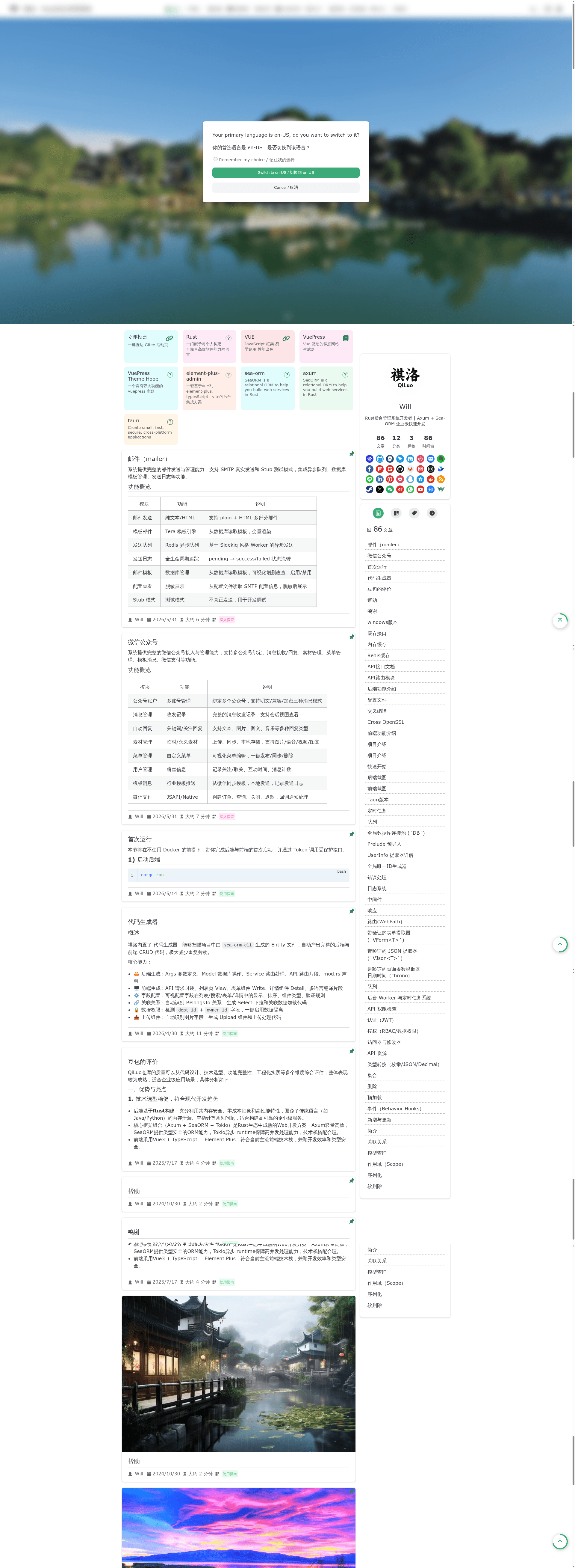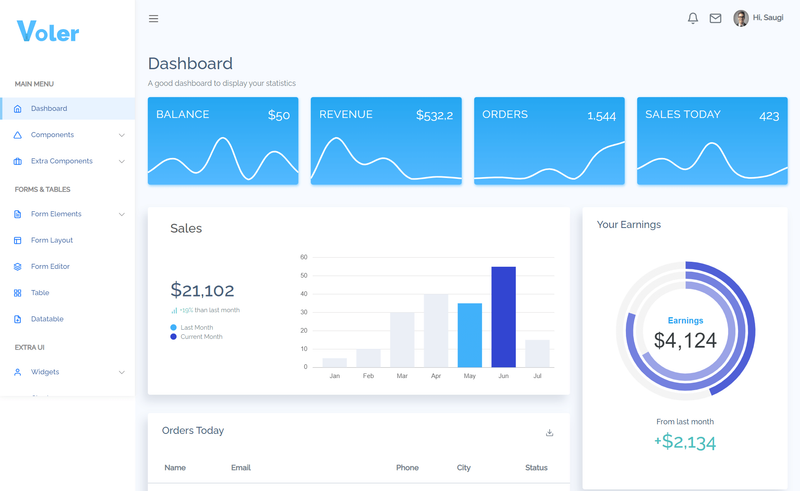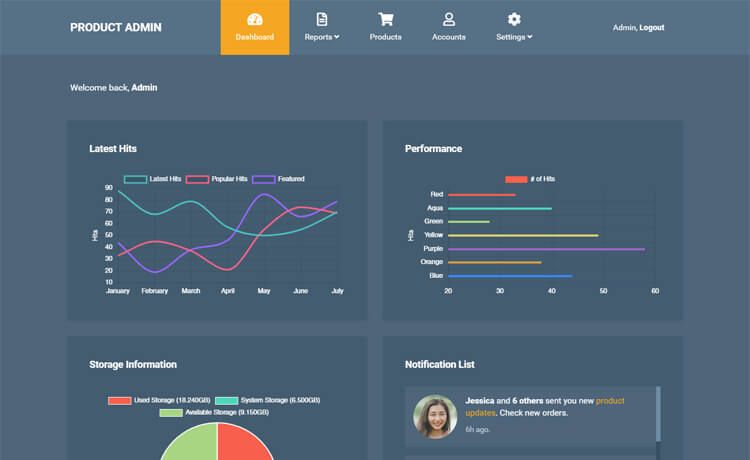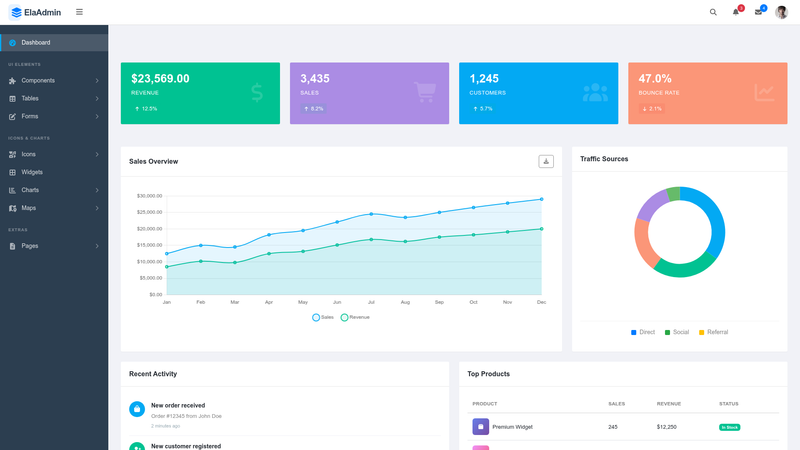
QiLuo is an open-source, enterprise-grade Rust admin dashboard and backend management platform (admin panel/CMS framework) built on Axum, Sea-ORM, and Vue 3, designed to generate complete management backends for SaaS and internal tools.
What is QiLuo?
QiLuo is an enterprise-grade admin dashboard and backend management platform written in Rust and Vue 3. It takes a database configuration and produces a running management frontend and backend with user, role, department, menu, and API permission controls, plus monitoring and scheduling. The project is open source under the MIT License and is hosted on GitHub, GitCode, and Gitee, with an official website at qiluo.vip providing tutorials and an online demo. It is built with Axum, Sea-ORM, and Tokio on the backend and Vue 3.4, Vite, TypeScript, Pinia, and Element Plus on the frontend.
Key Features
- RBAC permission control — Complete role-based access control with user, role, menu, and API-level permission assignment, plus frontend route permission checks.
- WeChat official account integration — Manage multiple WeChat accounts, custom menus, message history, fan data, and keyword auto-replies from the admin panel.
- Multi-tenancy and data isolation — Supports logical or physical tenant separation by tenant ID to meet SaaS security and compliance needs.
- Read-write splitting — Supports master-replica database architecture with automatic routing of read and write requests for higher query performance.
- Scheduled tasks — Configure cron-expressions tasks online and watch execution status without editing code.
- System monitoring — Real-time server status, online user list, and operation and login logs.
- Modern frontend stack — Vue 3.4, Vite 5.2, TypeScript 5.4, Pinia, Vue Router, Element Plus, and ECharts for charts.
- Cross-platform desktop client — A Tauri-based desktop wrapper is available alongside the web frontend.
Who is it for?
- Rust backend developers who need a ready-made admin UI and RBAC system to attach to their Axum-based services.
- SaaS product teams that require multi-tenant data isolation, read-write splitting, and API permission management out of the box.
- WeChat official account operators who want to manage menus, messages, and fans from the same backend that handles their main admin tasks.
- DevOps and system admins who need scheduled task configuration, server monitoring, and operation logs in a single dashboard.
What can you do with QiLuo?
- Spin up a complete admin panel: Clone the repo, configure the database, import qiluo.sql, and log in with admin/123456 to get users, roles, menus, and monitoring screens.
- Generate CRUD code with tutorials: Follow the auto-generate tutorial on qiluo.vip to produce model and API code for new business tables.
- Deploy to production: Build the Rust release binary with cargo build --release and the frontend with pnpm build:pro, then serve the dist directory from any static server.
- Integrate WeChat management: Add and configure multiple official accounts, publish custom menus, and enable keyword auto-replies without building a WeChat integration from scratch.
How does QiLuo work?
QiLuo separates the Rust backend and Vue frontend into two repositories. You set the database URL in the config/ directory, import the provided SQL file, run the backend with cargo run, and launch the frontend with pnpm dev. The default management address is http://localhost:4000, where you use the default admin account to access all modules. The backend is organized into api, service, model, cache, and worker directories, and the frontend follows a standard Vue 3 layout with permissions handled in permission.ts.
Pricing
QiLuo is free and open-source software distributed under the MIT License. There are no paid tiers mentioned in the official documentation.
FAQ
Is QiLuo free to use commercially?
Yes, the MIT License allows free use, modification, and redistribution, including in commercial projects. No license fee or subscription is mentioned in the project documentation.
What databases does QiLuo support?
QiLuo supports MySQL version 8.0 or higher and SQLite version 3.35 or higher as the primary database, with Redis version 6.0 or higher used for caching. The connection string is set in the config/ directory.
Do I need a specific Rust version?
The project requires Rust 1.70.0 or newer. The backend uses Axum, Sea-ORM, Tokio, and JWT, and the frontend requires Node.js 16.0 or higher for Vite-based development.
What is the default login for QiLuo?
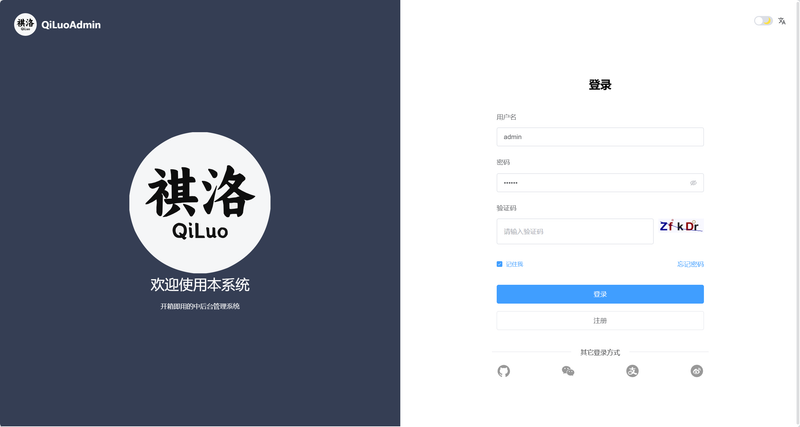
The default administrator account is username admin with password 123456. The project strongly recommends changing this password immediately after your first login.