Newsletter
Join the Community
Subscribe to our newsletter for the latest news and updates

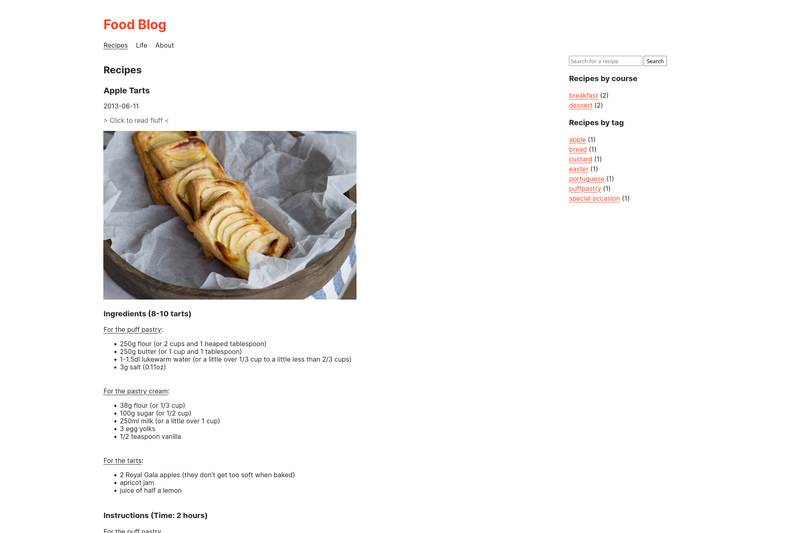
Clean, minimalist Hugo theme for food blogs with optional recipe schema markup, no tracking, and a Life section.
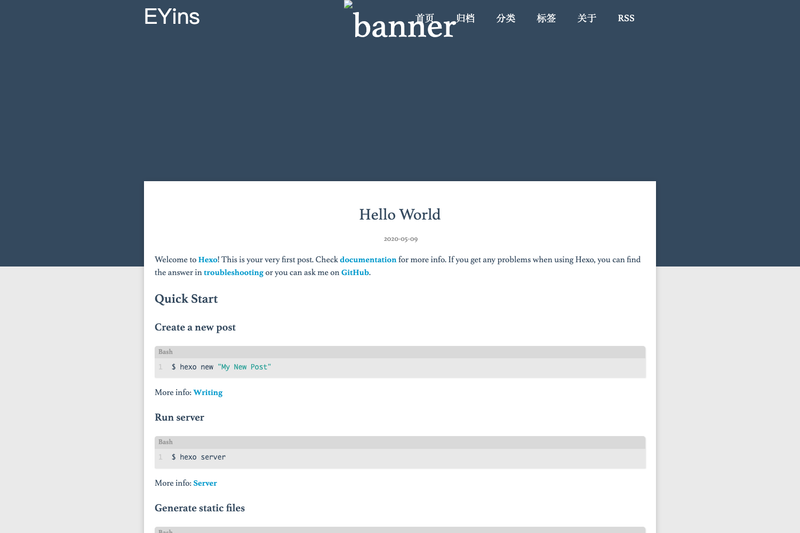
A live demo of the EYins Hexo theme, showcasing markdown, code highlighting, tag plugins, videos, and link posts.
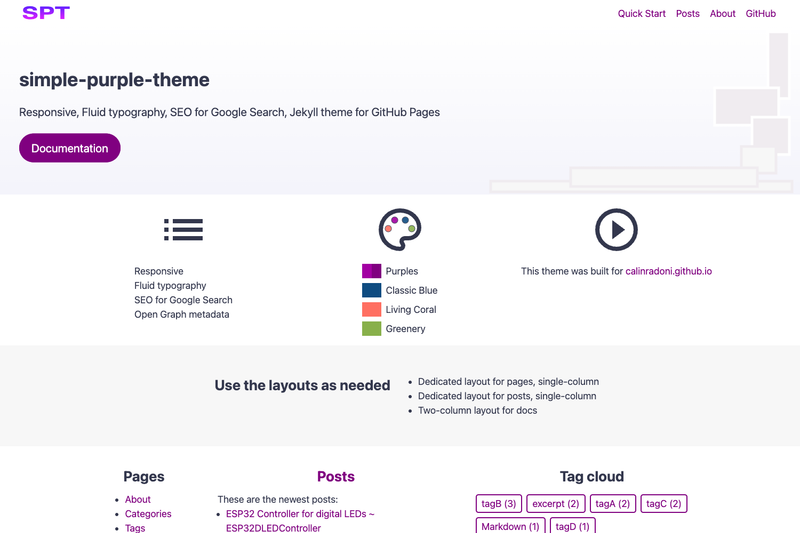
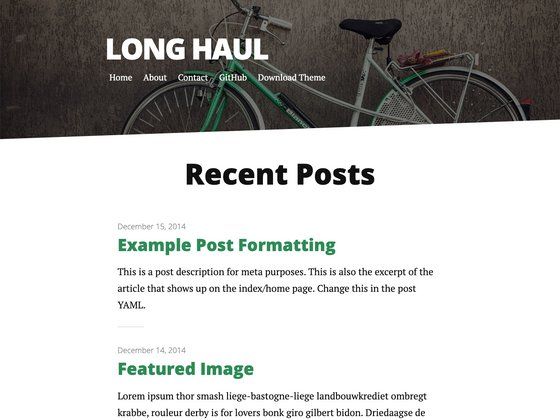
Responsive, fluid typography, SEO for Google Search — a JavaScript-free Jekyll theme for GitHub Pages.
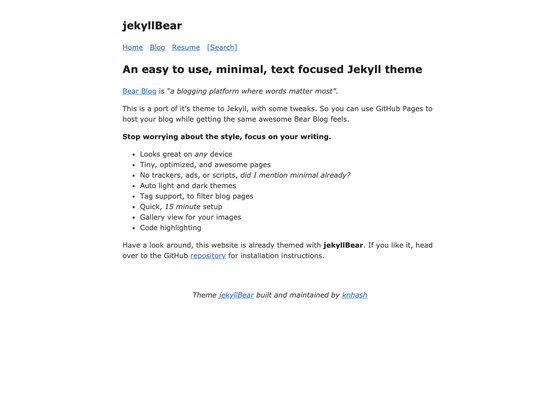
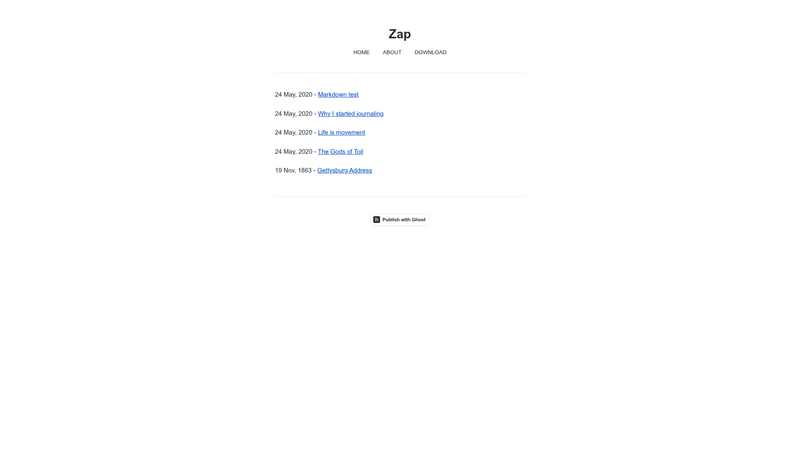
A minimalist, text-focused Jekyll theme ported from Bear Blog with tags, code highlighting, and a Life in Weeks visualization.
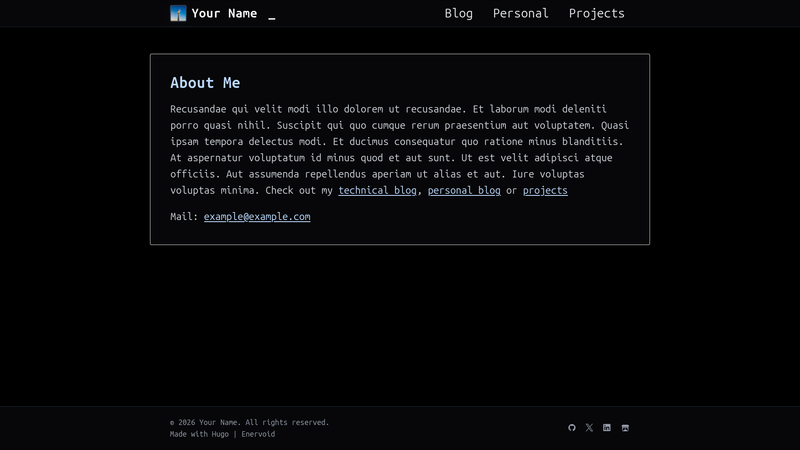
A minimal black Hugo theme with built-in KaTeX math and mermaid diagram support for personal blogs and portfolios.
Quiet Foodie is a clean, privacy-focused Hugo theme for building food blogs, with optional schema.org Recipe markup and a dedicated Life section for personal posts.
Quiet Foodie is a Hugo theme designed specifically for food blogs. It takes Markdown content and generates a static website with recipe pages, a Life section for personal posts, and an About page. The theme runs on the Hugo static site generator (version 0.41.0 or newer), is authored by paposeco, and is released under the MIT License.
recipeSchema = true in hugo.toml to add schema.org Recipe structured data to your recipe pages for better search engine results. New recipes can be generated with the recipeschema archetype.tags and a custom course taxonomy, allowing recipes to be grouped and browsed (see the Punched Potatoes demo).singlepage content type.canonifyURLs for hosting on GitHub Pages.Quiet Foodie is aimed at food bloggers who want a simple, fast, and privacy-conscious website without the bloat of trackers or social widgets. It is also well suited for Hugo users who need a minimal, clean base for a recipe site. Recipe developers who care about SEO will benefit from the optional structured data support.
To get started, install Hugo 0.41.0 or newer, create a new site, and clone the Quiet Foodie repository into the /themes directory. Then configure hugo.toml with the theme, taxonomies, and settings such as recipeSchema. Create the necessary _index.md files for Recipes, Life, and About, and add recipes using the provided archetypes via hugo new content.
Quiet Foodie is free and open source. The theme's source code is available on GitHub under the MIT License, so you can use, modify, and redistribute it without cost.
Yes, Quiet Foodie is released under the MIT License, which allows free use, modification, and distribution, including for commercial projects.
Yes. Set recipeSchema = true in your hugo.toml and use the --kind recipeschema archetype when creating a new recipe to include schema.org Recipe structured data.
Yes, the live demo is hosted on GitHub Pages, and the theme includes a canonifyURLs option for cases where your base URL is not the site root.
The theme specifies a minimum Hugo version of 0.41.0 in its module configuration, so you need that version or newer.
No. The theme explicitly states that it has no social media links and no tracking of any kind, making it a privacy-friendly choice.