React CRUD Boilerplate is a Next.js boilerplate for building an admin dashboard with create, read, update, and delete (CRUD) functionality, preconfigured with MUI, Formik, and TypeScript.
What is React CRUD Boilerplate?
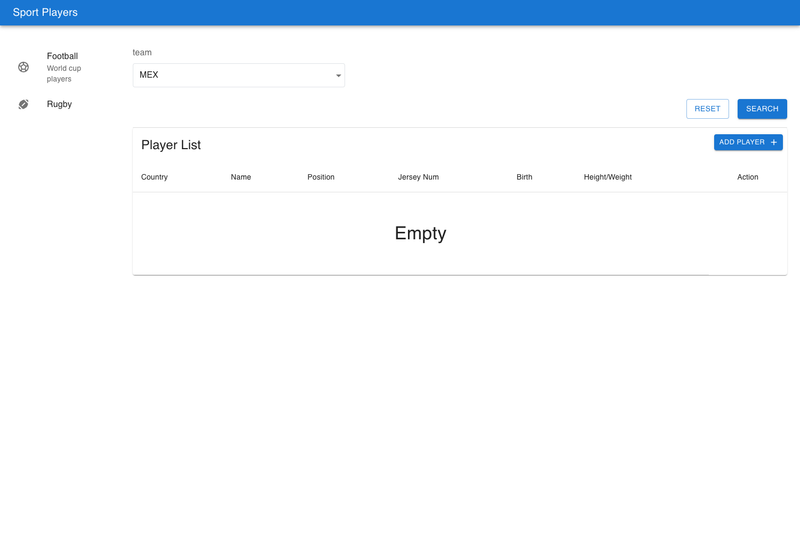
React CRUD Boilerplate is an open-source scaffold designed to help developers start an admin web system quickly. It is built on Next.js (bootstrapped with create-next-app) and uses MUI for UI components, Formik, dayjs, and yup for form handling, all written in TypeScript. The template includes a demo CRUD module called playerList that can be copied and adapted, along with mock API routes and data files for backend simulation.
Key Features
- Next.js App Router — The template uses the Next.js App Router structure, with the main code under /src/app and layout.tsx/page.tsx for routing.
- MUI component library — All admin interface components are built with MUI, so the dashboard matches Material Design out of the box.
- Formik + Yup + dayjs — Form handling and validation are preconfigured with Formik, Yup schemas, and dayjs date utilities, speeding up form-heavy admin pages.
- TypeScript — The whole scaffold is written in TypeScript, giving type safety across components, APIs, and data.
- Demo CRUD module (playerList) — A ready-to-copy folder containing AddModal, EditModal, and list components that demonstrate a complete CRUD flow; you can duplicate it to start a new entity.
- Mock API and data layer — /src/app/playerApi and /src/data provide an in-memory backend demo; they can be deleted when switching to third-party APIs.
- Common admin components — /src/common holds shared components for the dashboard, designed to be extended or customized.
- Dev server on port 3003 — Running yarn dev (or npm/pnpm equivalents) starts the app at http://localhost:3003.
Who is it for?
- Developers starting an admin panel — They can clone the repo, run yarn install, and have a working CRUD interface for a new project.
- Next.js learners — Those who want to see a practical example of App Router, API routes, and client components working together in a TypeScript CRUD app.
- Freelancers or agencies — They can use the boilerplate as a base to deliver admin dashboards faster, swapping the demo playerList module for client-specific entities.
What can you do with it?
- Build a custom admin dashboard — Copy the playerList folder, rename it, and modify the form fields and API endpoints to manage any resource (users, orders, products, etc.).
- Prototype CRUD features — Use the included mock API and data files to demonstrate add, edit, and delete workflows without setting up a backend.
- Learn form validation patterns — Study how Formik, Yup, and dayjs are combined in the AddModal and EditModal components to handle complex forms.
How does React CRUD Boilerplate work?
The template's workflow is straightforward: after installing dependencies with yarn, you run the dev server, open http://localhost:3003, and browse to the playerList page. To create a new CRUD module, copy the playerList folder, adjust the components and API functions, then edit layout.tsx and page.tsx following Next.js conventions. The mock backend in /src/app/playerApi and /src/data handles demo requests; delete these if you're using a real API.
FAQ
Is React CRUD Boilerplate free?
Yes, the project is hosted publicly on GitHub, so you can clone it and use it for your own projects at no cost. No license or payment is required to access the repository.
How do I start a new CRUD module?
Copy the playerList folder under /src/app, rename it to your entity, then adjust the form components (AddModal, EditModal) and the API functions in /src/api. Update layout.tsx and page.tsx to wire up the new route.
What tech stack does it use?
The boilerplate uses Next.js with the App Router, MUI for UI components, Formik and Yup for forms and validation, dayjs for dates, and TypeScript throughout. Package installation uses yarn, but npm and pnpm equivalents work too.
How do I deploy it?
Deploy to Vercel by connecting the GitHub repository to Vercel, or use the Vercel CLI. The README also links to Next.js deployment documentation for alternative hosting options.