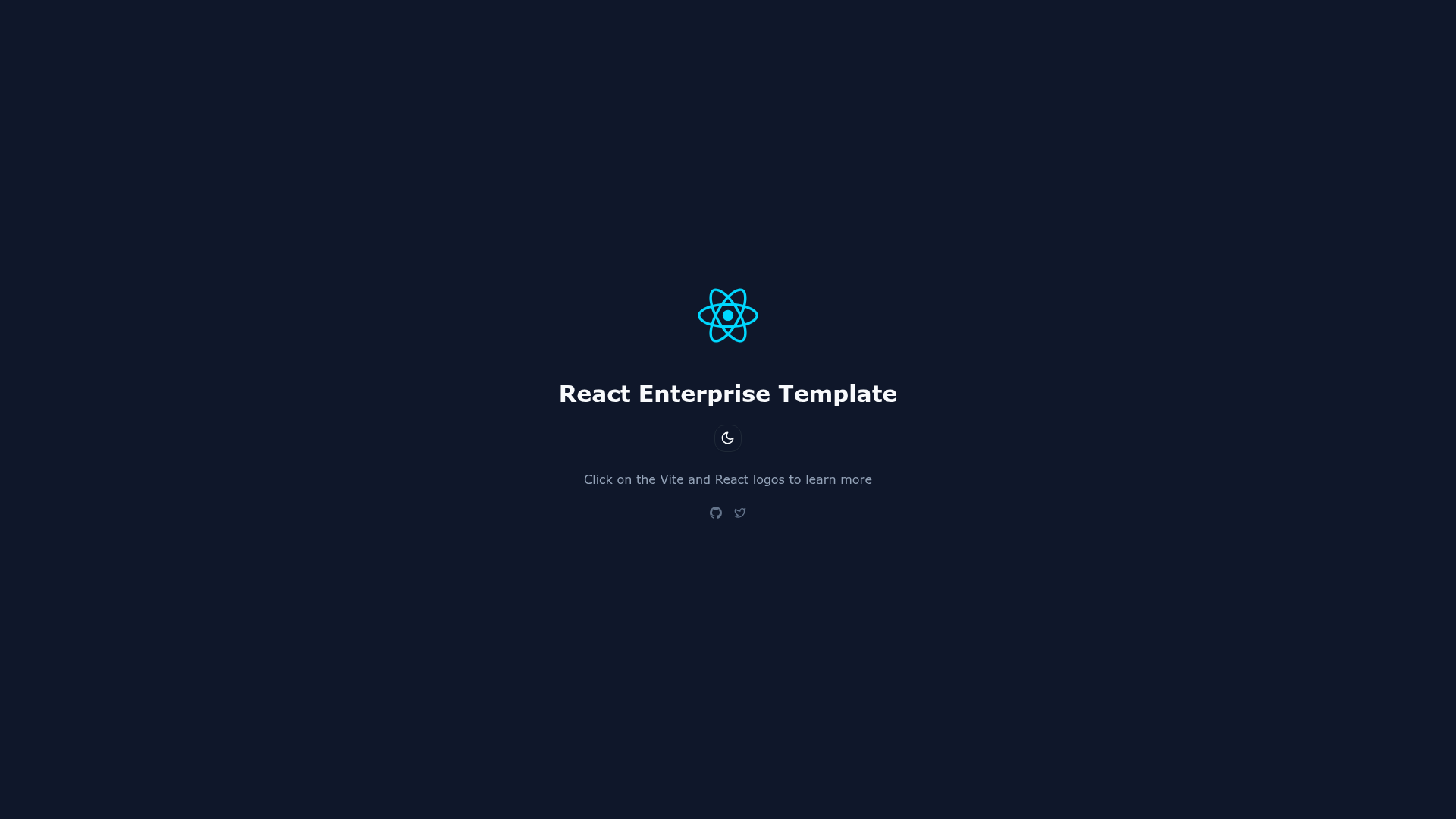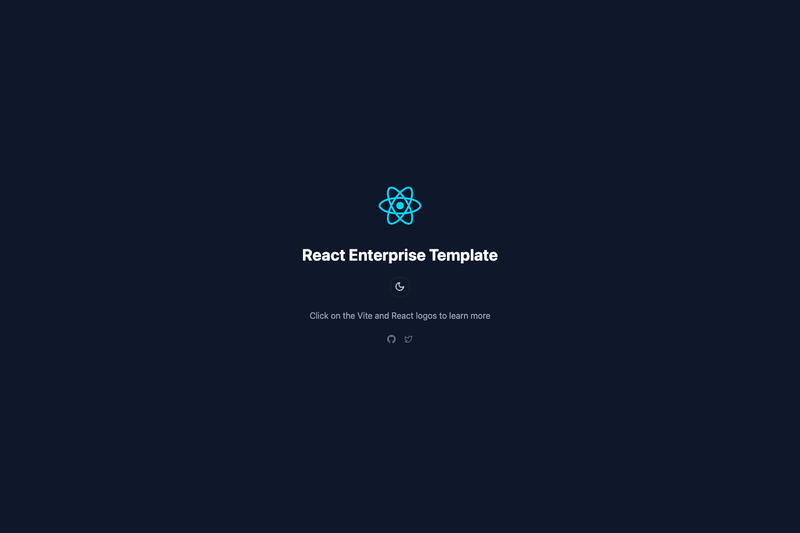
React Enterprise Boilerplate is a Vite-based React 18 template for building enterprise admin dashboards and internal tools, inspired by Blazity/next-enterprise but deliberately skipping Next.js to keep the environment lightweight.
What is React Enterprise Boilerplate?
React Enterprise Boilerplate is a GitHub project that provides a preconfigured React 18 development environment built on Vite. It takes your application code as input and produces a production build, plus a complete toolchain for testing, linting, and documenting UI components. The author created it to avoid pulling in Next.js for admin dashboard projects, which typically do not need server-side rendering. The template includes development scripts for starting the server on localhost:5173, building, previewing, linting, testing, formatting, and running Storybook.
Key Features
- Vite + React 18 — Uses Vite as the build tool with a dev server on port 5173 and fast hot reload.
- Tailwind CSS — Utility-first styling framework ready to configure for your design tokens.
- Shadcn UI — Copy-paste accessible components built on Radix UI primitives.
- Strict TypeScript — Enables strict mode and adds the ts-reset library for more accurate default type inference.
- ESLint & Prettier — Preconfigured linting and formatting to keep code clean and consistent.
- Testing suite — Vitest and React Testing Library handle unit and integration tests, while Playwright covers end-to-end tests.
- Storybook — Create, test, and showcase individual components in an isolated environment.
- Coupling and cohesion graph — A script using Madge generates an SVG file (graph.svg) that visualizes dependencies between internal modules.
In addition, the repository includes a production-ready Dockerfile and Semantic Release for automatic versioning and changelog generation.
Who is it for?
- Admin dashboard developers who want a well-tested React setup without using Next.js.
- Internal tool teams that need a preconfigured linting, testing, and formatting environment.
- Frontend architects who want to monitor module dependencies using the built-in coupling graph.
- Design system maintainers who appreciate the combination of Tailwind, CVA, and Storybook for building and documenting reusable components.
What can you do with it?
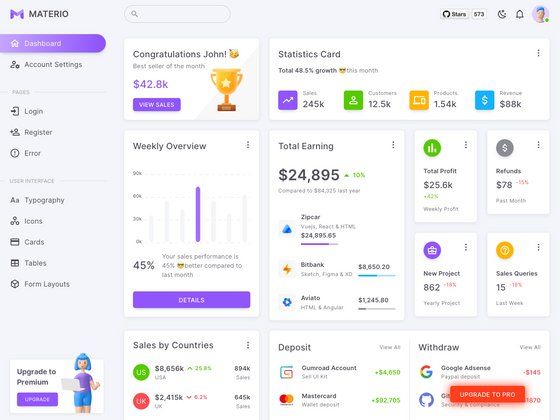
- Dashboard teams: Spin up a new admin interface with Tailwind and Shadcn UI components, plus a complete test setup.
- Component developers: Use Storybook to develop and preview UI parts in isolation, and run the coupling graph to verify boundaries.
- Quality-minded projects: Run unit, integration, and end-to-end tests through the included scripts, with no extra configuration.
How does it work?
- Fork and clone the repository.
- Run
pnpm ito install all dependencies. - Run
pnpm devto start the development server at http://localhost:5173. - Use the package.json scripts for building (
pnpm build), testing (pnpm test), linting (pnpm lint), and generating the coupling graph (pnpm coupling-graph).
Pros and Cons
- Pros: The entire toolchain—linting, formatting, testing, and Storybook—is set up ahead of time, so you can focus on writing code.
- Cons: The template intentionally does not include a state management library; you need to evaluate and add one yourself, with Zustand, Jotai, and Recoil suggested by the README.
Alternatives
- Blazity/next-enterprise — the template that inspired this project, but built on Next.js instead of Vite.
FAQ
Is React Enterprise Boilerplate free?
Yes, the code is publicly accessible in a GitHub repository under the name react-enterprise-boilerplate, and you can clone and use it without cost.
Does this boilerplate include state management?
No. The author deliberately left out a state management library, so teams can choose the one that fits their needs. The README recommends Zustand, Jotai, or Recoil.
How do I run the development server?
After cloning the repository, run pnpm i to install dependencies, then pnpm dev to start the server at http://localhost:5173.
Does it use Next.js?
No, it uses Vite and React 18. The template was created because the author considers Next.js too heavy for many admin dashboard projects.
What testing tools are included?
Vitest and React Testing Library for unit and integration tests, Playwright for end-to-end tests, and Storybook for component-level development and testing.