Newsletter
Join the Community
Subscribe to our newsletter for the latest news and updates

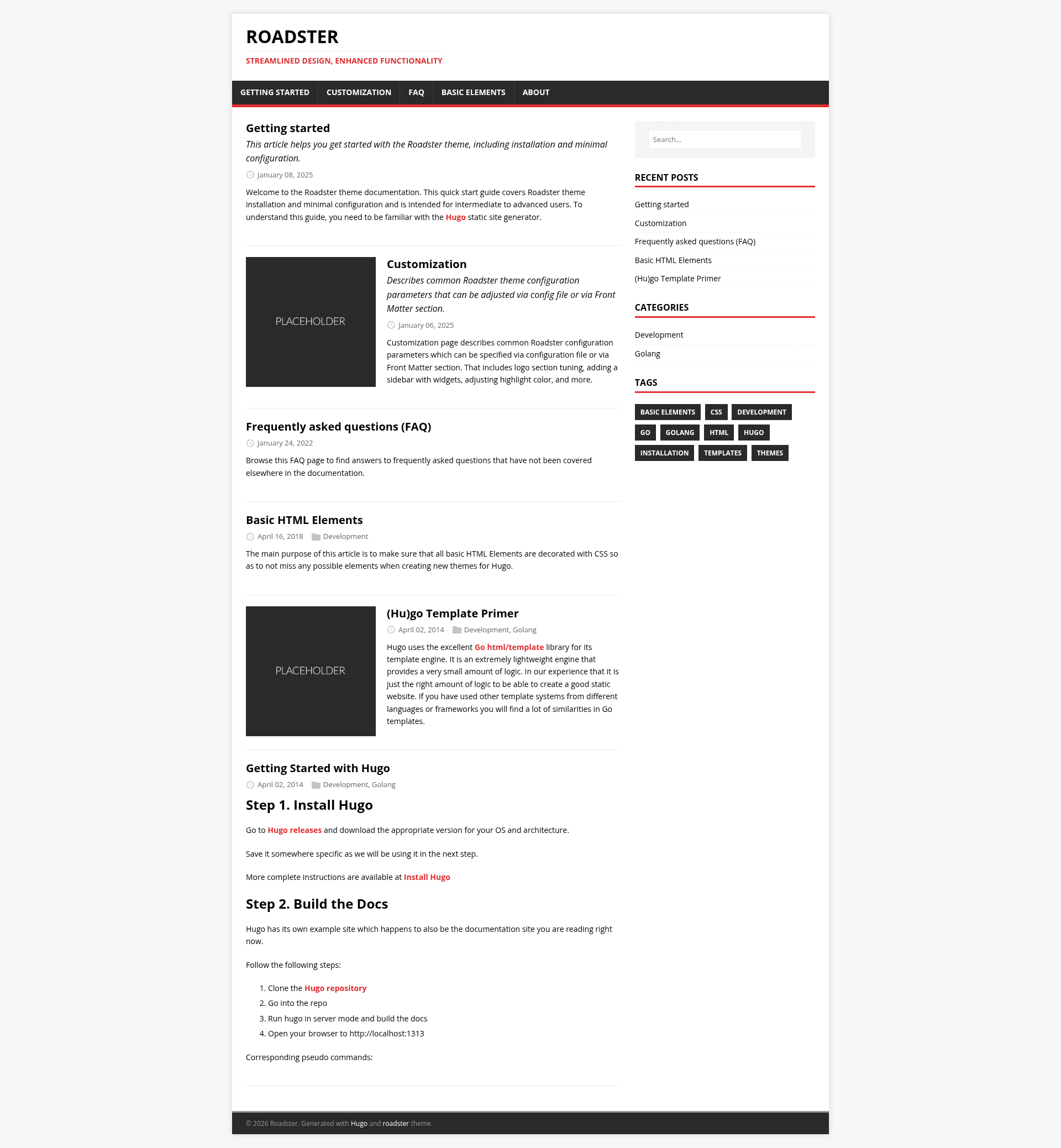
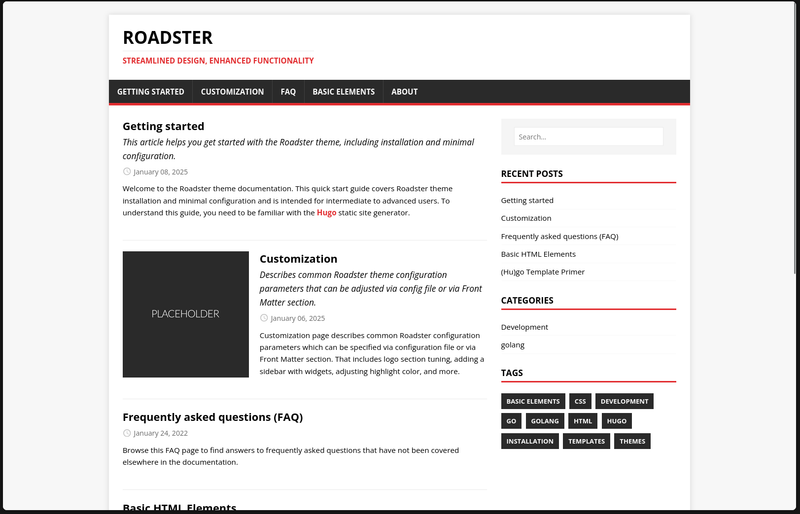
A clean, responsive Hugo theme with modern publishing features, forked from Mainroad.
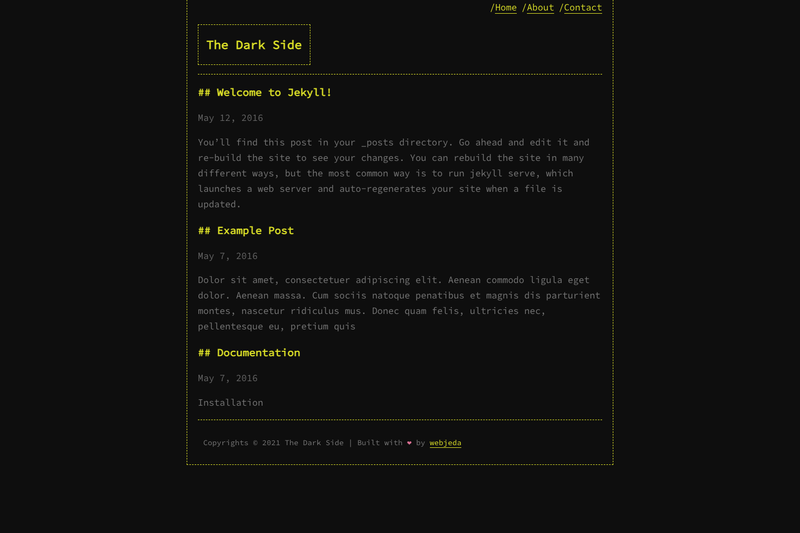
A dark theme for Jekyll, ready to deploy on GitHub Pages by forking.
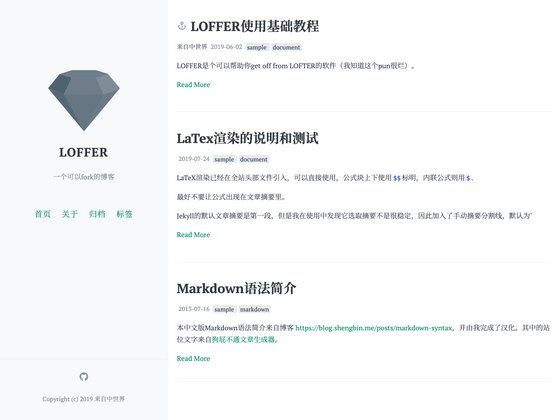
A free Jekyll blog theme with Chinese UI, designed for GitHub Pages and no-code deployment.
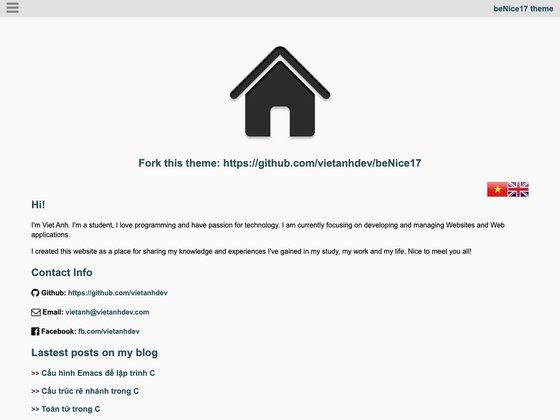
A light, simple, responsive Jekyll theme for personal websites and blogs, with code highlighting, search, and GitHub Pages support.
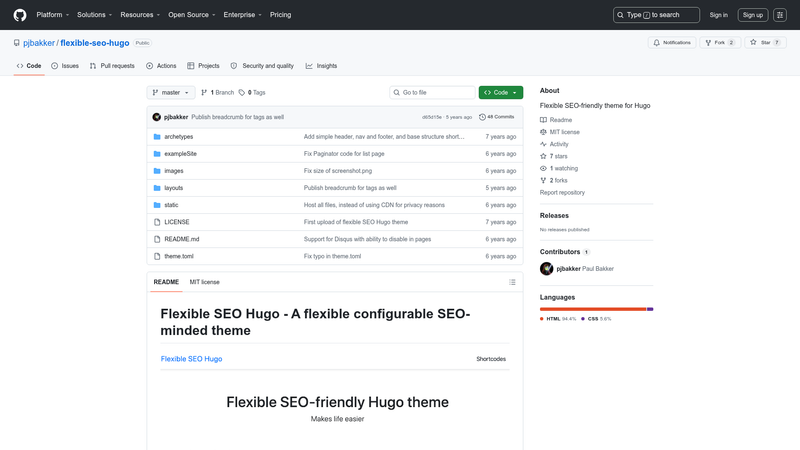
Configurable SEO-friendly Hugo theme on Bootstrap 4 with swappable nav, header, footer styles and automatic breadcrumbs.
Roadster is a clean, content-first Hugo theme for blogs and publishing sites, forked from the Mainroad theme and focused on readability and modern publishing features. It accepts standard Hugo Markdown content and front matter and produces a static HTML website with a responsive layout, widgetized sidebar, and built-in social sharing metadata.
Roadster is a Hugo theme, meaning it provides the templates, styles, and configuration for a static site generated by Hugo. As input, it takes Markdown posts, pages, and author data; as output, it generates a fast, static HTML site. The theme is maintained on GitHub by mansoorbarri and is a fork of Vimux's Mainroad theme, with issues and pull requests from the original project accounted for.
Roadster is aimed at bloggers who want a no-frills, content-first design with clean typography. It also suits technical writers and teams who publish multi-author blogs and need author attribution. Developers who prefer Hugo's simplicity and speed can use Roadster as a starting point for a personal or project site.
Bloggers: publish Markdown posts and automatically get Open Graph and Twitter Cards for social sharing. Technical writers: create documentation sections with a Table of Contents and clean reading layout. Development teams: deploy a multi-author corporate blog with per-author pages and built-in Google Analytics integration.
After installing Hugo, you clone or submodule the repository into the themes/roadster folder of your site. Set theme = "roadster" in hugo.toml, then run Hugo to build the static site. The theme reads your content files and uses its templates to assemble pages, widget areas, and metadata.
Roadster is free and open source under the MIT license.
Mainroad is the upstream theme from which Roadster was forked, offering the same general layout with less modern configuration.
Yes. Roadster is released under the MIT license, which allows free use, modification, and redistribution, including for commercial projects.
Clone the repository (or add it as a git submodule) into your Hugo site's themes/roadster directory. Then set theme = "roadster" in your hugo.toml configuration file. A step-by-step guide is available in the theme documentation.
Yes. Roadster includes multiple-author support, so you can assign each post to an author and display author bylines on posts.
Roadster offers a responsive layout, widgetized sidebar, table of contents, MathJax, SVG icons, custom Google Fonts, Open Graph, Schema, Twitter Cards, Disqus, and Google Analytics support, along with translations for more than fifteen languages.