Newsletter
Join the Community
Subscribe to our newsletter for the latest news and updates

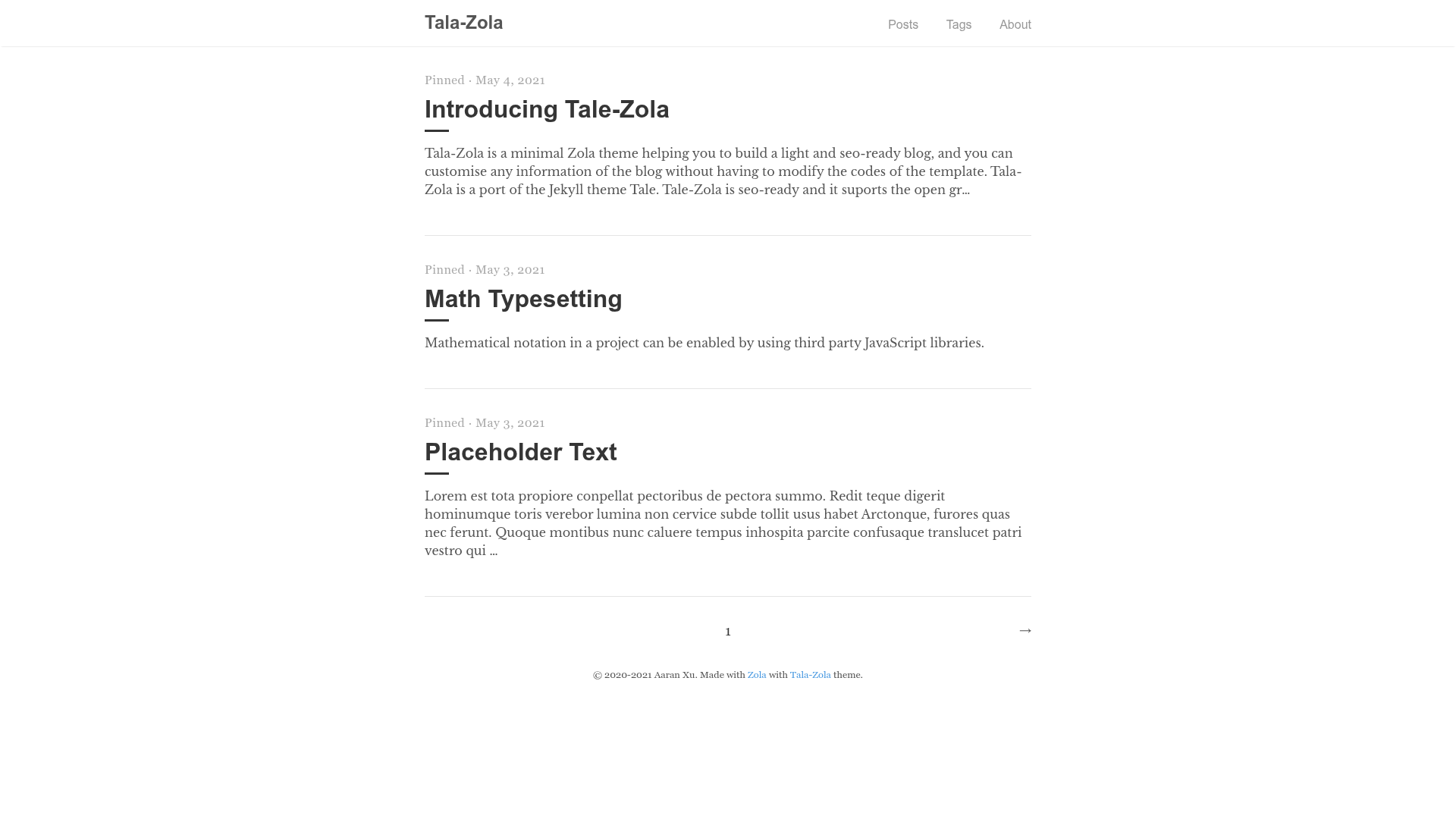
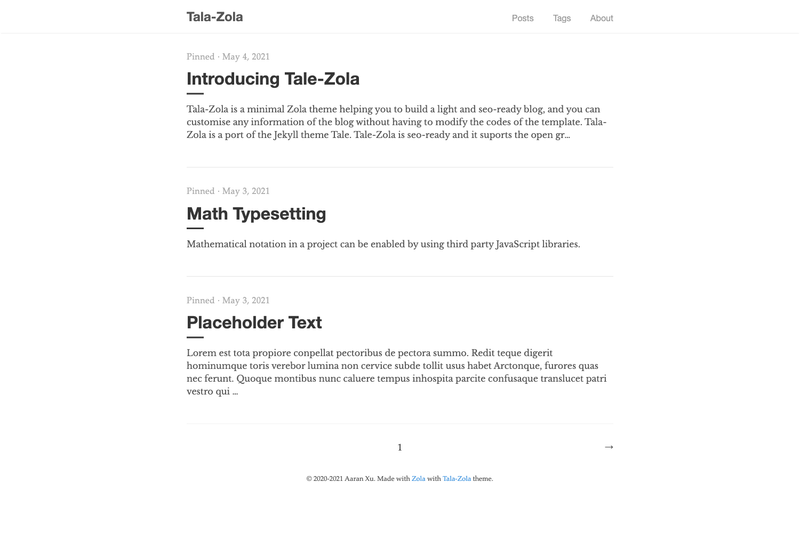
A minimal, SEO-ready Zola blog theme ported from the Jekyll theme Tale, with customizable config and templates.
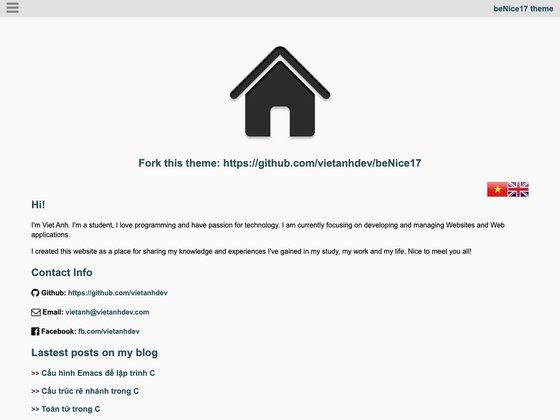
A light, simple, responsive Jekyll theme for personal websites and blogs, with code highlighting, search, and GitHub Pages support.
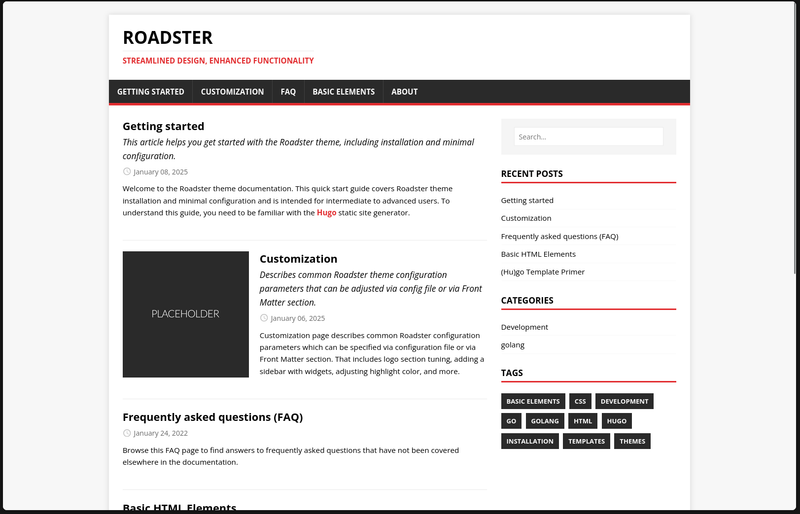
A clean, responsive Hugo theme with modern publishing features, forked from Mainroad.
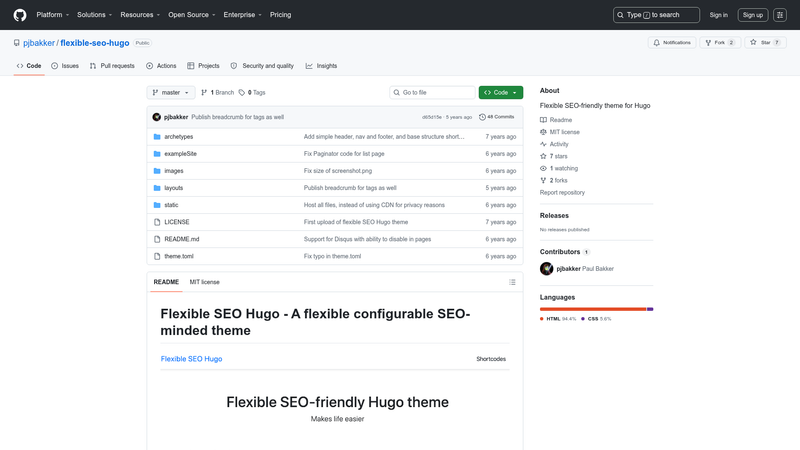
Configurable SEO-friendly Hugo theme on Bootstrap 4 with swappable nav, header, footer styles and automatic breadcrumbs.
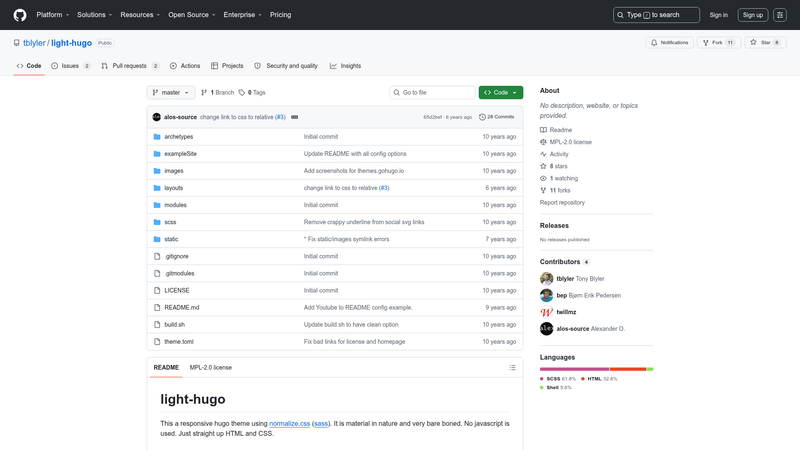
Minimal, responsive Hugo theme with no JavaScript, normalize.css styling, and support for posts and pages.

A Jekyll theme for GitHub Pages that combines Bootstrap 4 and fullpage.js to build responsive scrolling static websites and blogs.
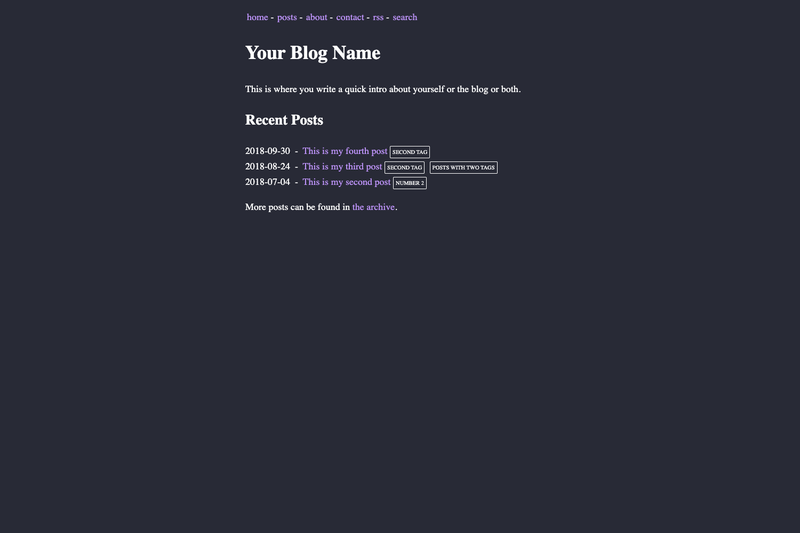
A very minimal developer blog theme using Eleventy.
Tale-Zola is a minimal Zola blog theme, ported from the Jekyll theme Tale, that generates a lightweight, SEO-ready static blog when run through the Zola static site generator (version 0.13.0 or newer).
Tale-Zola is a port of the Jekyll theme Tale, built for the Zola static site generator. It takes Markdown content files placed in Zola's content directory and a config.toml file as input, and outputs a static HTML blog with pagination, tags, and a 404 page. The theme is developed by Aaran Xu and distributed under the MIT license from its GitHub repository.
paginate_by setting).sass/_custom.scss partial.http://127.0.0.1:1111 with zola serve.config.toml.Installation is a five-step process: create a new Zola site with zola init, clone the repository into the themes directory (or add it as a submodule), enable it in config.toml with theme = "tale-zola", add a content folder with an _index.md file, and run zola serve to start the development server with live reload. The theme also ships an example config.toml that you can copy to your project root.
Tale-Zola is open source and distributed under the MIT license, so it is free to use, modify, and redistribute, including for commercial projects.
Yes, Tale-Zola requires Zola version 0.13.0 or newer. The development server runs by default at http://127.0.0.1:1111 and supports live reload.
Yes. The theme includes an extra.expressions configuration block in config.toml where you can change strings like 'Home', 'Written by', 'Tags', and the 404-page text. For custom styling, you can add CSS in sass/_custom.scss.
Set disqus = true and disqus_id with your Disqus identifier, and set google_analytics with your tracking ID in the [extra] section of config.toml. Disqus can also be enabled per post via the extra.disqus front-matter option.
Yes, you can set katex = true in [extra] to enable KaTeX math rendering site-wide, or add it in the front matter of an individual page to enable it for just that page.