
Template details
Self Portofolio
Free Jekyll-based responsive online CV template for portfolio and resume websites.
About this template
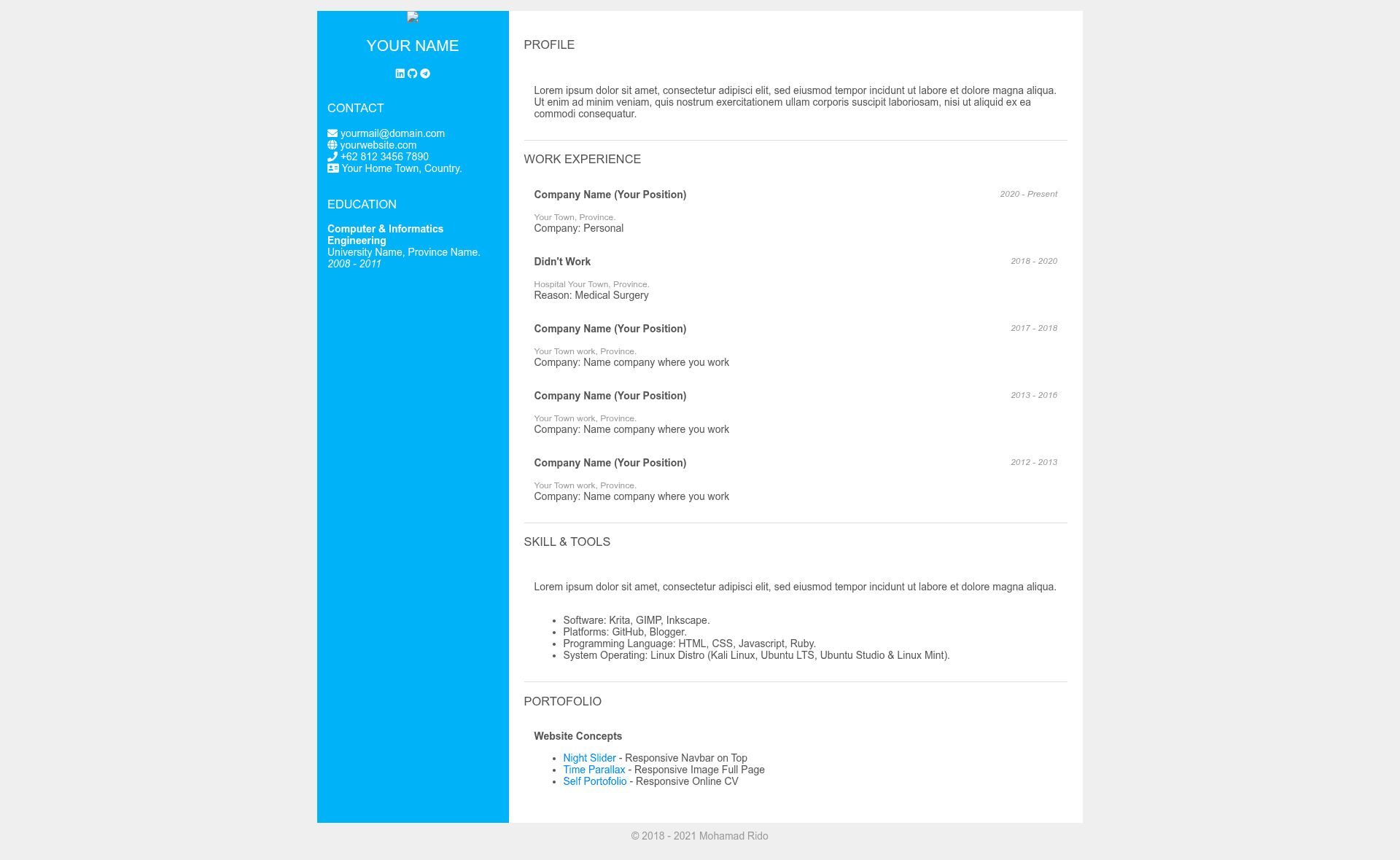
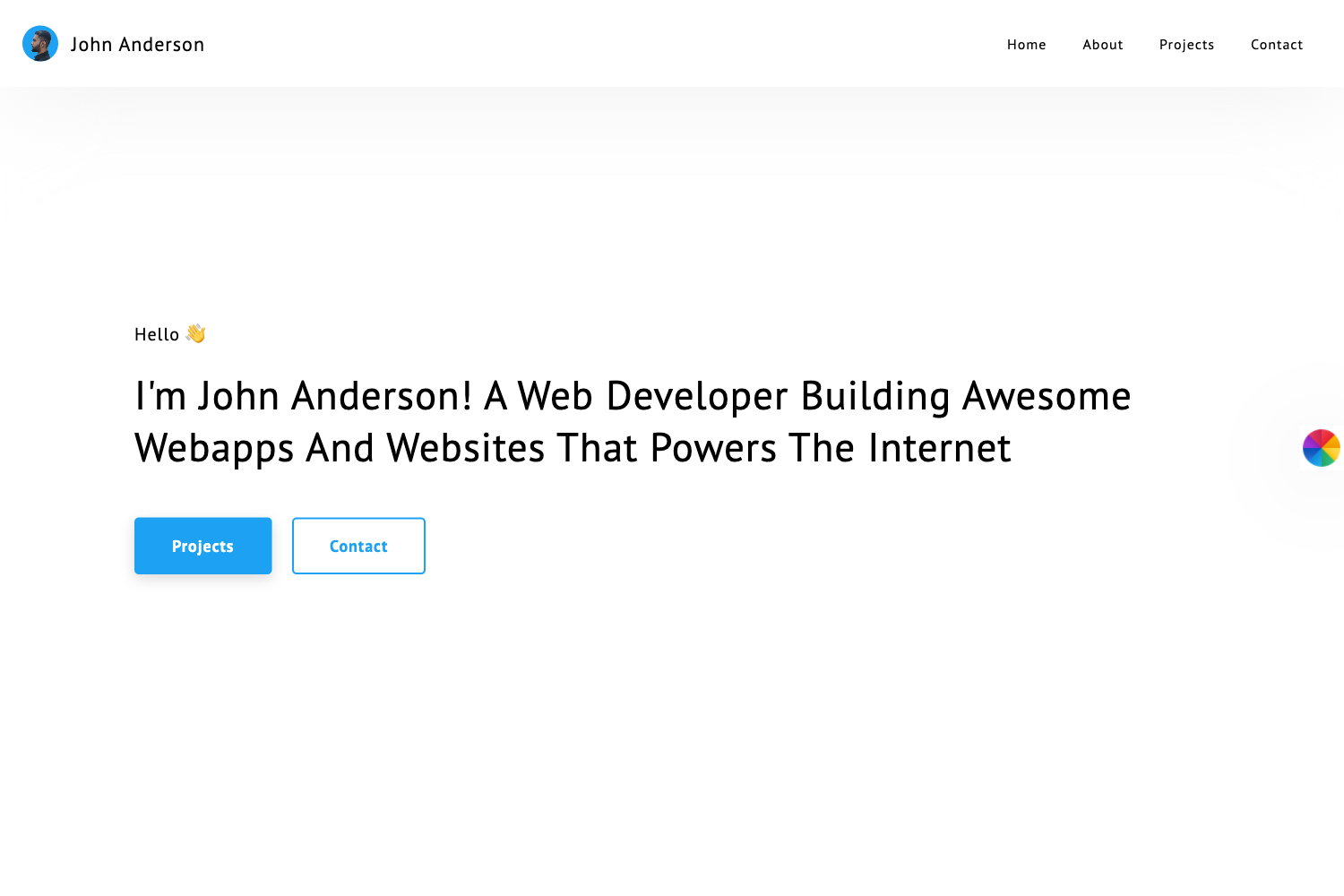
Self Portofolio is a Jekyll-based responsive online CV template that builds a static portfolio/resume website for free hosting on GitHub Pages. Its core function is to let you edit two files and publish a mobile-friendly personal resume with a clean two-column layout and SEO tags.
What is Self Portofolio?
Self Portofolio is a free, open-source Jekyll theme for an online CV or portfolio. It uses a YAML configuration file (_config.yml) and an HTML page (index.html) as inputs, and it produces a static website you can host on GitHub Pages. The template is maintained by GitHub user mohamadrido, and a live preview is available at mohamadrido.github.io/self-portofolio.
Key Features
- Two-column homepage layout — the design splits content into two columns, typically for a profile photo/summary and detailed experience.
- Responsive design — the layout adapts to smartphone screens so your CV remains readable on mobile devices.
- Fast loading — the developer states the template was tested on Google PageSpeed Insights, indicating a performance-checked result.
- Custom 404 page — a dedicated not-found page is included to handle broken links gracefully.
- SEO tags — basic metadata tags are included to help search engines index your personal page.
- Free to fork — you can fork the repository and use it for free; removing the footer credit is allowed.
- GitHub Pages integration — enabling Pages from the main branch makes your CV live at your-username.github.io.
Who is it for?
- Job seekers — get an online resume live in minutes without paying for hosting or a domain.
- Freelancers — create a simple portfolio to display work and a PayPal support link.
- Students — use the template to publish a personal academic profile with minimal setup.
- Jekyll learners — understand how a static site generator turns YAML and HTML into a deployed site.
What can you do with it?
- Job seekers: edit index.html with your own details and push to GitHub Pages to publish a CV.
- Freelancers: customize _config.yml to set your site title and metadata, then link to your projects.
- Developers: fork the repository, experiment with the Jekyll structure, and learn how GitHub Pages builds the site.
How does it work?
The quick start guide gives three steps: fork the repository, go to Settings > GitHub Pages and select the main branch as the source, then edit the _config.yml and index.html files in your fork. Once you commit changes, GitHub Pages automatically rebuilds the static site.
FAQ
Is Self Portofolio free?
Yes. You can fork and use the template without cost, and the footer credit can be removed. If you want to support the developer, there is an optional PayPal link.
What files do I need to edit?
Only _config.yml and index.html. _config.yml holds global site settings and SEO values; index.html contains the visible content of your CV.
Does it require a database or a server?
No. Self Portofolio is a static Jekyll site that runs entirely on GitHub Pages. There is no backend, database, or login system involved.
Can I host it elsewhere?
Yes, because the output is plain HTML, CSS, and assets. You can download the repository and upload it to any static file host, though the quick start focuses on GitHub Pages.
How popular is this template?
The GitHub repository currently has 5 stars and is listed under topics such as concepts, jekyll, portfolio-website, and theme.