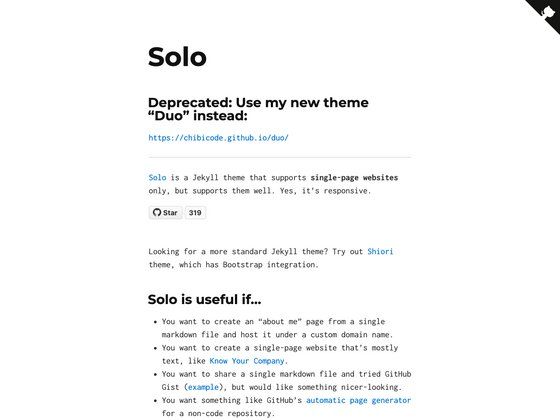
Solo is a Jekyll theme built specifically for single-page websites. It renders a responsive, lightweight page from standard Jekyll content and is hosted on GitHub, though the project is now unmaintained and the author recommends the successor theme, Duo.
What is Solo?
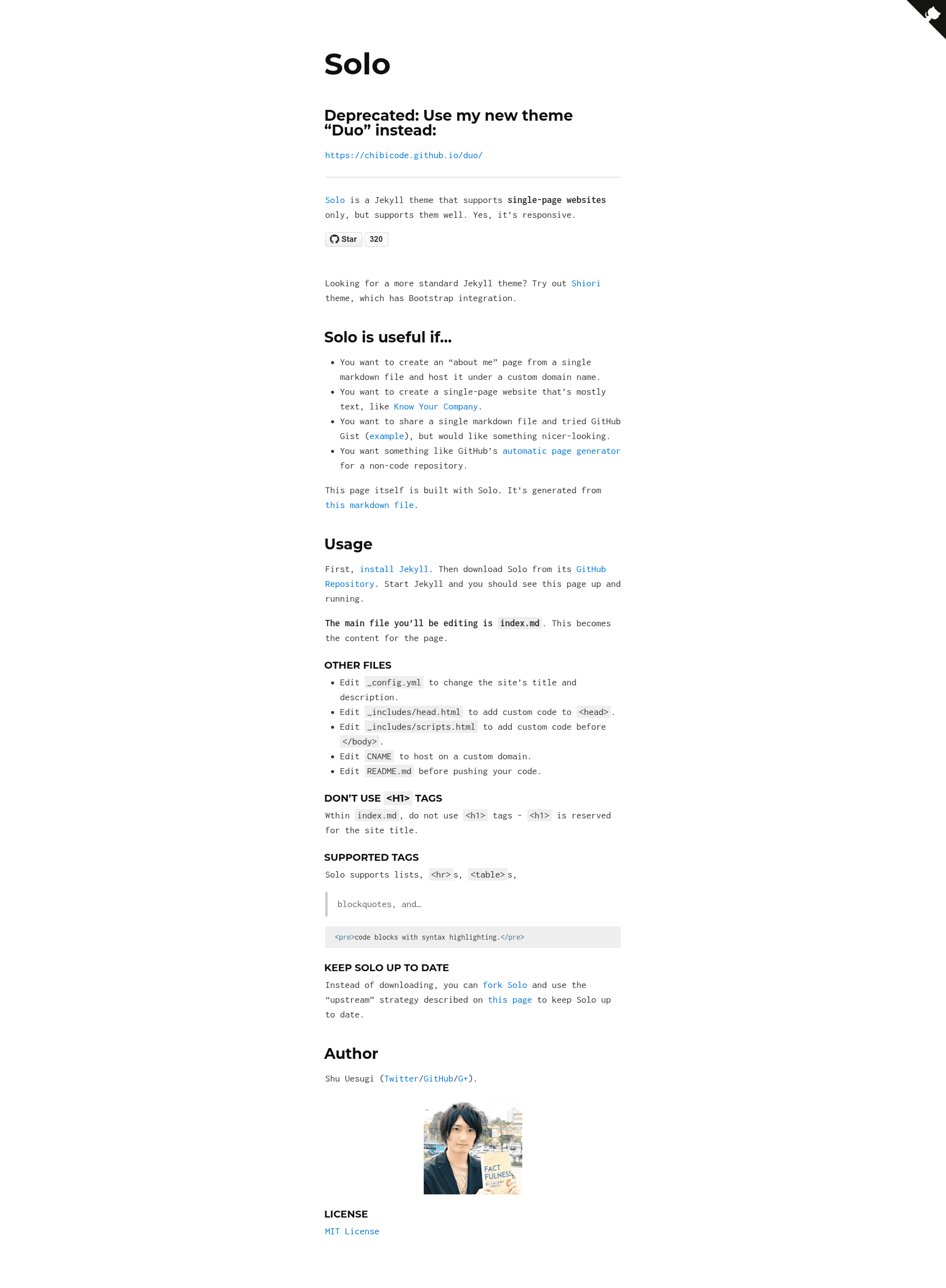
Solo is a Jekyll theme that supports single-page websites only, prioritizing simplicity and responsiveness over multi-page features. It takes Markdown content written for Jekyll and compiles it into a single static HTML page, so the whole site fits in one viewport. The theme was created by GitHub user chibicode and is available at chibicode.github.io/solo, where a live demo and documentation are also hosted. The repository explicitly marks the project as UNMAINTAINED, and the author directs users to the newer theme, Duo, at chibicode.github.io/duo.
Key Features
- Single-page architecture — Designed exclusively for single-page websites, so all content is compiled into one page without blog archives or multiple page templates.
- Responsive layout — The theme is responsive out of the box, adapting the page to phone, tablet, and desktop screen sizes.
- Built on Jekyll — Uses Jekyll, the static site generator, meaning content is authored in Markdown and rendered into clean static HTML.
- Live demo and documentation — The project page at chibicode.github.io/solo includes a working demo and setup instructions in the documentation.
- Lightweight output — With no navigation menu, sidebar, or blog loop, the generated page is a single HTML document plus minimal assets, keeping load time low.
- Community traction — The GitHub repository has received 320 stars, showing it was used and appreciated by developers despite its current unmaintained status.
Who should use Solo?
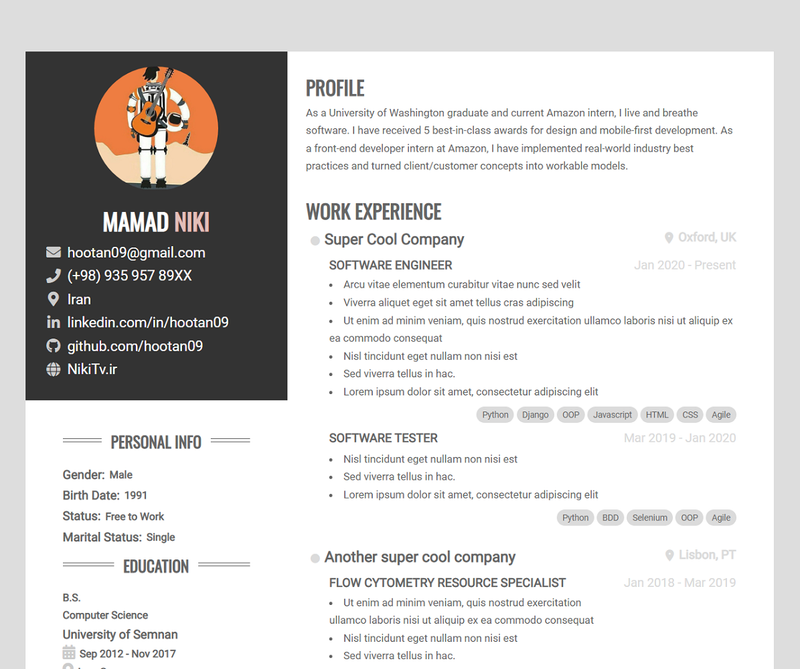
Solo fits anyone who needs a fast, no-frills single-page site and is comfortable with Jekyll's static-site workflow. Developers can use it to publish a professional landing page for a side project. Students or freelancers can turn it into a one-page portfolio or resume site. Open-source maintainers can host a simple project homepage that links out to the repository, documentation, and releases. Because the theme is now unmaintained, new users should weigh the deprecation notice before starting a long-term project with it.
Use cases
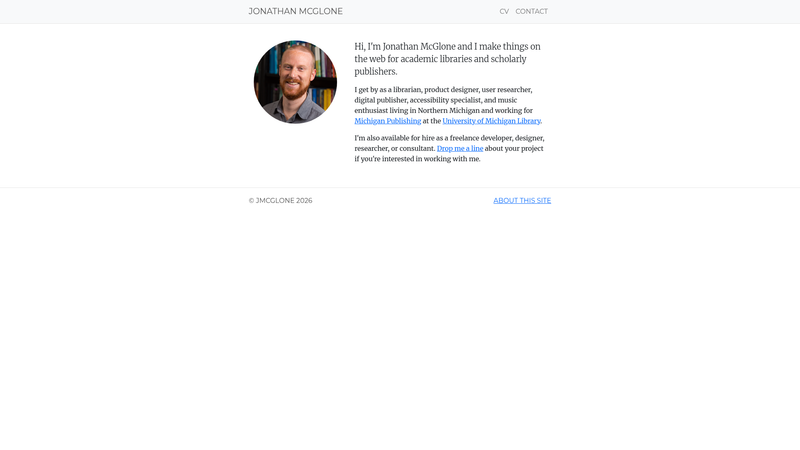
- Personal landing page — Write a short bio and links to your social profiles in Markdown, and Solo renders a single responsive page for you.
- Project homepage — Give a GitHub project a clean one-page site with a description, screenshots, and download links.
- Coming soon page — Announce a product or event on a single page, with just a headline and a signup link.
Pros and cons
- Pros: Simple to set up (Jekyll theme), responsive by default, lightweight single-page output, and backed by a demo and documentation.
- Cons: The project is unmaintained, so it will not receive further updates; and because it supports only single-page sites, you cannot extend it to a blog or multi-page site.
Alternatives
The author's successor theme, Duo, is the recommended replacement for Solo. Duo is available at chibicode.github.io/duo and is the project's official continuation.
FAQ
Is Solo still maintained?
No. The GitHub repository is marked UNMAINTAINED, and the author explicitly recommends using the newer theme, Duo, instead of Solo.
Can I use Solo for a blog?
No. Solo supports single-page websites only, so it does not provide blog index pages, post layouts, or archive pages. For a blog, use a multi-page Jekyll theme.
Is Solo responsive?
Yes. The theme is described as responsive, meaning it adjusts to different screen sizes, from mobile phones to desktop monitors.
Where can I find the demo and documentation?
The demo and documentation are hosted at chibicode.github.io/solo. The demo shows the single-page layout in action, and the docs explain installation and customization.