Newsletter
Join the Community
Subscribe to our newsletter for the latest news and updates

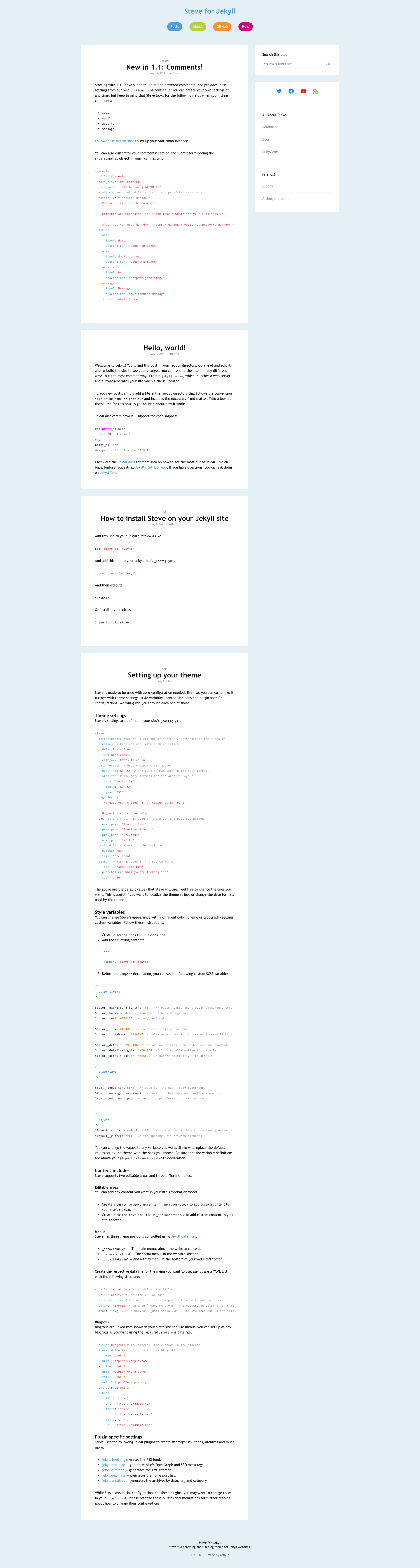
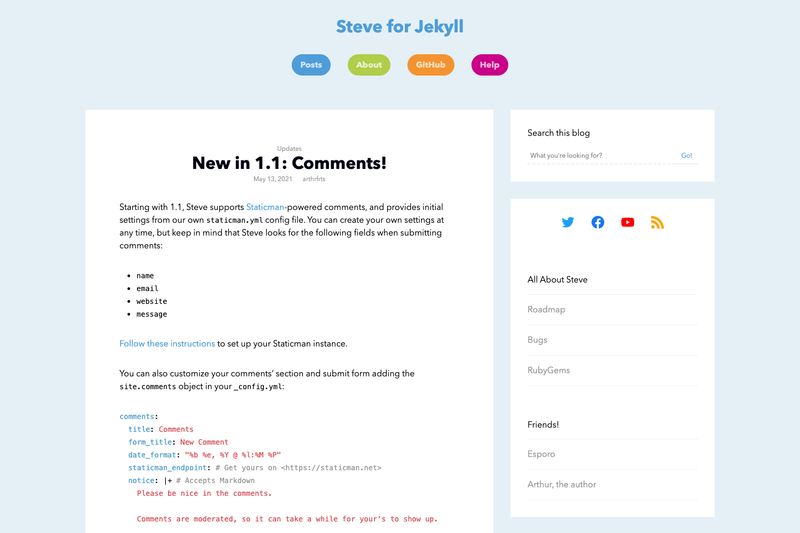
A charming and fun two-column blog theme for Jekyll, distributed as a Ruby gem.
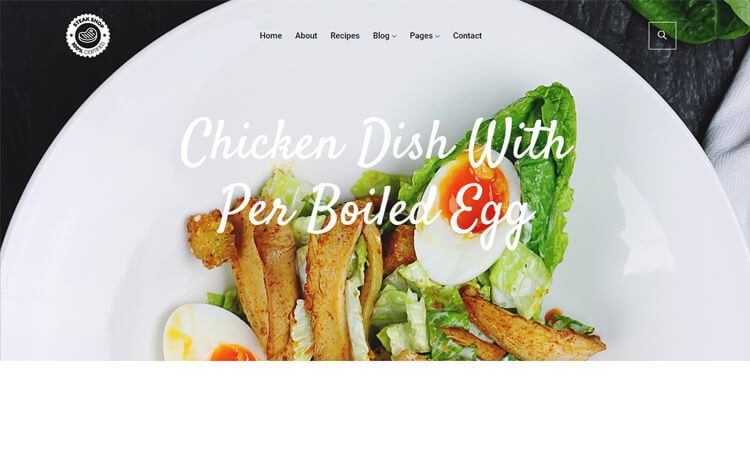
Free multi-page Bootstrap 4 HTML5 cooking website template for food blogs, recipe sites, and restaurants.
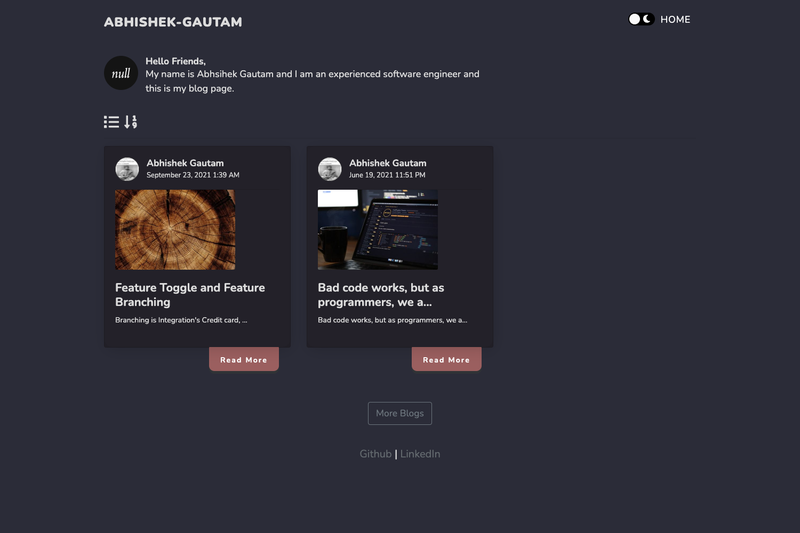
Next.js and Sanity blogging template with draft previews, code highlighting, rich text, theming, and serverless JAMstack architecture.
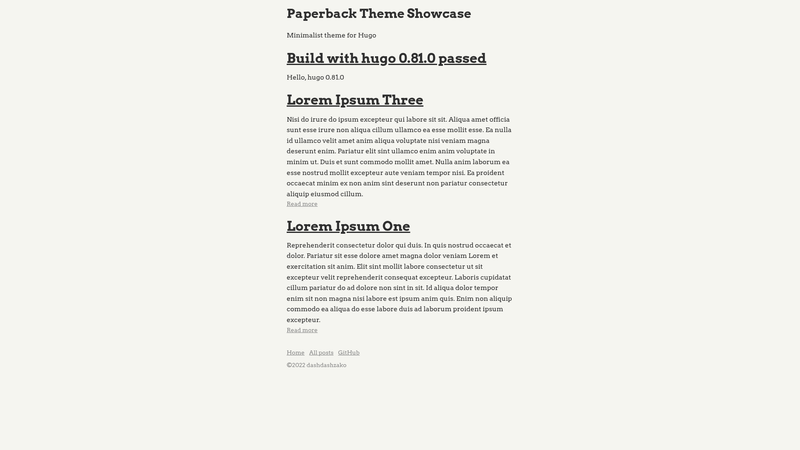
Minimalist Hugo theme for blogs with high-contrast colors, no decorative effects, and Highlight.js code syntax highlighting.
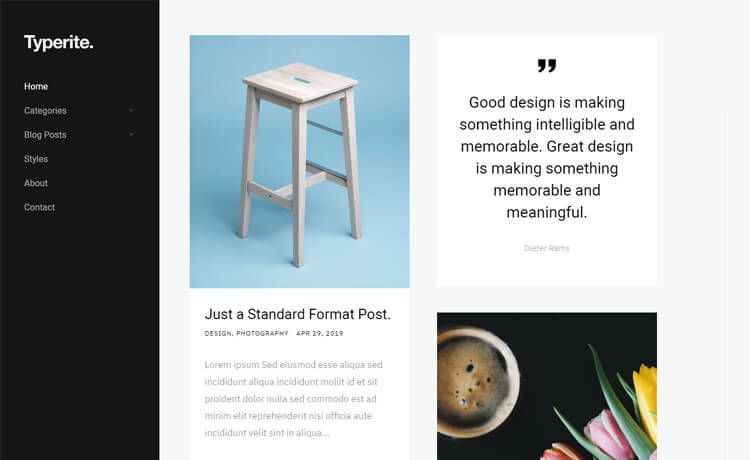
Free HTML5 masonry blog template with sticky sidebar, dropdown menus, off-canvas search, and 4 post formats.
Steve is a two-column blog theme for Jekyll, distributed as a Ruby gem named steve-for-jekyll, that provides a ready-to-run blog layout for static sites generated from Markdown content.
Steve is a Jekyll theme created by GitHub user @arthrfrts for use on the Esporo network of websites, and released as open source under the MIT License. As a Jekyll theme, it takes standard Jekyll site content — pages, posts, data files, and configuration — and renders it into a static HTML site using Liquid templates and Sass stylesheets. The theme is installed by adding steve-for-jekyll to a site's Gemfile and setting theme: steve-for-jekyll in _config.yml, then running bundle. It works out-of-the-box and offers documented options for menus, comments, and theme style.
gem install steve or via Bundler, then activate it in _config.yml; no manual file copying is required._layouts, _includes, _sass, and assets, so customizations follow normal Jekyll conventions.bundle exec jekyll serve locally and adjust files in _layouts, _includes, and _sass; the site regenerates automatically on each refresh.