Newsletter
Join the Community
Subscribe to our newsletter for the latest news and updates

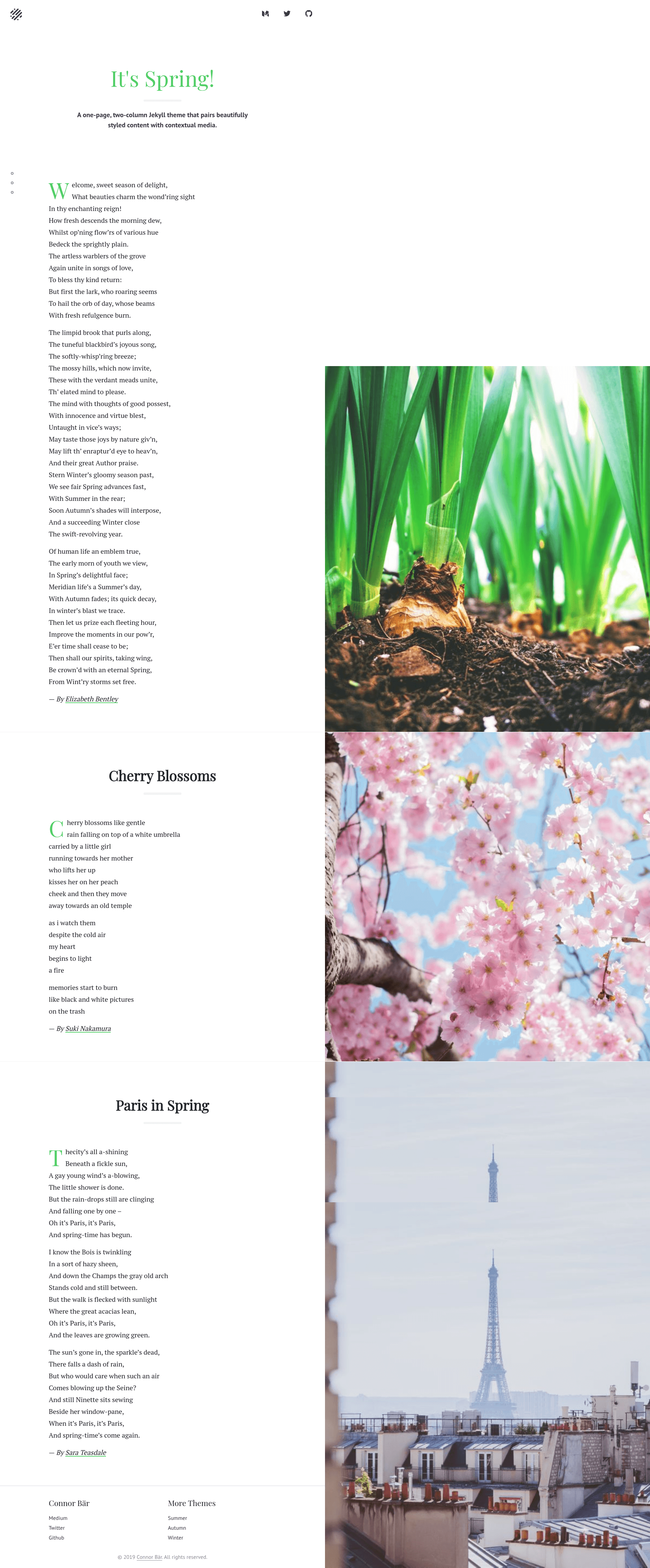
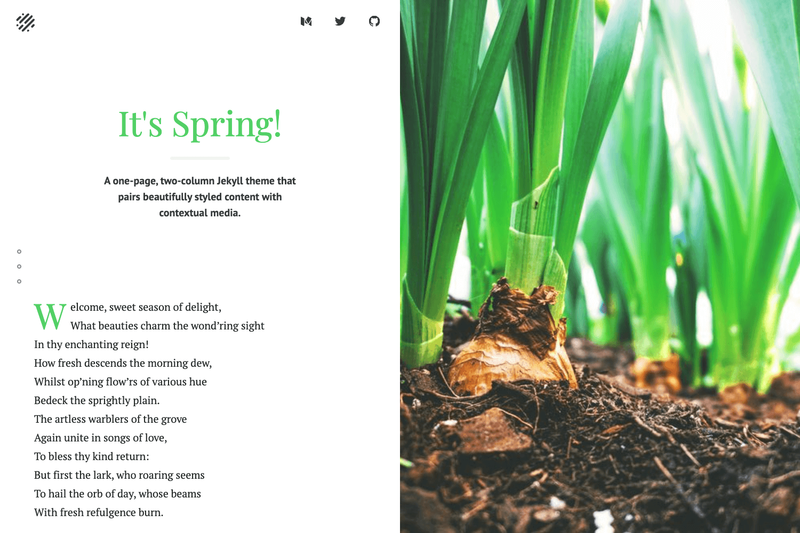
A one-page, two-column Jekyll theme that pairs beautifully styled content with contextual media.
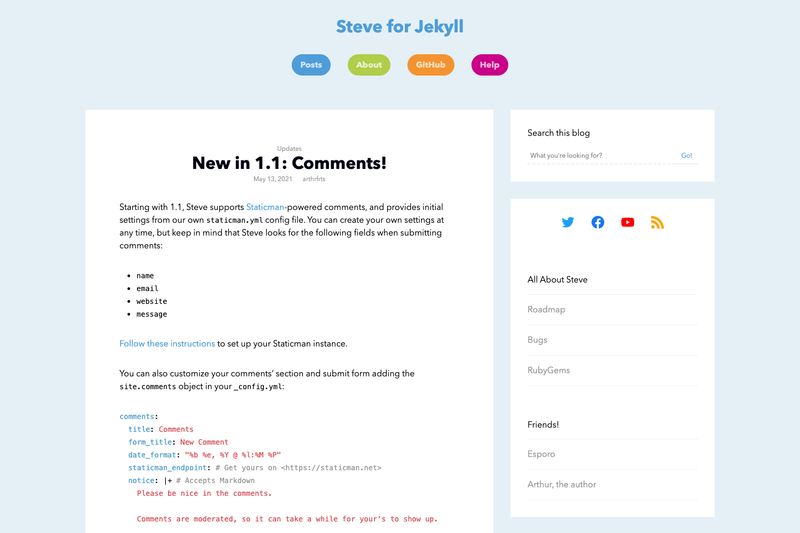
A charming and fun two-column blog theme for Jekyll, distributed as a Ruby gem.
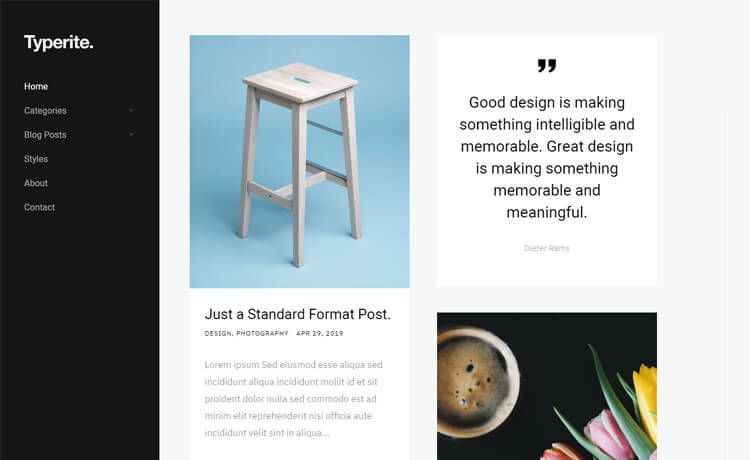
Free HTML5 masonry blog template with sticky sidebar, dropdown menus, off-canvas search, and 4 post formats.
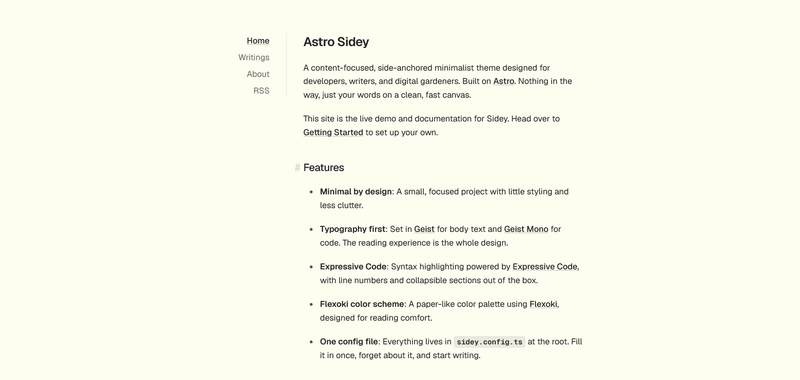
A simple, minimalistic personal blog theme built with Astro and TailwindCSS, inspired by sidey-jekyll
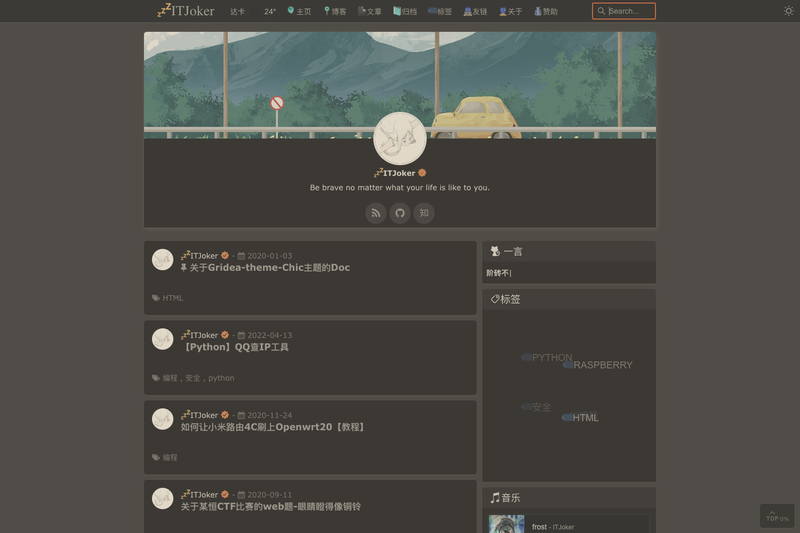
A free open-source Gridea blog theme ported from Hexo's Chic, featuring light/dark modes, LaTeX formulas, Live2D, and a music player.
Spring is a one-page, two-column Jekyll theme for publishing long-form content alongside contextual media, built by Connor Baer and released under the MIT license.
Spring is an open-source Jekyll theme that arranges text and media in a single-page, two-column layout. It takes a standard Jekyll site (posts, pages, and configuration) and generates a static website with one page that pairs written content with images or other media. The theme is created by Connor Baer and is available on GitHub. It ships with a fully furnished Jekyll setup, including a Gemfile and package.json, so you can clone the repository and start a local server with a few commands. The theme is no longer actively maintained but is noted to work as-is.
Spring suits writers and bloggers who want a minimal, clean presentation for long-form articles with accompanying imagery. Developers starting a new Jekyll project can use it as a ready-made base instead of configuring a theme from scratch. Photographers and designers can also use the two-column layout to pair visual portfolios with descriptive text.
Spring runs as a standard Jekyll site. After installing Jekyll, the bundler gem, and yarn (or npm), clone the repository and run bundle install followed by yarn to install dependencies. Start the development server by running yarn start, which serves the site at localhost:4000. To customize the theme, edit options in _config.yml and rebuild the site.
Spring is entirely free and open source under the MIT license. There are no paid tiers or subscription fees.
Minima is the default Jekyll theme that ships with new Jekyll site generations, offering a simpler single-column layout compared to Spring's two-column design.
Yes, Spring is open source and distributed under the MIT license, so it is free to use for personal or commercial projects without licensing fees.
Yes, Spring includes a dark theme option that can be enabled by changing the relevant setting in the _config.yml file. The README highlights it as a standout feature.
The theme is no longer actively maintained, but the README states it should work as-is. The author welcomes contributions via pull requests and bug reports.
You need Jekyll, the bundler gem, and yarn (or npm) installed on your computer. After cloning the repository, run bundle install and yarn to install dependencies, then yarn start to launch the server.