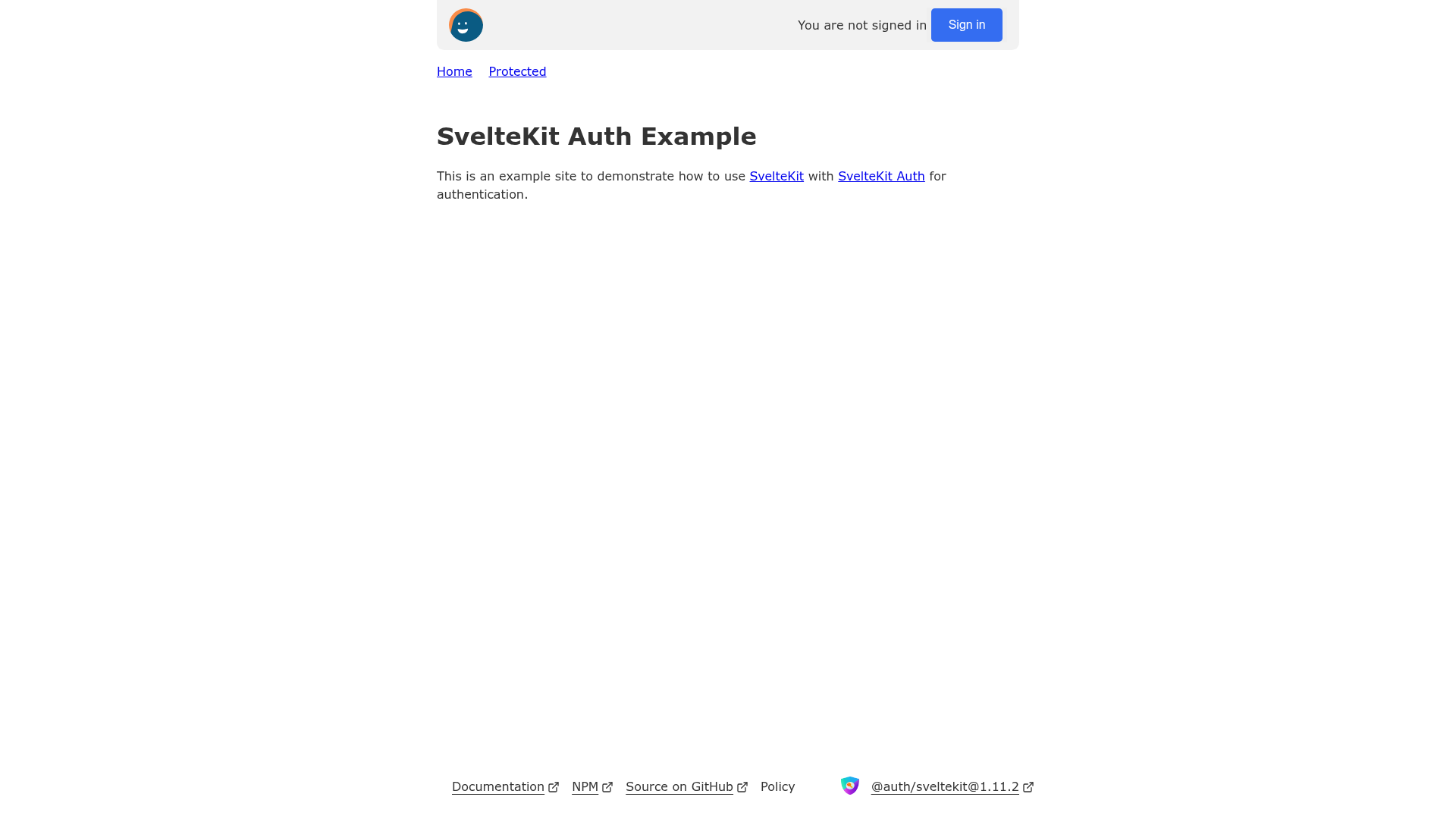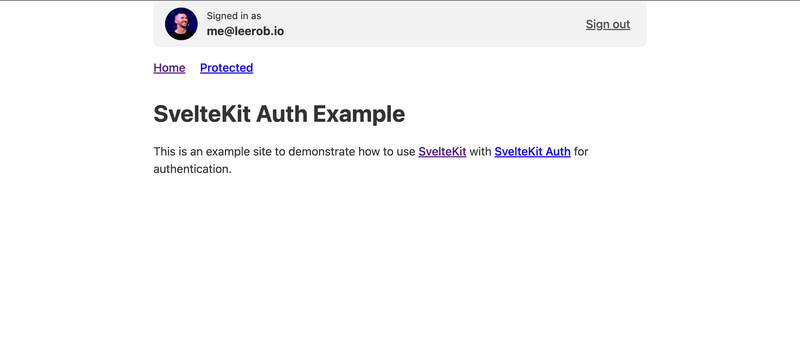
SvelteKit Auth Example is an official, open-source boilerplate from the Auth.js team that demonstrates how to add OAuth2 authentication to a SvelteKit application using the @auth/sveltekit package.
What is SvelteKit Auth Example?
SvelteKit Auth Example is the official example application for using Auth.js (formerly NextAuth.js) with SvelteKit. It is maintained in the nextauthjs/next-auth monorepo under apps/examples/sveltekit, so its code stays in lockstep with the core Auth.js library. The app is written in TypeScript and uses the @auth/sveltekit npm package as its authentication dependency. The repository description explicitly states that it is an "Example showing how to use Auth.js with SvelteKit." It is also the companion to the Auth.js SvelteKit documentation hosted at sveltekit.authjs.dev, which the README links to. Because it is a full SvelteKit project, it includes file-based routing and server endpoints, and it can be deployed to Vercel with a single click using the button in the README.
Key Features
- Official Auth.js integration — The example is built and maintained by the NextAuth.js/Auth.js team in the same monorepo as the library, so it reflects the recommended way to use
@auth/sveltekit. - TypeScript — The codebase is written in TypeScript, as indicated by the TypeScript badge in the README, giving you typed configuration for authentication handlers.
- One-click Vercel deployment — The README contains a "Deploy with Vercel" button that creates a new Vercel project from the GitHub repository URL, with no additional setup described.
- OAuth2 support — The repository is tagged with
oauth2, and Auth.js provides built-in support for OAuth2 providers out of the box. - Transparent package metrics — The
@auth/sveltekitdependency shows npm version, bundle size (via Bundlephobia), and download count badges directly in the README. - Open source — The example is published under the nextauthjs GitHub organization, and the README instructs contributors to open pull requests against
nextauthjs/next-auth. - SvelteKit-native — The project runs on SvelteKit, leveraging its server route handling and dev/preview workflow for a local authentication flow.
Who should use SvelteKit Auth Example?
- SvelteKit developers who want a known-good authentication setup without wiring OAuth themselves. They can clone or deploy the example and then configure the authentication options with their own OAuth credentials.
- Auth.js users who are new to SvelteKit and want a reference implementation. The README links to the docs at sveltekit.authjs.dev, making it a learning path.
- Teams migrating a Next.js app that already uses NextAuth.js — this example shows the same concepts mapped onto SvelteKit, saving research time.
What can you do with SvelteKit Auth Example?
- Deploy a live demo without local setup: Click the Vercel button, and the app runs on a Vercel URL immediately, letting you test the authentication flow in the browser.
- Inspect the Auth.js wiring: Study how
@auth/sveltekitis imported and used in SvelteKit's server endpoints to understand session handling and sign-in callbacks. - Use it as a project scaffold: Fork the repository on GitHub, add your OAuth credentials, and build a new SvelteKit app on top of an already-authenticated base.
How does the deployment work?
The README presents a single "Deploy with Vercel" button. Clicking it opens Vercel's project-creation flow with the GitHub repository URL pre-filled, the project name set to sveltekit-auth-example, and the repository name set to the same value. Vercel then builds the SvelteKit app, and once deployed, the app's authentication endpoints are live at the generated URL.
FAQ
Is SvelteKit Auth Example free to use?
Yes, it is open source and hosted on GitHub under the NextAuth.js organization. There is no license restriction mentioned in the README, and you are free to fork it for your own projects.
How do I run the example locally?
The README doesn't include local setup commands, but because it is a standard SvelteKit project, you can clone the repository and run SvelteKit's development server. The exact commands are covered in the Auth.js SvelteKit documentation linked from the README.
Does this example work with any OAuth provider?
Auth.js supports many OAuth2 providers, and the example is tagged with oauth2. You would configure your provider by editing the authentication options file, following the Auth.js SvelteKit documentation.