Newsletter
Join the Community
Subscribe to our newsletter for the latest news and updates

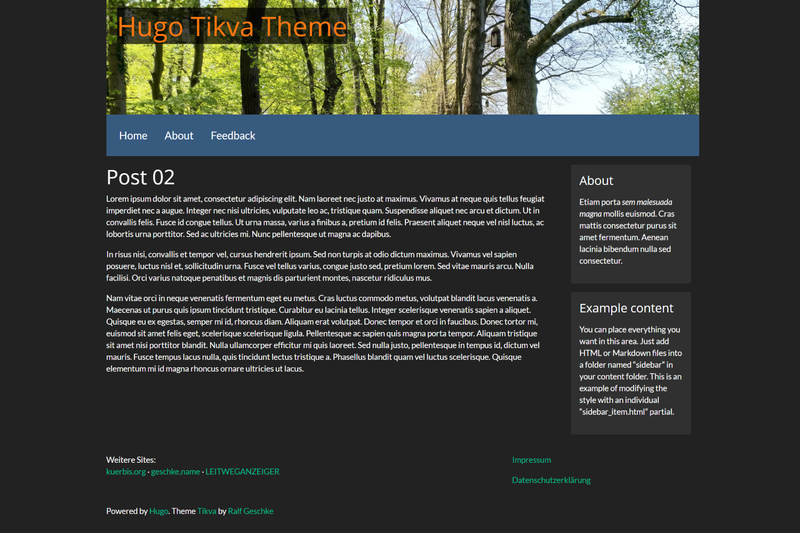
Minimalistic Hugo theme based on Bootstrap v4, offering 30+ designs, configurable sidebars, footer, and subfooter sections.
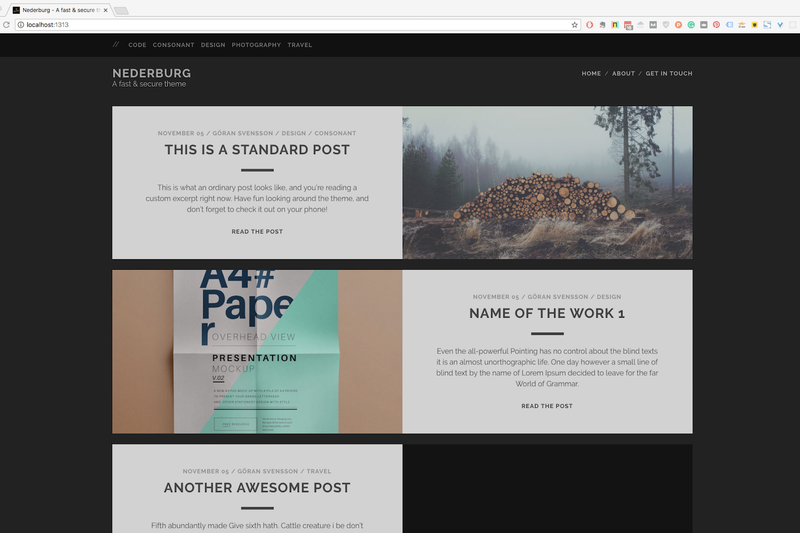
Hugo blog theme ported from the Tracks WordPress theme, with Disqus comments, Google Analytics, Gravatar bios, and multi-author support.
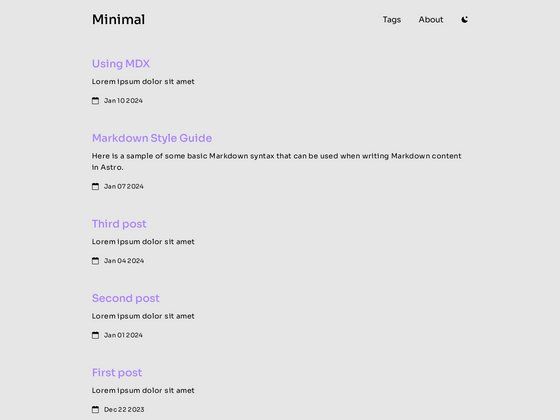
Free, open-source Astro blog theme with Tailwind styling, Markdown/MDX posts, dark/light mode, and expressive code blocks.

A Jekyll blog theme for GitHub Pages with Swiftype site search and Gitalk comment integration.
A Gatsby.js starter for building static blogs with MDX, Prism.js syntax highlighting, pagination, and category pages.
Tikva is a minimalistic Hugo theme built on Bootstrap v4 that produces responsive static sites from a single config file, with more than 30 built-in design variants.
Tikva is an open-source Hugo theme based on the Bootstrap v4 CSS framework, created by geschke as a port of the earlier Tikva themes for Grav CMS and WordPress, with some features added from the Azbalac WordPress theme. It takes standard Hugo content plus a config.toml file as input and outputs a static website with responsive layouts, configurable sidebars, a multi-column footer and a subfooter area. The theme runs on the Hugo static site generator, integrates Bootswatch color schemes alongside its own custom styles, and is distributed under the MIT license.
Tikva ships with more than 30 designs, half newly created and half taken from the Bootswatch project, so the entire look of a site changes by switching one config value. Three main layouts are available: a content column without sidebar, a sidebar on the right, and a sidebar on the left, each set through the params.sidebar style option. Font settings, including size, font type and variant, are customizable from the config and support Google Fonts. Analytics integrations cover Google Analytics through Hugo's built-in async template, plus Matomo and Yandex Metrica. The footer supports flexible multi-column content, and a dedicated subfooter area sits below it for credit or "Powered by..." text as shown in the screenshots. Custom JavaScript or CSS snippets are included by adding javascript_header.html and javascript_footer.html partial files to the site's layouts/partials/ folder, which inject the code into the head section or just before the closing body tag. The navbar displays the Hugo main menus by default, and the theme also includes a custom image render hook from hugo-theme-bootstrap by Razon Yang.
Hugo bloggers who want a responsive Bootstrap-based design with minimal template editing can switch between 30+ Bootswatch variants from the config alone. Developers migrating a site from WordPress or Grav can reuse the same Tikva look on Hugo, since this theme is a port of those versions. Site owners who need built-in analytics get Google Analytics, Matomo and Yandex Metrica without installing separate plugins. Anyone publishing a small portfolio or content site can pick a header style with a header image and overlay title using the signa or materia themes.
layouts/partials/ folder.You install the theme by cloning the repository into the themes folder of a Hugo site or by adding it as a Git submodule, then reference exampleSite/config.toml for the available options. To enable the content sections, create a content/sections/ folder containing footer, sidebar and subfooter subfolders, make each page bundle headless, and turn the sections on in the config with params.theme.footer, params.theme.subfooter and params.sidebar. The number of footer columns currently equals the number of files placed in the footer directory.
Tikva is free and open source under the MIT license, with no paid tiers or premium features described in the repository.
Yes, Tikva is released under the MIT license and its source is available on GitHub in the geschke/hugo-tikva repository. No paid tiers or commercial restrictions are described in the documentation.
Run git clone https://github.com/geschke/hugo-tikva.git inside the themes folder of your Hugo site, or add it as a Git submodule with the command shown in the installation section. The exampleSite folder provides a working configuration reference.
Set params.sidebar.enabled = true in your site config and choose a style: right displays the sidebar on the right, left displays it on the left. The default is disabled, so the demo site shows content without a sidebar.
Tikva supports three analytics options out of the box: Google Analytics via Hugo's internal async template, Matomo, and Yandex Metrica. All three are controlled through the theme configuration without extra plugins.
Add a file named javascript_header.html to include code in the head section, or javascript_footer.html to include code just before the closing body tag. Both files belong in the layouts/partials/ folder of your site and are picked up automatically.
Yes — the author states the theme is still work in progress, its documentation is not complete, and some Hugo features are not yet supported. The number of footer columns, for example, is tied to the number of files placed in the footer directory.