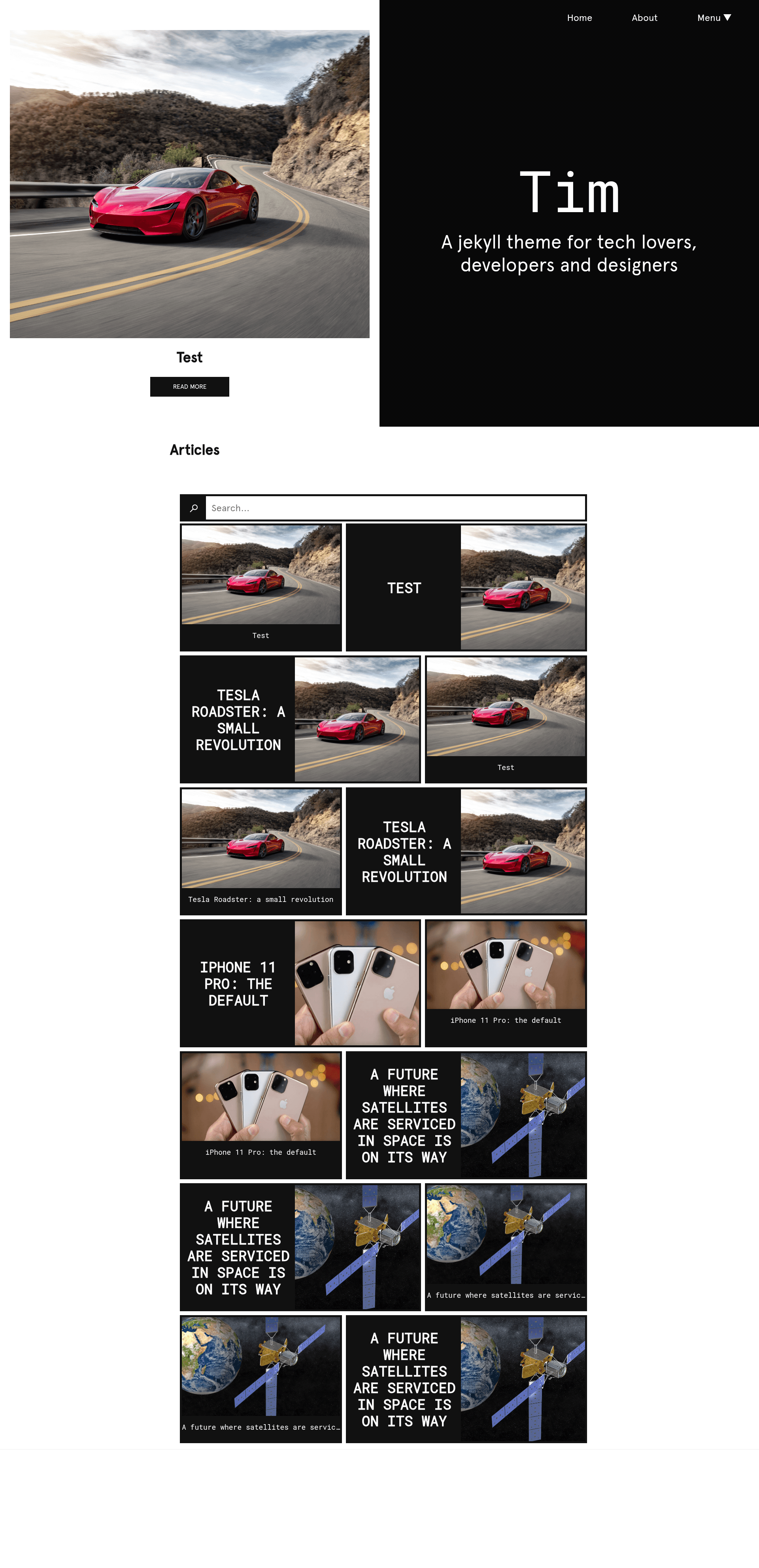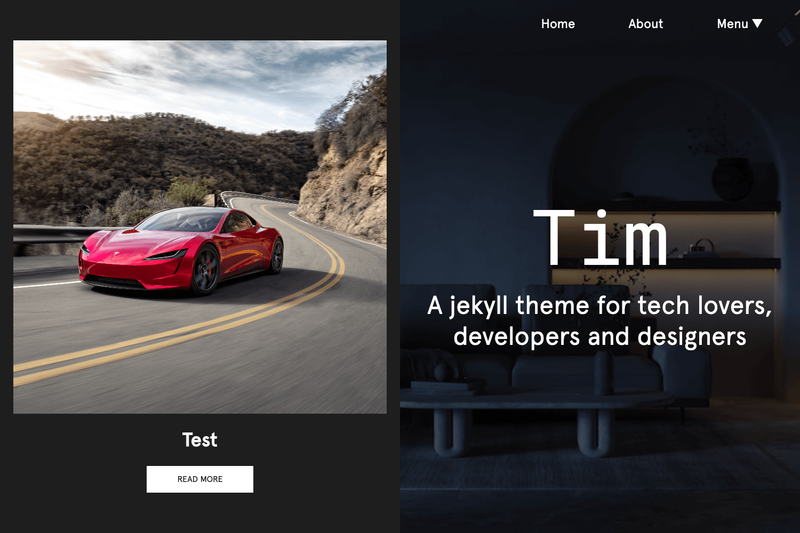
Tim is a Jekyll theme for hackers and designers that turns a standard GitHub repository into a typography-focused blog with responsive layouts and native dark mode support.
What is Tim?
Tim is a Jekyll blog theme described on its source page as "a perfect simple blog theme" for people who care about design and want a very simple blog. It takes Markdown content in a Jekyll repository as input and produces a static blog designed with a meticulous typography choice aimed at helping readers read better. The theme runs on Jekyll, the Ruby-based static site generator, and the source page recommends using Forestry.io as the content management system because Tim was created with it in mind. A live demo is hosted at https://tim.arguiot.com.
What makes Tim stand out?
Tim stands out among Jekyll themes for its typography-first design, its compatibility with the iOS 13/macOS dark mode, and its two-step fork-based installation.
- Typography-first reading experience — the page states the theme was designed with "a very meticulous choice of typography" to help readers read better; the page does not name the specific fonts used.
- Native dark mode support — Tim is compatible with the dark mode in iOS 13 and macOS, so the site follows the user's system appearance on Apple platforms.
- Fully responsive layout — the page says the theme is "fully responsive to improve the user experience," so layouts adapt across screen sizes.
- Broad browser compatibility — the page states Tim is compatible with all current browsers.
- Fork-based installation — setup is described as forking the repository and editing
_config.yml, with no extra build or command-line steps listed on the page. - Forestry.io CMS integration — the theme was created with Forestry.io in mind, which pairs a visual editor with a Git-backed content workflow.
- Blog-focused repository topics — the GitHub repository carrying Tim is tagged with blog, jekyll, jekyll-blog, jekyll-theme, and website, confirming its scope as a personal-blog theme.
Who is Tim for?
Tim is aimed at hackers, designers, and editors who want a simple blog without configuring a multi-purpose theme.
- Hackers and developers — who want a Git-based blogging workflow: fork the theme, write Markdown posts, and publish through Jekyll without a database.
- Designers — who care about typography and want a simple, readable presentation for long-form writing.
- Editors using Forestry.io — who want a visual CMS that writes changes back to the Git repository so non-developers can publish posts.
What can you do with Tim?
With Tim you can publish a Jekyll blog, write technical Markdown posts, and manage content through a Git-backed CMS.
- Personal blogging: publish a static blog with a typography-focused design and dark mode that matches macOS and iOS settings.
- Technical writing: keep posts in Markdown inside a GitHub repository and publish them with the two-step fork-and-configure setup.
- CMS-managed publishing: connect Forestry.io to edit posts visually while Tim renders them as a static Jekyll site for you.
How does Tim work?
Tim runs on the standard Jekyll workflow: you fork the repository, change the _config.yml file with your own site configuration, and Jekyll builds the static blog. The source page also strongly recommends using Forestry.io as the CMS because Tim was created with it in mind. A finished example is viewable at https://tim.arguiot.com.
FAQ
Is Tim free?
The source page presents Tim as a theme you use by forking its GitHub repository and lists no price or payment tiers anywhere on the page. The instructions say to fork the repository to start using it, with no purchase step mentioned.
Does Tim support dark mode?
Yes. The page explicitly states Tim is "compatible with the new dark mode in iOS 13/macOS," meaning the site follows the system appearance on Apple devices.
Is Tim responsive?
Yes. The source page states the theme is "fully responsive to improve the user experience," so the layout adapts to different screen sizes and devices.
What CMS does Tim recommend?
Tim was created with Forestry.io in mind, and the installation instructions "strongly recommend" using it as the content management system. Forestry.io is a Git-backed CMS, which suits the fork-and-configure Jekyll workflow Tim uses.