Newsletter
Join the Community
Subscribe to our newsletter for the latest news and updates
A Hugo theme for personal portfolio sites with minimalist design, multilingual support, and analytics/comment integrations.

Free Bootstrap 4 multi-page personal portfolio template with hero header, sticky nav, portfolio grid, blog, and PHP contact form.

A curation of awesome portfolio ideas for developers and designers
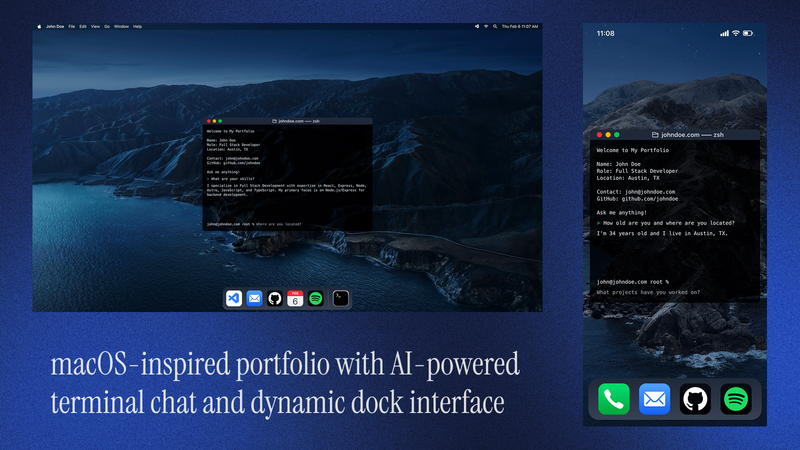
Interactive macOS-inspired portfolio with AI-powered chat, dynamic backgrounds, and SEO optimization
Nim is a free and open-source personal website template built with Next.js 15, React 19, Tailwind CSS v4, and Motion-Primitives.

Minimal Portfolio HTML Template is a static HTML portfolio template using Bootstrap and modernizr.js for responsive, cross-browser pages.
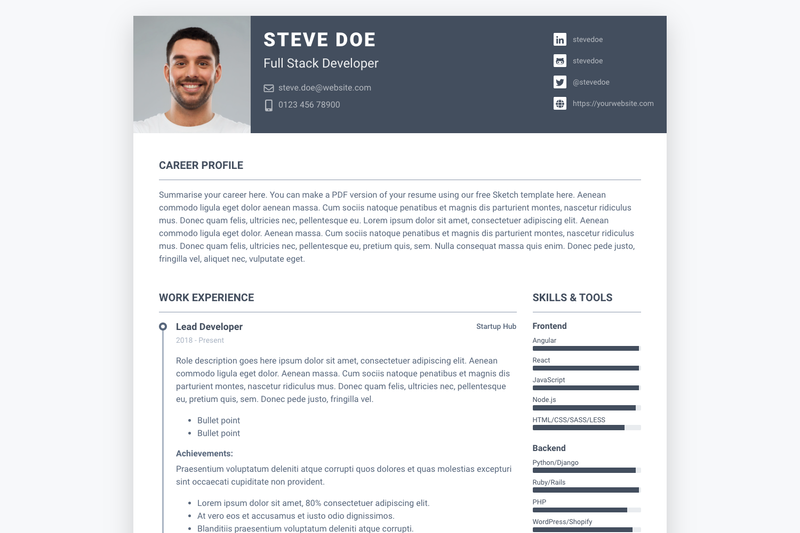
A minimal Jekyll Theme to host your resume (CV)
Toha is a Hugo theme for building personal portfolio and resume websites, combining a minimalist card-based design with full responsiveness and built-in multilingual support.
Toha is an open-source Hugo theme focused on personal portfolios, accepting Markdown content and YAML/JSON data files as input and producing a static HTML site. It runs on Hugo, the static site generator, and is maintained under the hugo-themes GitHub organization. The theme requires Hugo extended version 0.163.0 or higher, Go 1.19 or later for Hugo modules, and Node v18 with npm 8 for its frontend asset pipeline.
The easiest setup is forking the reference repository hugo-toha/toha-example-site and editing its hugo.yaml configuration. Starting from scratch involves initializing a Hugo module with hugo mod init, adding github.com/hugo-toha/toha/v4 as a module import, running hugo mod tidy, then generating Node dependencies with hugo mod npm pack, installing them with npm install, and finally serving the site with hugo server -w.
Yes, Toha is an open-source theme hosted on GitHub under the hugo-themes organization, and you can use it without paying any licensing fee. Pull requests and bug reports are welcome.
Toha needs Hugo extended version 0.163.0 or higher, Go 1.19 or later for Hugo module support, and Node v18 or newer with npm 8 or later for asset generation.
Toha integrates with Disqus, Valine, Utterances, and Giscus. You enable one of these through the Hugo configuration file, and each uses its own server or GitHub-based storage for comments.
GoatCounter, counter.dev, Google Analytics, Matomo/Piwik, and Umami are all supported, so you can choose between privacy-friendly lightweight counters and full-featured analytics platforms.
Yes, Toha includes translations for 23 languages, from English and Spanish to Japanese, Hindi, Arabic, and Hebrew. You can add more languages by following the translation guide in the documentation.