TrunkBasedDevelopment.com
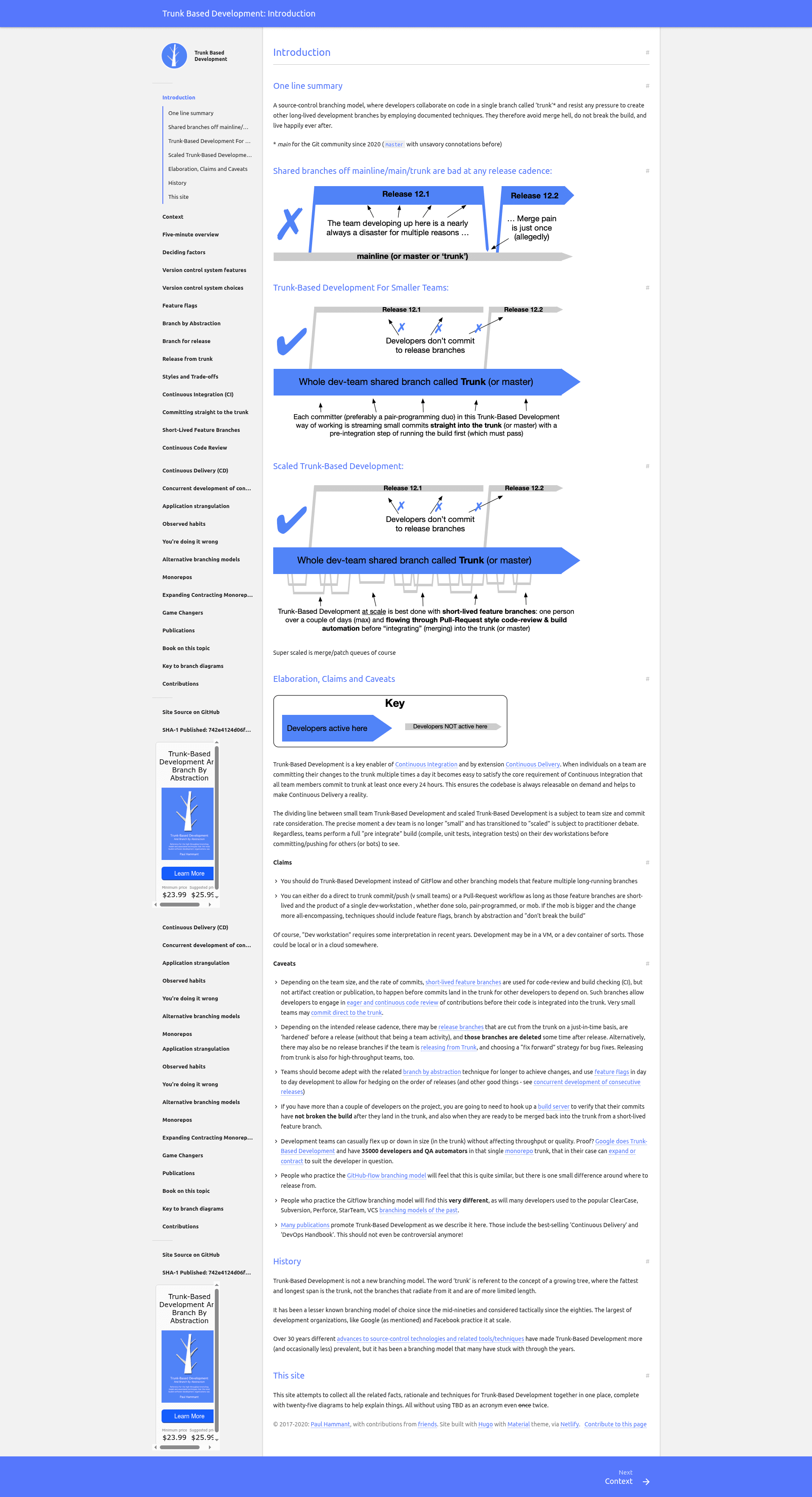
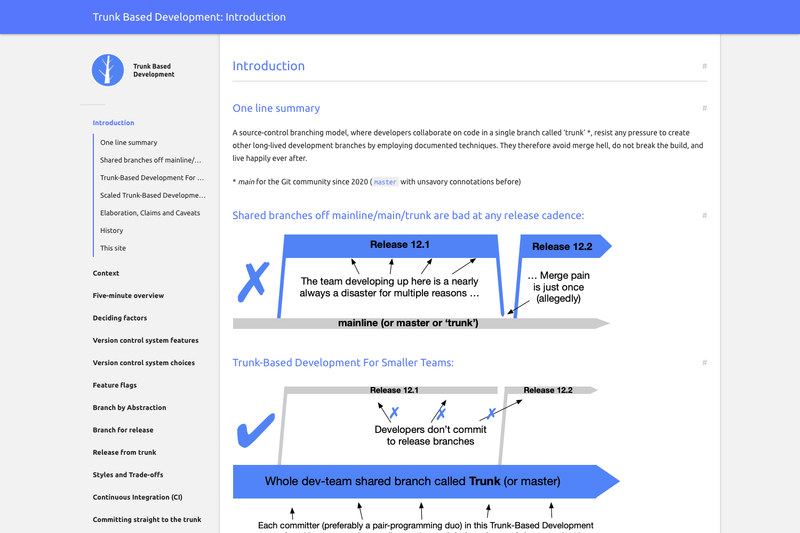
TrunkBasedDevelopment.com is the open-source Hugo static site that teaches trunk-based development — the branching model where developers integrate small changes into a shared trunk frequently. This repository contains the complete markdown source for the site, including articles, reference sections, and Chinese translations maintained in separate branches.
What is TrunkBasedDevelopment.com?
TrunkBasedDevelopment.com is a Hugo-powered static website and its source repository. It takes markdown content as input and generates a multi-page HTML site as output, with the Hugo theme governing layout. The project lives on GitHub with 543 stars and is developed through community pull requests, with contribution rules documented in the repository readme.
Key Features
- Hugo static site generator — The site runs on Hugo; contributors run
hugo serverlocally and benefit from hot-reloading while editing markdown. - Multi-level audience content — Contribution rule 2 requires content to keep beginner, intermediate, and advanced readers in mind, so articles layer explanations for different skill levels.
- Bilingual branch structure — English content lives on the
masterbranch, while Chinese translations are kept on thecnandtwbranches, with merge tracking used to keep translations aligned with English changes. - Community contribution flow — Non-committers contribute via pull requests; committers can merge directly. The readme also specifies that English expansions go to
masterand Chinese translations go to the respective translation branches. - Structured reference sections — Blog entries and tweets are placed in collapsed
refssections without inline forward links, and must appear in chronological order per section. - Inline book and report links — Links to mainstream books and Gartner-style reports appear inline, and can use affiliate codes that contribute to the original authors.
- Hugo theme constraint — The theme does not render H1 tags correctly, so the repository rules forbid using H1 headings in markdown sources.
- Front-matter date controls — Dates in markdown front matter are used to drive the previous/next article navigation, so contributors must be careful with them.
Who is it for?
- Software developers — Use the site as a reference for implementing trunk-based development in their teams, with practical guidance on branching and integration.
- Engineering managers — Evaluate whether trunk-based development fits their organization by reading the multi-level articles and linked references.
- Technical writers and translators — Contribute new English articles to
masteror maintain Chinese translations on thecnandtwbranches, following the documented contribution rules. - Hugo site builders — Study a real-world Hugo project that demonstrates bilingual branch management, custom contribution workflows, and a content-heavy structure.
What can you do with it?
- Run the site locally: Install Hugo, clone the repository,
cdinto thetbddirectory, and runhugo serverto preview the site atlocalhost:1313with hot reload on every edit. - Contribute English content: Expand the existing material by opening a pull request to the
masterbranch, following the rule to keep content multi-level and free of inflamed language. - Maintain Chinese translations: Work on the
cnortwbranch to keep translations in sync with the English content, leveraging merge tracking to stay aligned. - Extend the website: Add new sections while respecting the theme constraints, such as avoiding H1 tags and preserving chronological order in reference sections.
How does TrunkBasedDevelopment.com work?
The workflow is documented in the readme: install Hugo, clone the repo, cd into the tbd directory, and run hugo server. The site then serves on localhost:1313, and any edit to a markdown file triggers a hot reload so contributors see changes instantly. Contributions arrive as pull requests, with English changes targeting master and Chinese changes targeting cn or tw.
FAQ
How do I run this site locally?
Install Hugo first, then clone the repository and cd into the tbd directory. Run hugo server and open http://localhost:1313 in your browser. Hugo hot-reloads pages as you edit, so you can see your changes live without restarting the server.
Can I contribute to the site if I'm not a committer?
Yes. The readme states that pull requests are the way to contribute for non-committers. You can open a pull request with your changes, and maintainers or committers will review and merge them. English content goes to the master branch, while Chinese translations go to the cn or tw branches.
What are the main contribution rules?
The repository lists rules such as keeping content multi-level for beginner, intermediate, and advanced readers; avoiding inflamed language; abiding by the golden rule; placing blog and tweet links in collapsed refs sections in chronological order; linking mainstream books inline with optional affiliate codes; avoiding H1 tags; and expanding abbreviations like "Repo" and "Deps" to their long forms.
Does this project include translations?
Yes. Chinese translations are maintained on the cn and tw branches, and the readme says these should always reflect the English content so merge tracking can keep the two in step. English content is on the master branch.
What topics does the repository cover?
The GitHub metadata lists topics including "book", "hugo", and "trunk". The site's focus is trunk-based development, a version control branching model; the repo currently has 543 stars on GitHub.