Newsletter
Join the Community
Subscribe to our newsletter for the latest news and updates

A static HTML/CSS/JS portfolio website template with sections for projects, skills, and contact, hosted on GitHub Pages.
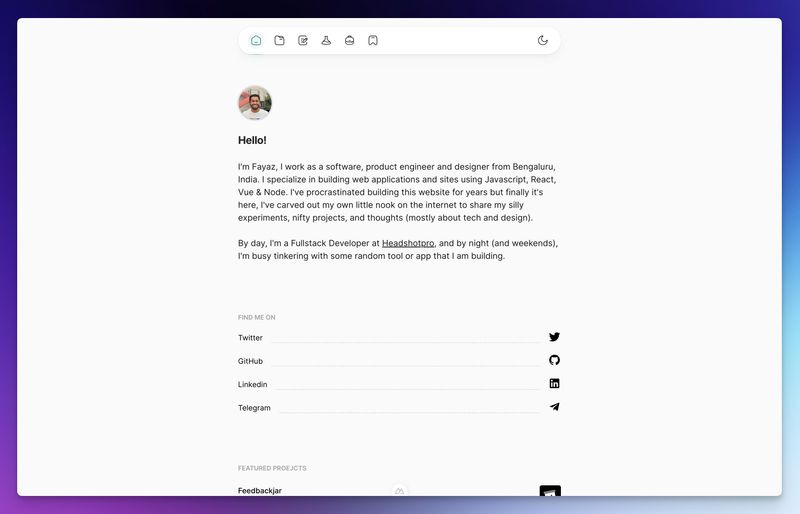
A minimal personal portfolio template built with Nuxt 3, Nuxt Content, and Tailwind CSS for developers and designers.
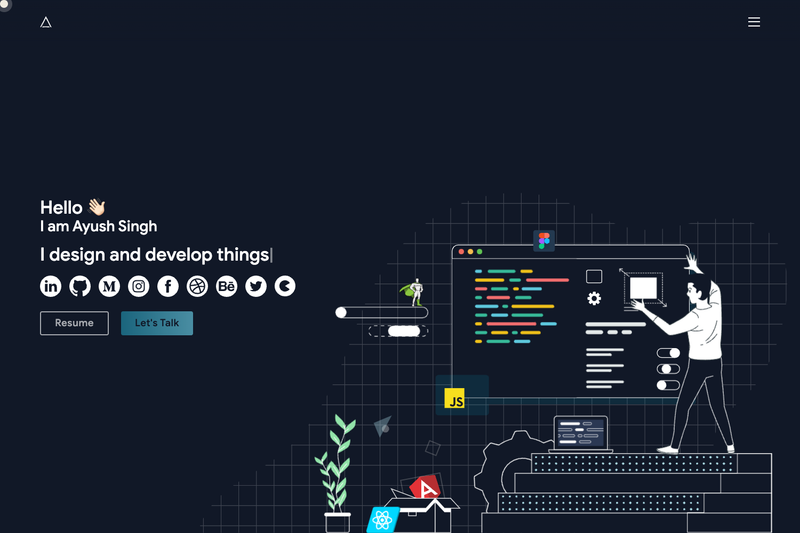
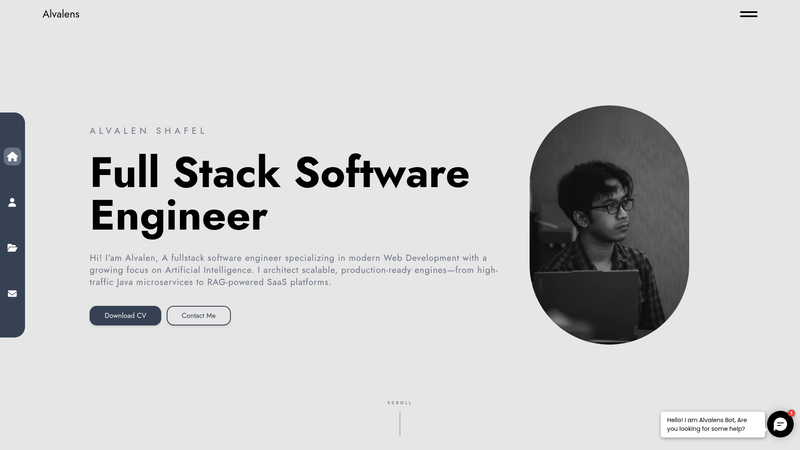
Interactive portfolio template built with Next.js, GSAP, Tailwind, and React.
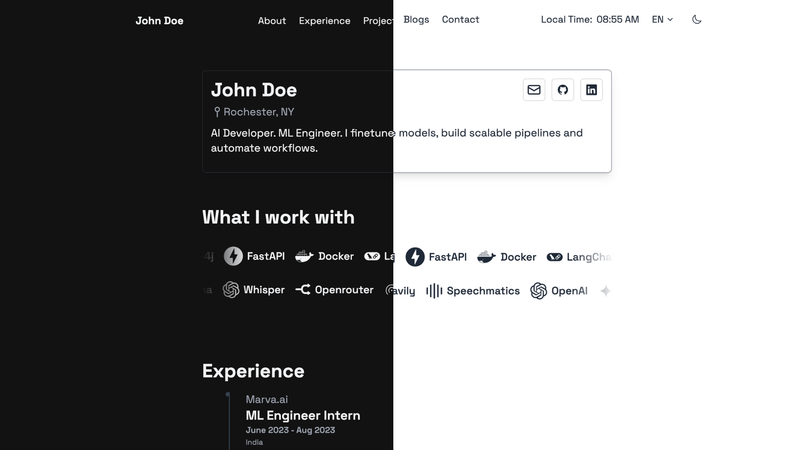
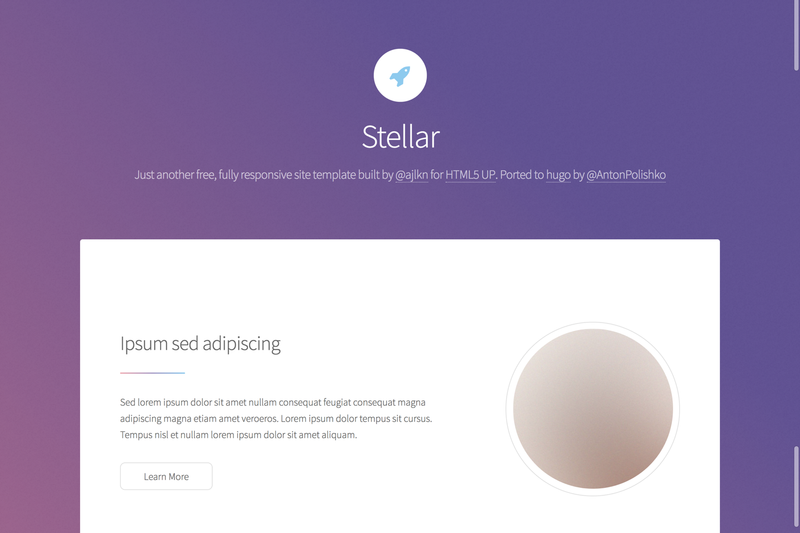
A clean, minimalistic Hugo theme with dark/light mode, Tailwind CSS, multilingual support, and blog-ready pages.
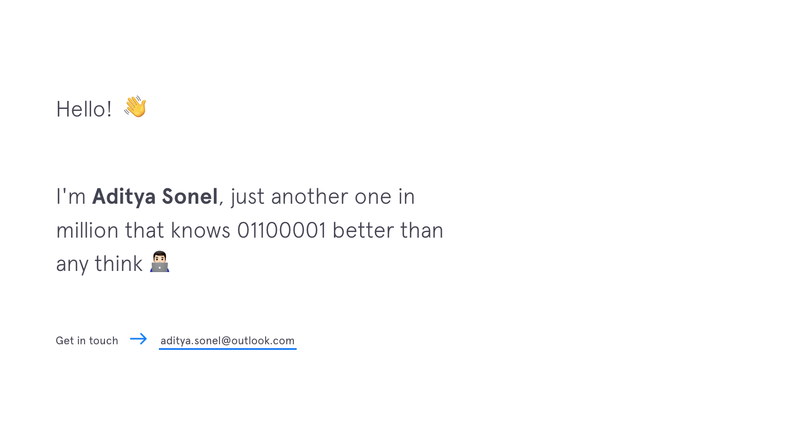
A single-page portfolio template for developers to showcase skills, experience, and open-source projects on GitHub Pages.
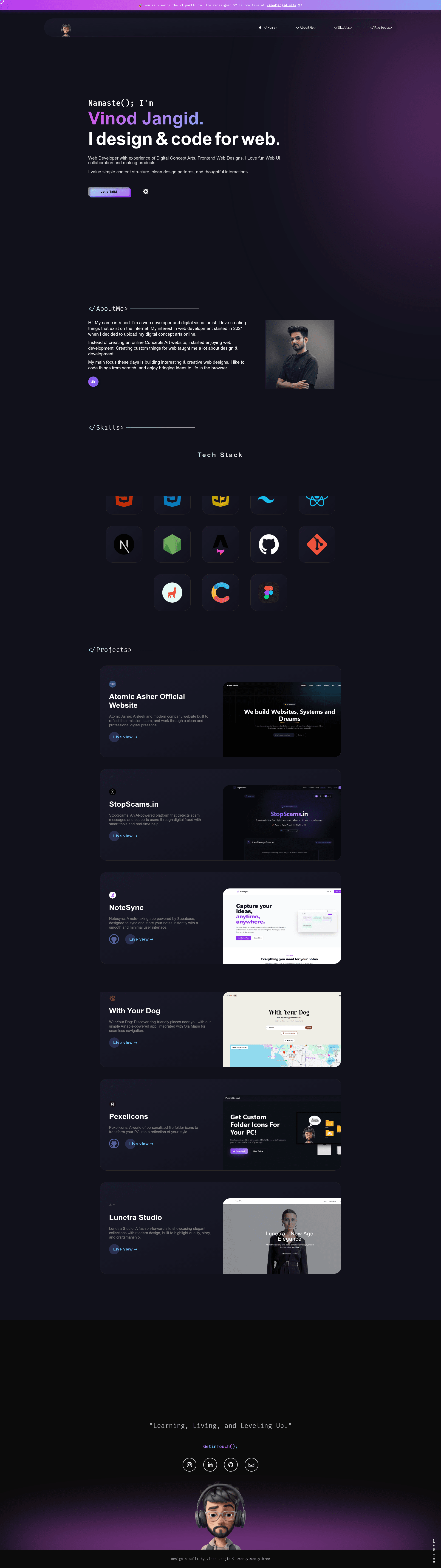
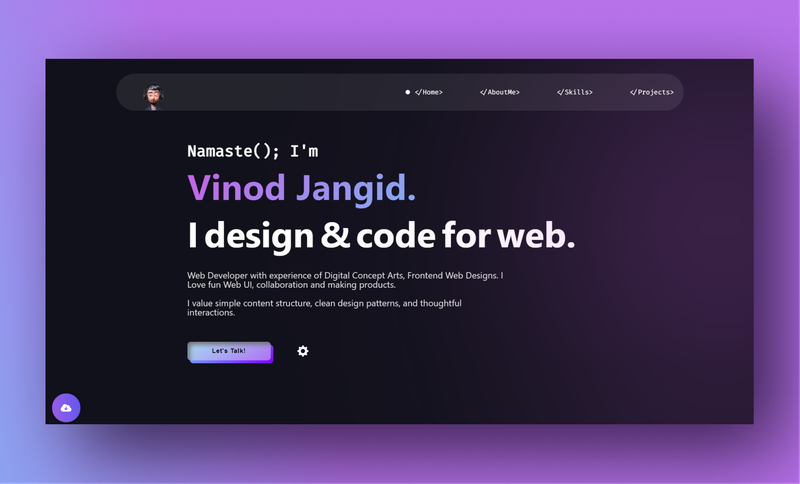
vinodjangid07.github.io is a static, single-page portfolio template built with plain HTML, CSS, and JavaScript and designed for free hosting on GitHub Pages.
It is the open-source personal portfolio of developer Vinod Jangid (Portfolio V1), which doubles as a reusable template. It takes content that you edit directly in index.html — projects, about text, skills, work experience, and contact details — and renders it as a responsive single-page site. The site runs entirely in the browser with no backend, making it deployable to any static host, with GitHub Pages being the documented target. The repository is maintained, with the latest release dated 11 Jan 2024, and carries an MIT license.
Free — the project is released under the MIT License, so you can use it with no cost. The only required action is including the license text if you redistribute the code.
Yes. The repository is licensed under MIT, which allows free personal and commercial use, modification, and redistribution with attribution.
Clone or fork the repository, customize index.html, then push it to a new repository named username.github.io. Go to the repository's Settings → Pages and set the source to the main branch; the site will publish at https://username.github.io.
No. The template is built with vanilla HTML5, CSS3, and JavaScript. You only need to edit HTML and optionally add your own CSS or JS.
Yes. In the head tag of index.html you'll find an analyticsId and a Google Search Console ID. Delete the author's values and insert your own to track visits.
The page includes a Mini intro, About me, Skills, Projects, and Contact me sections. The README lists exactly those five.