Newsletter
Join the Community
Subscribe to our newsletter for the latest news and updates

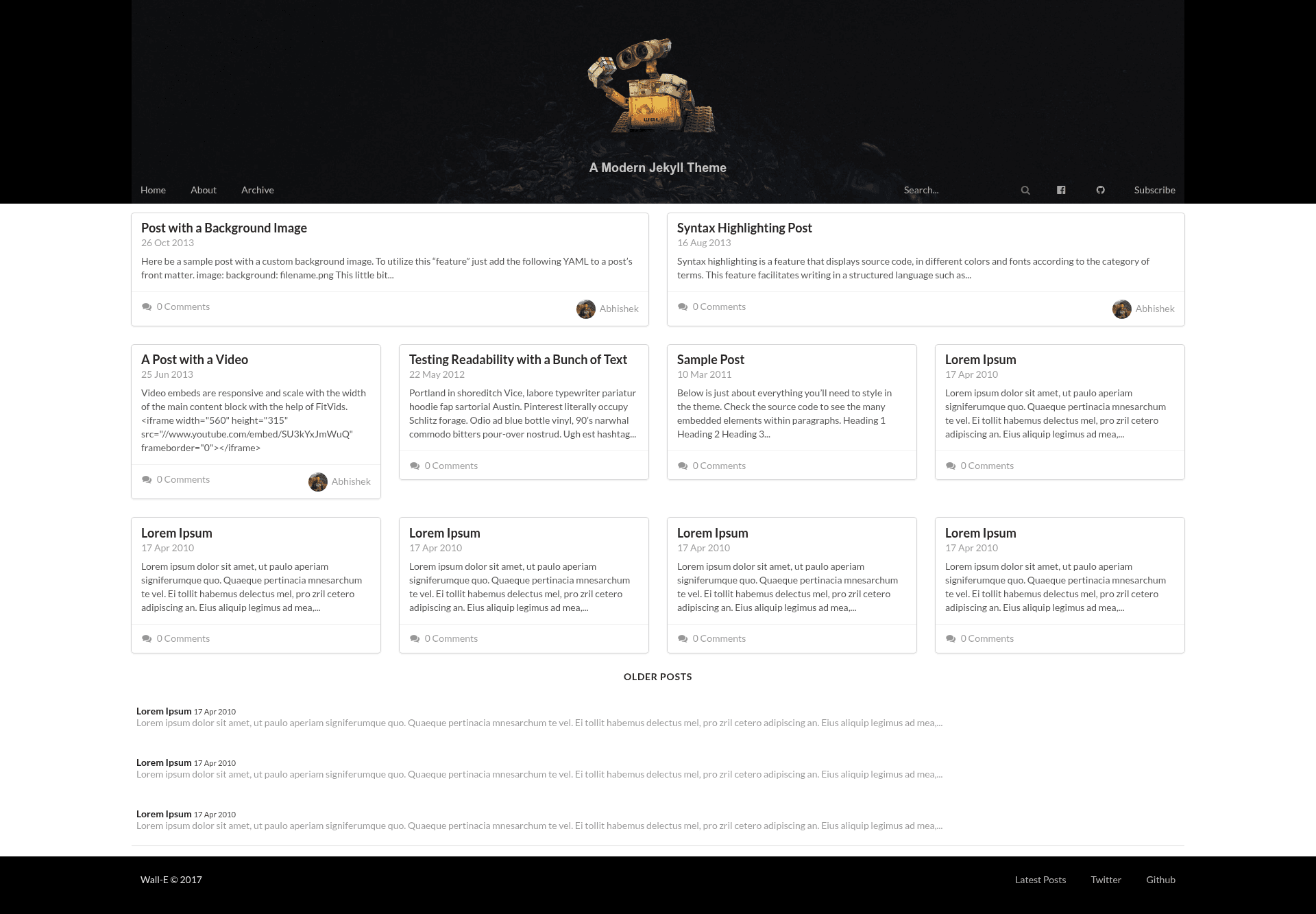
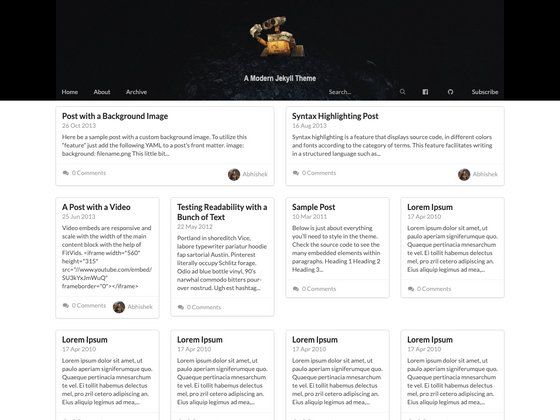
A modern Jekyll theme with a magazine-style grid frontpage, beautiful typography, and integrated Disqus.
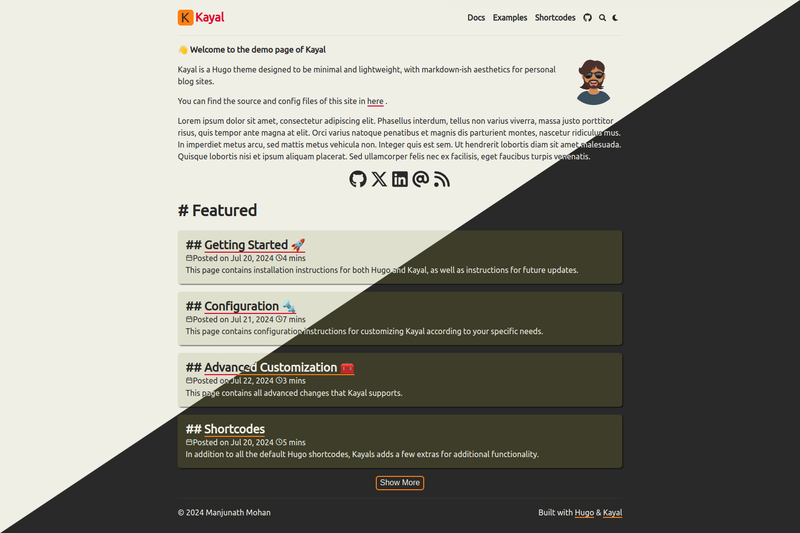
Minimal and lightweight Hugo theme with markdown-ish aesthetics for personal blog sites.
A work-in-progress Jekyll theme that adapts Ghost's Casper design, with a live demo and open-source code.
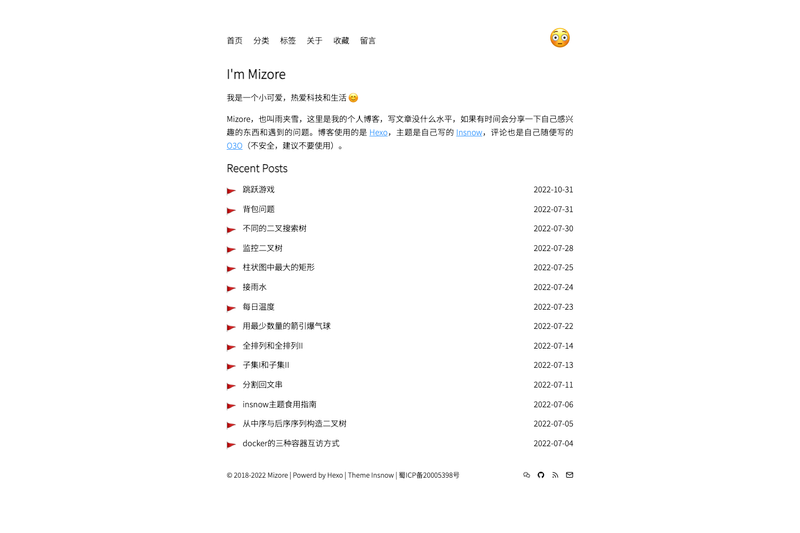
A simple, open-source Hexo theme called insnow for personal blogs, styled with Stylus and using Markdown for content.
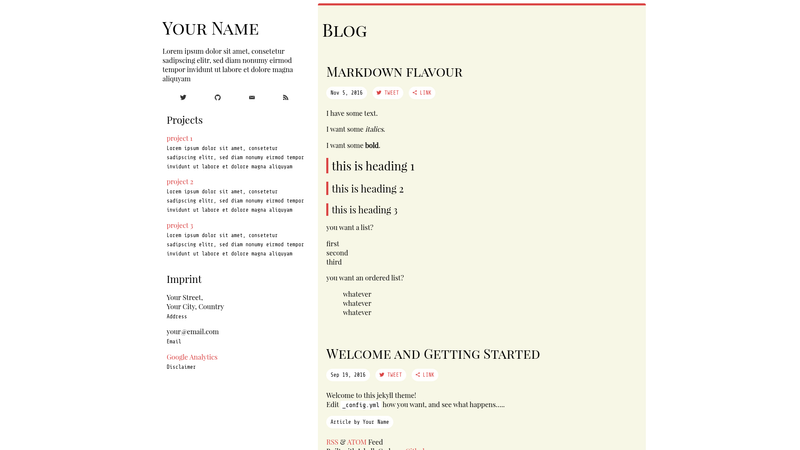
A minimal single-page Jekyll blog theme for GitHub Pages, configured entirely through _config.yml with accent colors, analytics, and language support.
Wall-E is a free, open-source Jekyll theme that creates a magazine-style grid frontpage for personal blogs, with Semantic UI responsiveness, Google search integration, and built-in Disqus comments.
Wall-E is a modern Jekyll theme designed for personal blogs. It takes standard Jekyll Markdown posts and renders them into a magazine-like grid layout on the homepage, with a one-column post template that keeps attention on the content. The theme is built on Semantic UI, uses League Gothic and Open Sans fonts, and is distributed on GitHub under the MIT license. It runs on any Jekyll installation and is commonly deployed to GitHub Pages via the username.github.io workflow.
disqus_shortname variable in _includes/disqus.html and _includes/disqus-count.html with your own username to activate it.assets/js/main.js.assets/css/mobile.css, with screenshots demonstrating portrait and landscape views.your-username.github.io, delete the sample posts, and edit _config.yml.Wall-E is aimed at content creators and developers who want a clean, reading-focused blog without designing from scratch.
your-username.github.io, and push content to have a live static blog in minutes._includes files and asset stylesheets.Using Wall-E starts by setting up Jekyll and forking the repository. After cloning your fork, you delete the sample posts in _posts and the tmp directory, then edit _config.yml with your site variables and replace the Disqus shortname in two includes. Running jekyll serve makes the blog live at localhost:4000 for local testing, and pushing to GitHub publishes it to your-username.github.io.
Wall-E is free and open source under the MIT license. There are no paid tiers or premium features; you can use, modify, and redistribute it without licensing fees.
Yes, Wall-E is open-sourced under the MIT license, so the theme is completely free to use, modify, and redistribute, even for commercial projects.
The theme works out of the box, but you need a basic Jekyll installation to build the site. The README links to Jekyll's official installation guide to get started.
Replace the value of the disqus_shortname variable in both _includes/disqus.html and _includes/disqus-count.html with your Disqus username, then rebuild the site.
Yes, the recommended workflow is to fork the repository, rename the fork to your-username.github.io, and push your changes. The blog then goes live at that URL automatically.
Yes, the theme is built with Semantic UI and includes a separate mobile CSS file. Screenshots in the README show the homepage and posts in portrait and landscape mobile views.