Newsletter
Join the Community
Subscribe to our newsletter for the latest news and updates

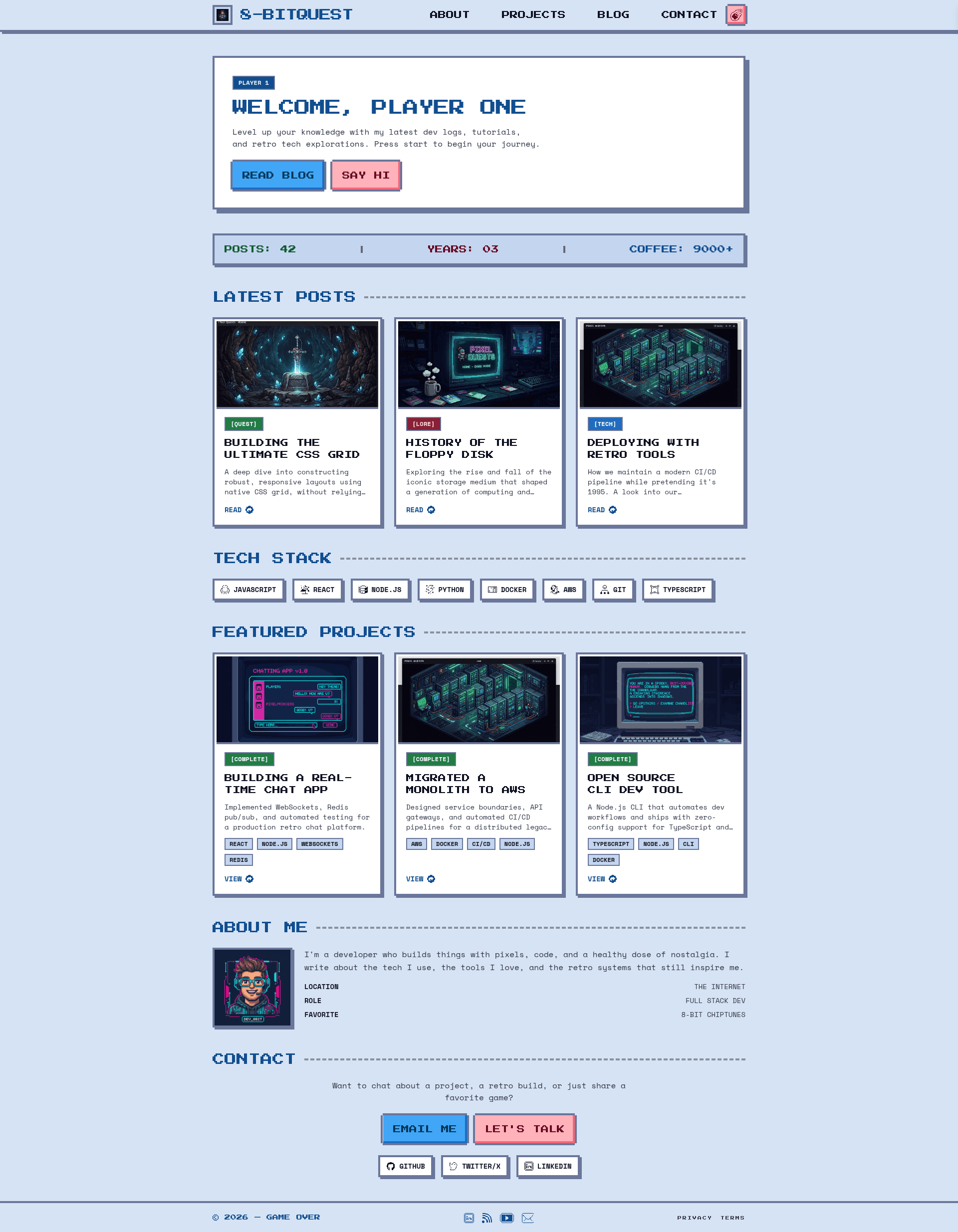
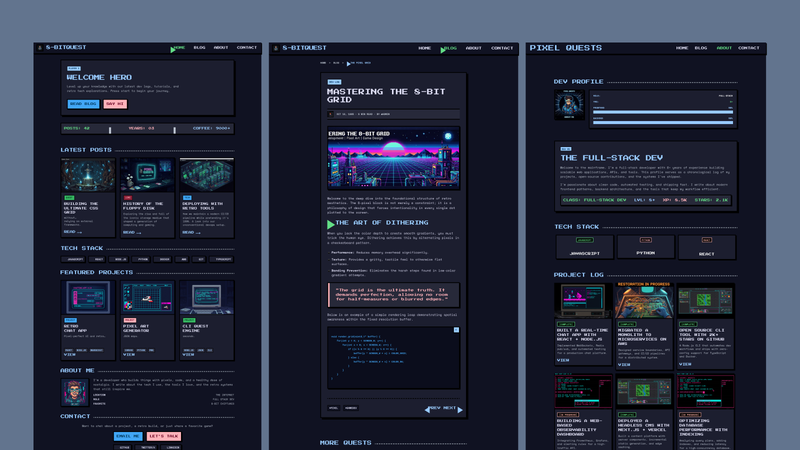
A retro pixel-art developer portfolio theme for Astro 7 with MDX blog, case-study projects, and a JavaScript-free contact form.
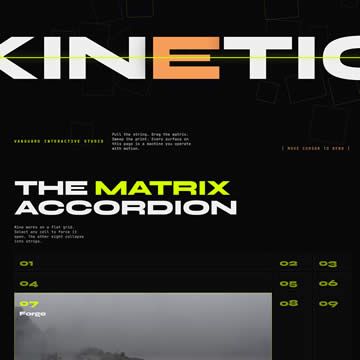
Free vanilla HTML5/CSS3/JS one-page template with interactive hero, grid accordion, and lenticular effects for portfolios and agencies.
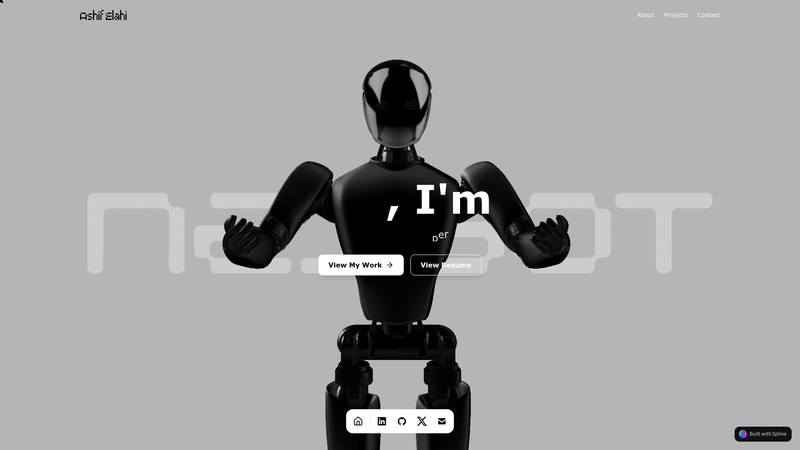
A personal portfolio website built with React, Vite, TailwindCSS, Framer Motion, GSAP, Spline, and Lenis.
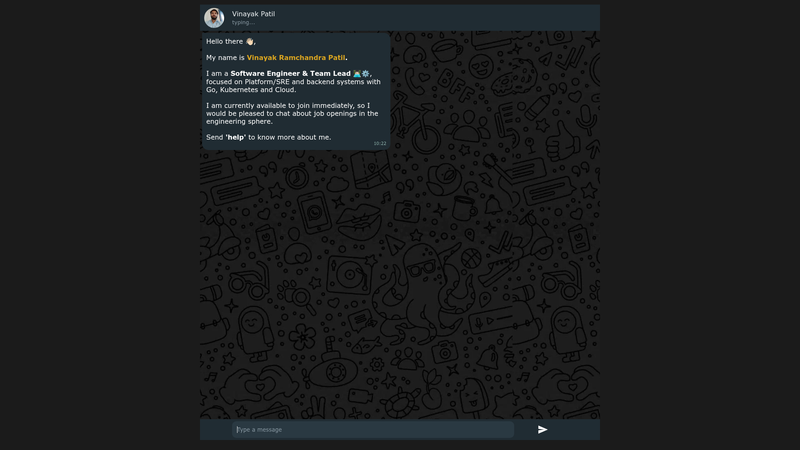
A lightweight personal portfolio template styled like a WhatsApp chat, with auto-replies, resume download, and map support.
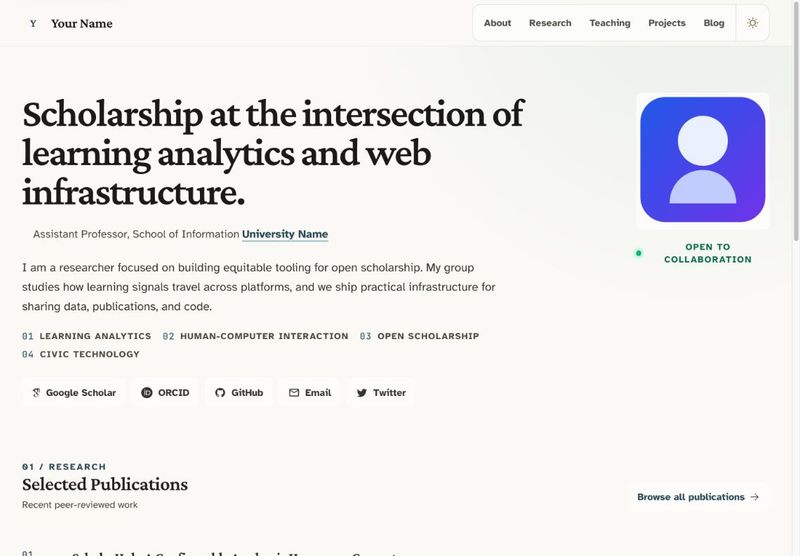
A refined Astro theme for academic portfolios, research profiles, and personal scholar websites.
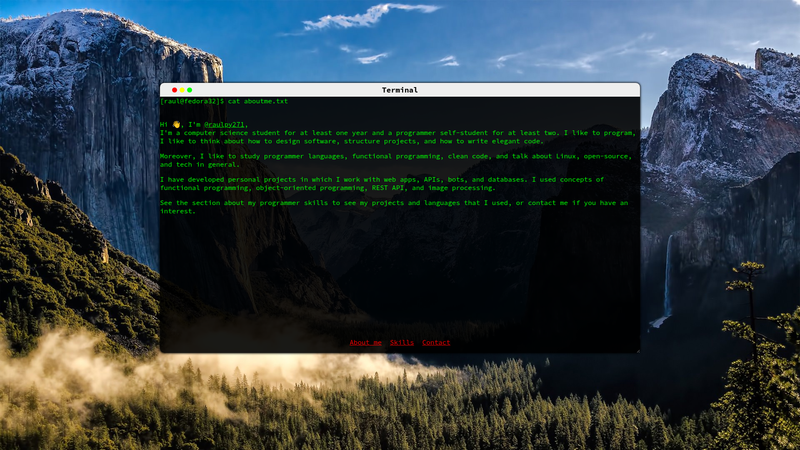
A ReactJS portfolio template that presents personal info inside a draggable, resizable MacOS-style terminal window.
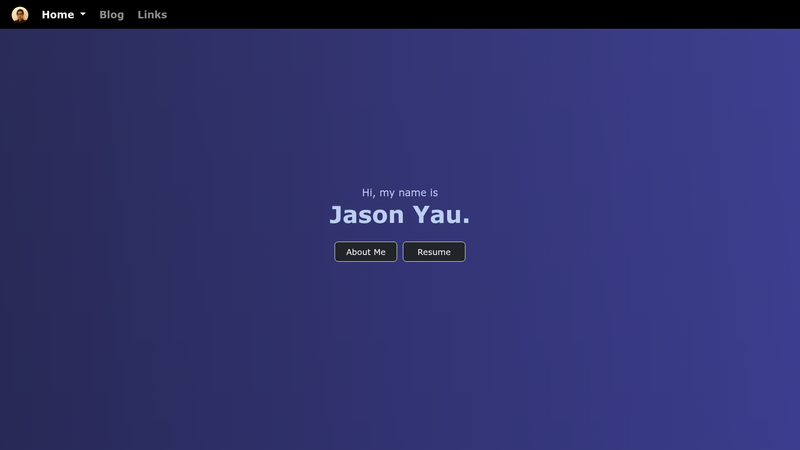
Fully customizable personal portfolio and blog website made with Spring Boot
8-BitQuest is a retro 8-bit, pixel-art developer-portfolio theme for Astro 7 that ships as a complete working site — Home, About, Blog, Projects, and a server-rendered Contact page — with a CSS-first token architecture and light and dark themes built in.
8-BitQuest is an Astro theme that turns typed content collections and a small set of config files into a static developer portfolio. It runs on Astro 7, Tailwind CSS v4, and TypeScript in strict mode, and its only server-rendered route is /contact/, which posts through a Resend-backed Astro action. The theme includes 20 pages, six sample blog posts, six sample projects, and a dev-only /examples/ui catalog, all sourced from the original Figma design.
8-BitQuest is aimed at developers, designers, and small studios that want a pixel-art portfolio with a blog and case-study projects. A frontend developer can clone the repo and have a running site with pnpm dev and no configuration; an indie game studio can replace the sample projects with structured case studies; and a solo developer who wants a no-CMS site can use the built-in MDX blog and the contact form that works with JavaScript disabled.
Run pnpm install, then pnpm dev to serve localhost:4321; the project runs with no configuration and no API keys, and the contact form accepts a submission then reports a send failure until Resend keys are added. Site-wide facts are edited in src/config, sample content is replaced in src/data, and a production deploy runs astro build plus wrangler deploy to Cloudflare Workers. The before-you-deploy checklist covers setting SITE_URL, adding RESEND_API_KEY and CONTACT_TO_EMAIL, replacing public/og.jpg, filling sameAs social URLs, and removing the dev UI catalog.
Yes. The /contact/ page uses a native form method POST bound to an Astro action, so it works with JavaScript disabled. The server re-validates with contactSchema, runs a honeypot and a submit-time spam gate, and sends mail through a plain fetch to the Resend API with a 10-second timeout.
No. The development server runs with no configuration and no keys; only the contact form needs keys, specifically RESEND_API_KEY and CONTACT_TO_EMAIL, with an optional CONTACT_FROM_EMAIL. Missing keys are read at request time rather than at build time, so the build never breaks.
The default setup deploys to Cloudflare Workers: the build emits static pages plus one Worker that renders the on-demand /contact/ route. The adapter in astro.config.mjs can be swapped to @astrojs/node, @astrojs/netlify, or @astrojs/vercel with a two-line change.
Yes. Remove the contact form or set its prerender flag to true and drop the @astrojs/cloudflare adapter, and any static host can serve the dist/ output. Doing this also removes the duplicate stylesheet that the mixed build emits for the on-demand /contact/ route.