Newsletter
Join the Community
Subscribe to our newsletter for the latest news and updates

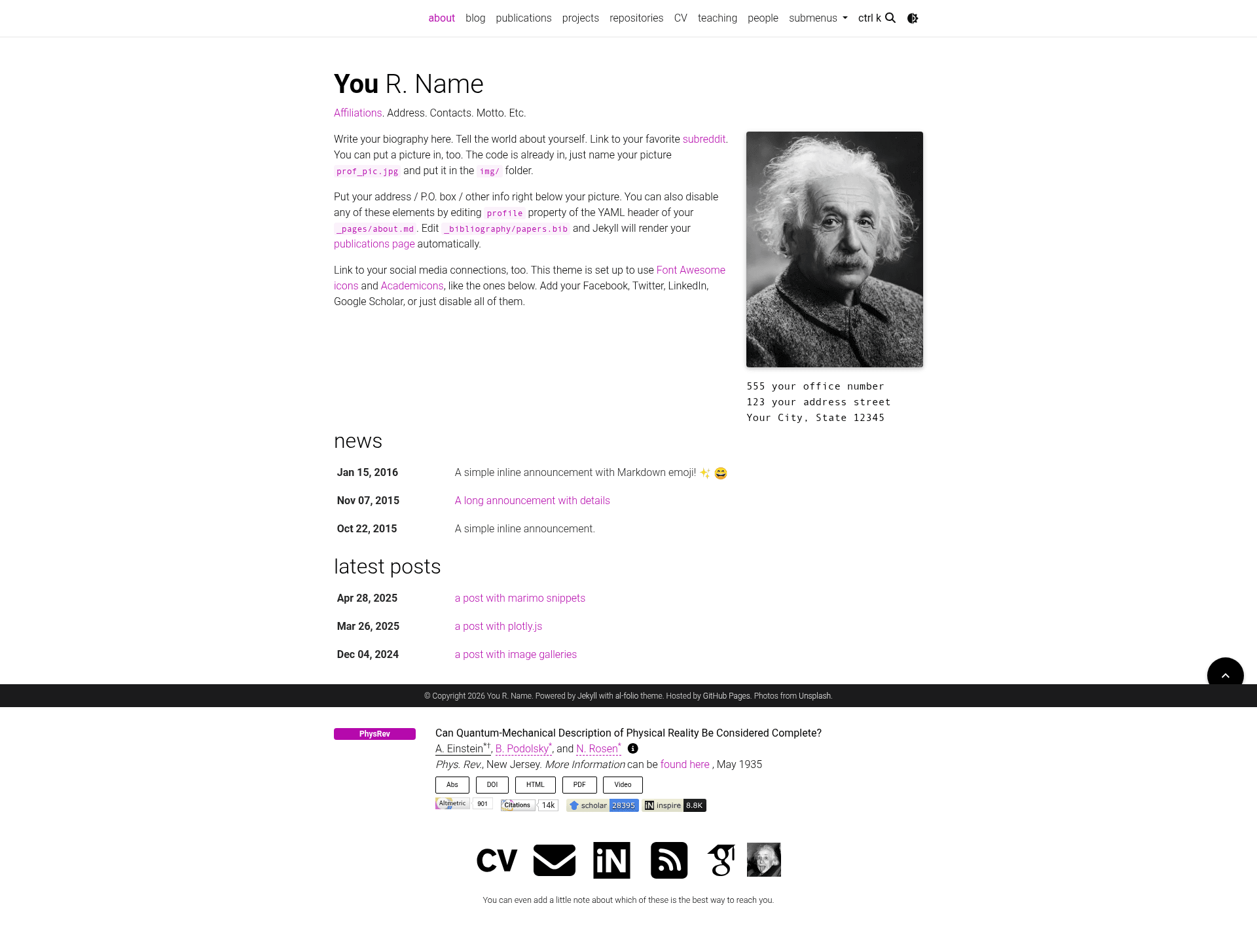
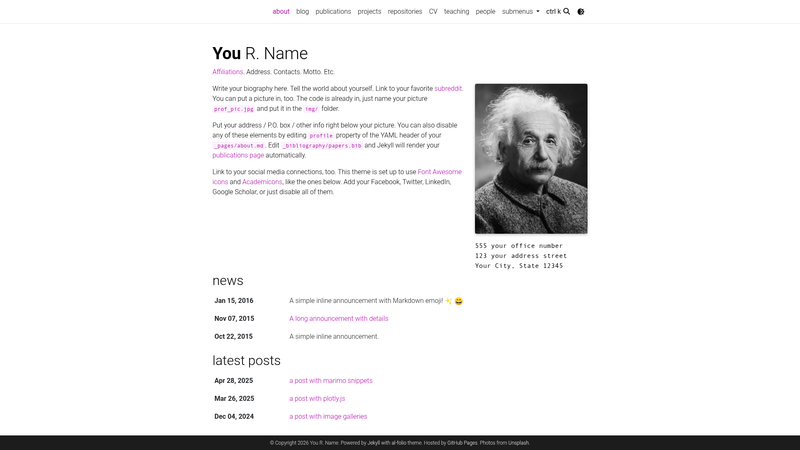
A simple, clean, and responsive Jekyll starter for academic websites with publications, CV, and blog pages.
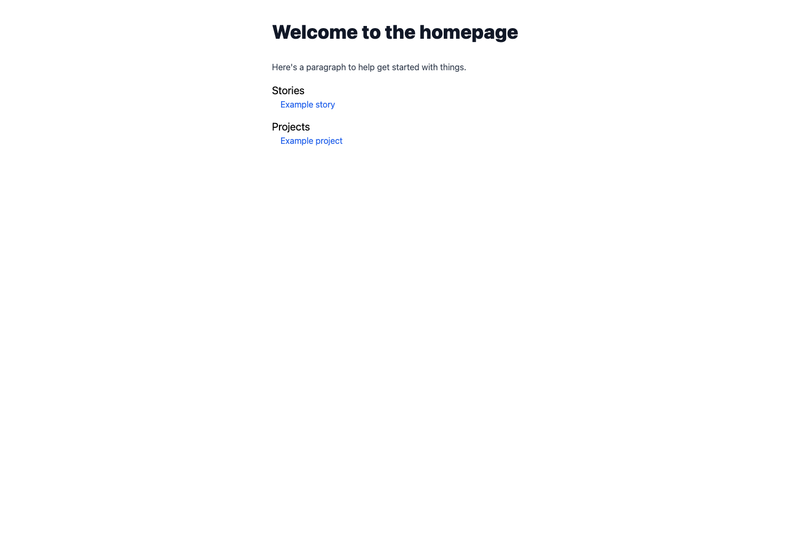
A minimal Eleventy + Tailwind CSS starter kit for static sites with production build and GitHub Pages deploy.
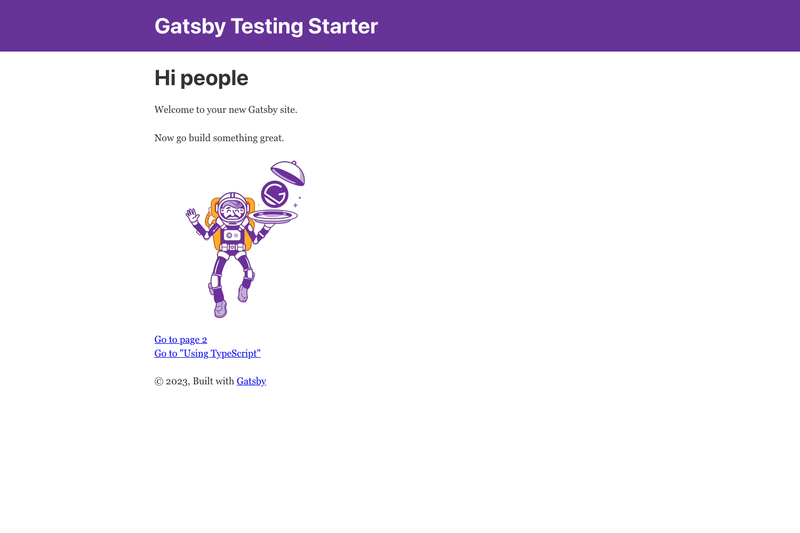
A Gatsby starter with configured testing frameworks and tools for each layer of the Test Pyramid.
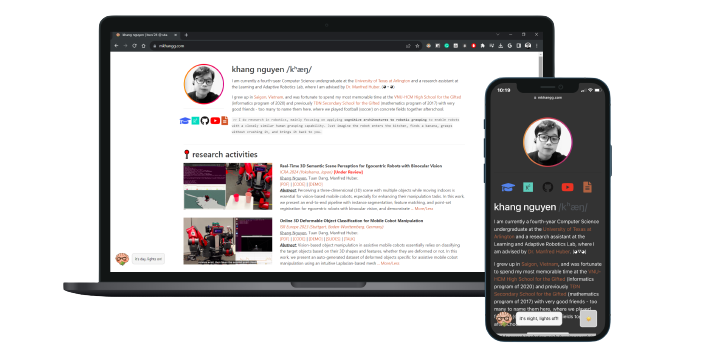
Simple Jekyll-theme website template for academic websites, resume pages, and research portfolios with YAML-based content management.
Battery-packed template / boilerplate to initialize PWA-ready Next.js app with TailwindCSS & TypeScript setup ✨
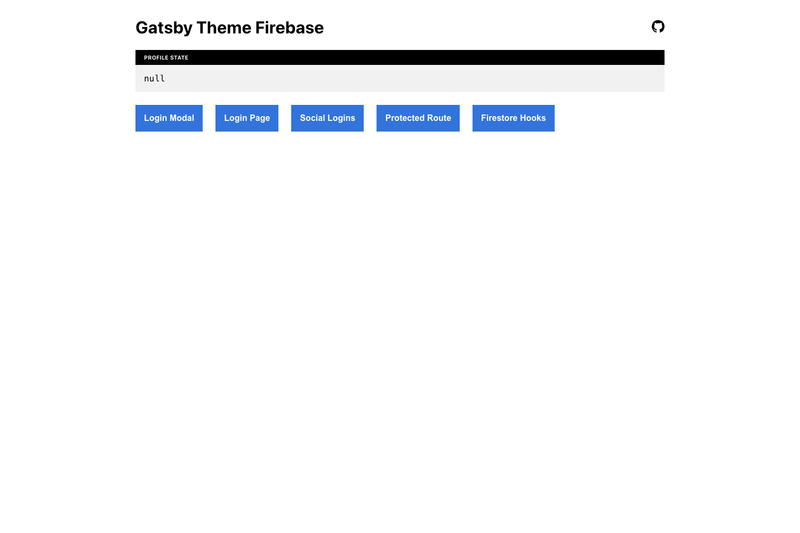
A Gatsby Theme for adding Firebase to your application.
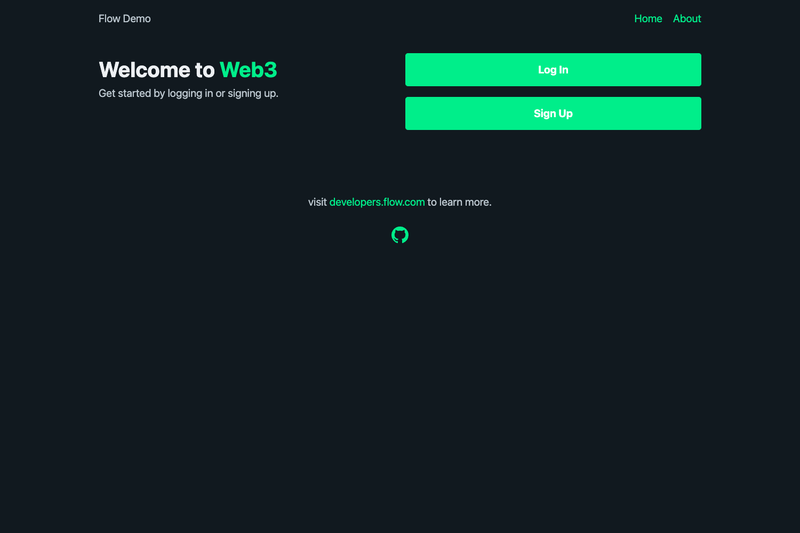
A basic React/NextJS project showing how to use the Flow Client Library (FCL)
al-folio is a free, open-source Jekyll starter for academic websites that generates a full homepage, publications list, CV, blog, and lab pages from data files and BibTeX.
al-folio is a simple, clean, and responsive Jekyll starter for academic websites, maintained by Maruan Al-Dhedivat and a team including Rohan Deb Sarkar, Amir Pourmand, and George. In v1.x it is a thin starter rather than a monolithic theme: runtime features ship as independently versioned Ruby gem plugins, so sites pick up fixes by bumping a pinned version in the Gemfile instead of merging theme internals. It takes content in the form of YAML data files, Markdown posts, and BibTeX bibliographies, and outputs a static site ready to deploy on GitHub Pages or any static host.
al-folio is installed by clicking "Use this template" on GitHub rather than forking, which prevents accidental pull requests. Setup steps are in docs/QUICKSTART.md — you edit _config.yml, data files, and posts, then commit; a GitHub Actions workflow builds and deploys the static site. For existing customized forks, the recommended path is an agent-assisted migration using the al-folio v1 migration skill and the al_folio_upgrade audit.
al-folio is free and open source under the MIT License.
Yes, al-folio is released under the MIT License, so it's free to use, modify, and redistribute. You only pay for hosting if you choose a non-GitHub-Pages provider.
Use the "Use this template" button on GitHub. Forking keeps a link to the main repository and risks accidentally pushing your personal changes to alshedivat/al-folio as pull requests. If you already forked, work on a dedicated branch and never create PRs to the main repo.
The starter ships with home, publications, CV, projects, people, repositories, and blog pages. Publications are generated from BibTeX, the CV from cv.yml or resume.json, and people from _data — content is driven by data files rather than template edits.
Yes. Comments via Giscus or Disqus, analytics via Google, Cronitor, Pirsch, Openpanel, Cloudflare, or Simple, and GDPR cookie consent are bundled as plugins. Most are "setup" rows, meaning you must supply your own key or ID in _config.yml before they render anything.
The theme follows the visitor's system preference and offers a sun/moon toggle in the navbar that persists across visits. Both light and dark modes are included in the starter's al-folio-core plugin.