Newsletter
Join the Community
Subscribe to our newsletter for the latest news and updates

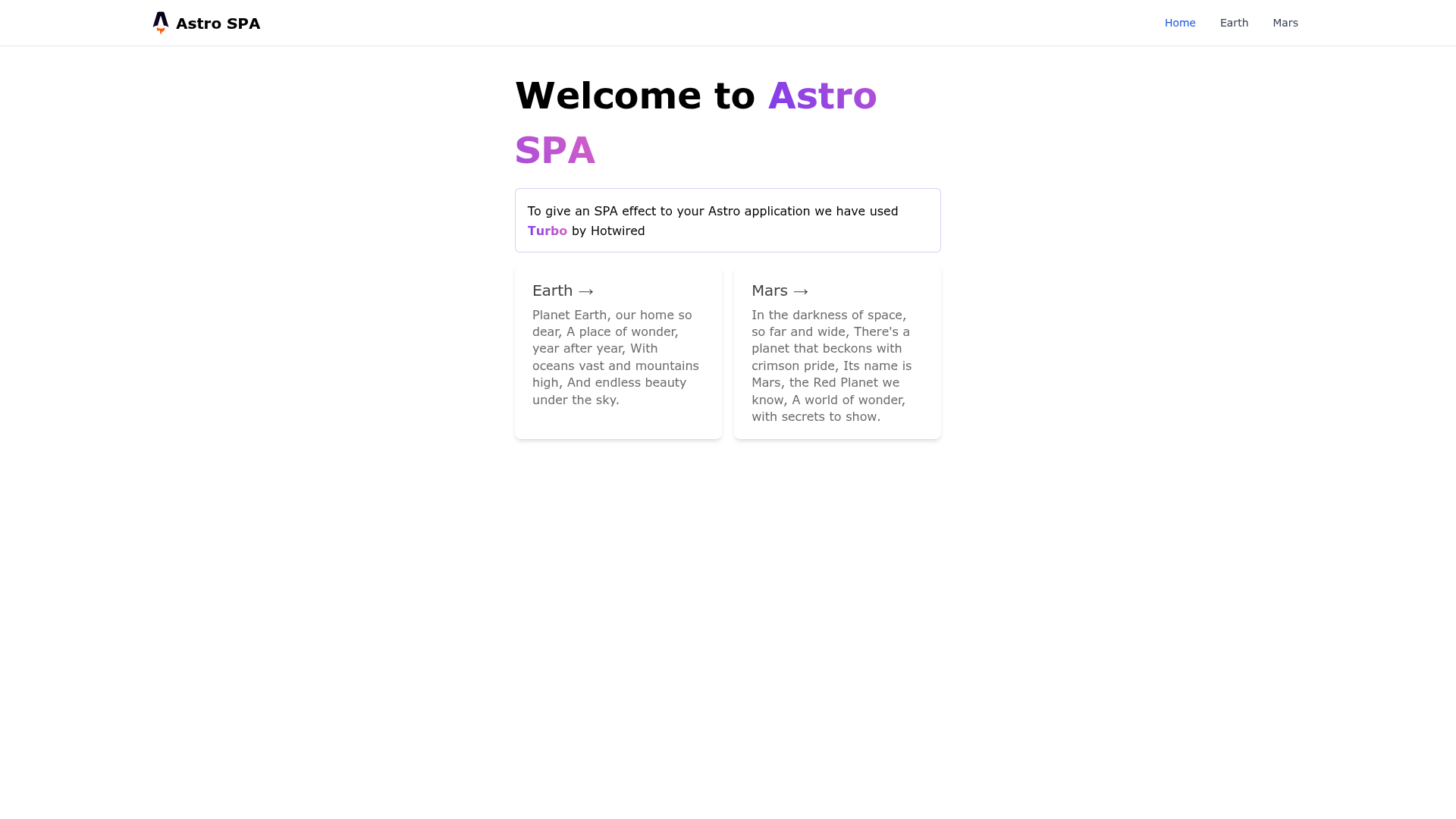
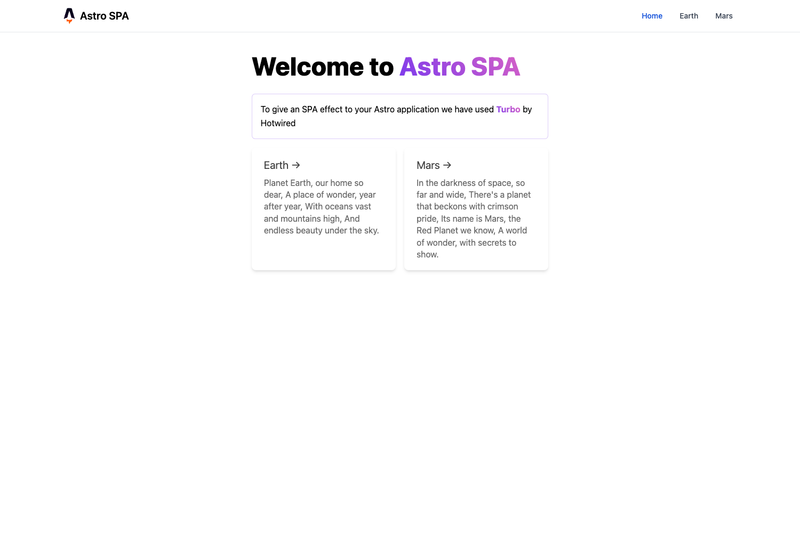
A simple boilerplate to get started with Astro JS & Tailwind CSS with SPA behaviour.
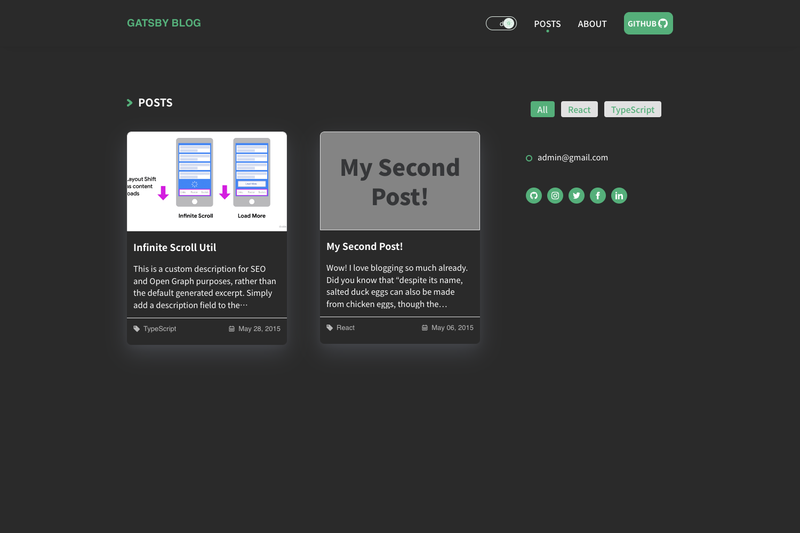
A simple blog starter focused on the post, and with typescript.

Next.js landing page starter using the Newt headless CMS, with App Router, pre-built content models, and Vercel deployment.
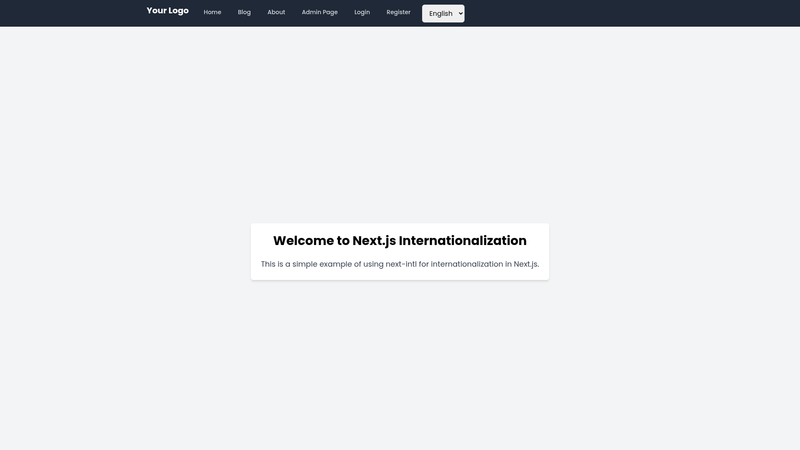
Next.js starter with i18next internationalization, NextAuth authentication, Tailwind CSS, and TypeScript.
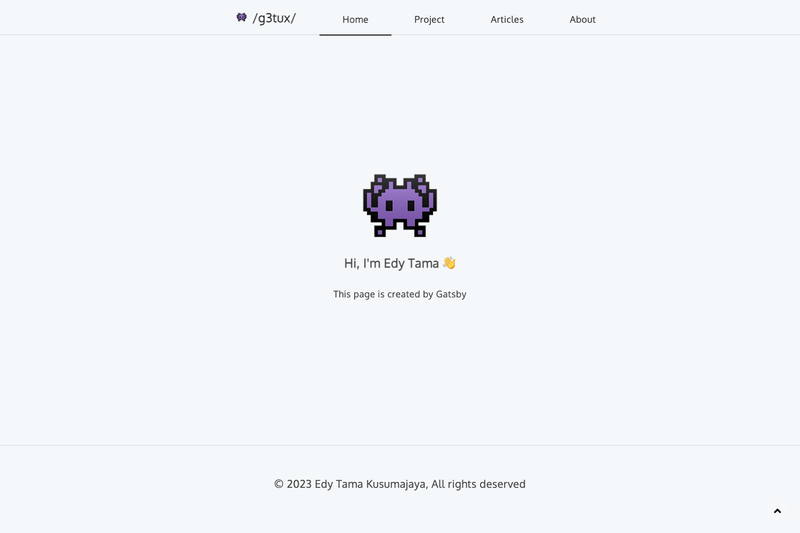
A simple Gatsby.js theme for personal blogs and portfolios, built from the official gatsby-starter-default.
Astro SPA Starter Kit: Basics is an Astro boilerplate that combines Astro JS, Tailwind CSS, and Hotwire to build single-page application (SPA) behavior with static-site output.
This starter template scaffolds a new Astro project via npm create astro@latest -- --template basics, adding Tailwind CSS for utility-first styling and Hotwire for SPA-style page transitions. The generated site builds to a static ./dist/ folder and runs a local dev server at localhost:3000 during development. The project structure includes src/pages/index.astro as the default route, src/layouts/Layout.astro for shared layout, and src/components/Card.astro as an example component. Astro treats any .astro or .md file in src/pages/ as a new route, while components in src/components/ can be written in Astro, React, Vue, Svelte, or Preact.
.astro or .md file in src/pages/ becomes a URL route without extra configuration.src/components/ alongside native Astro components.public/ and they are served at the root of the site.npm run dev starts a local server, npm run build generates a production build to ./dist/, and npm run preview tests the built site locally.index.astro, edit the layout in Layout.astro, and add Tailwind classes to match your brand..md or .astro files to src/pages/ and each one becomes a new route instantly.src/pages/ to generate content pages, then style them with Tailwind and layout components.After scaffolding with the create astro command, run npm install to install dependencies. Then npm run dev starts a development server at localhost:3000. When you're ready to ship, npm run build compiles the site into static files under ./dist/, and npm run preview serves that build locally for verification. The Astro CLI is available via npm run astro ... for tasks like adding integrations or checking the project.
The template is an open-source starter based on the official Astro basics template. The repository is publicly available and the Astro framework itself is free to use.
Hotwire (specifically Turbo) enables SPA-like navigation by intercepting page loads and swapping content dynamically. Combined with Astro's static site generation, this gives a fast, app-like feel without a heavy client-side framework.
Yes. The template's src/components/ directory is designed to hold Astro, React, Vue, Svelte, or Preact components. Astro compiles them where they are used.
Create a new .astro or .md file in src/pages/. The file name becomes the route. For example, about.astro will be served at /about.
Place any static asset in the public/ directory. Files there are copied directly to the root of the built site, so you can reference them with a leading slash, such as /favicon.svg.