Newsletter
Join the Community
Subscribe to our newsletter for the latest news and updates

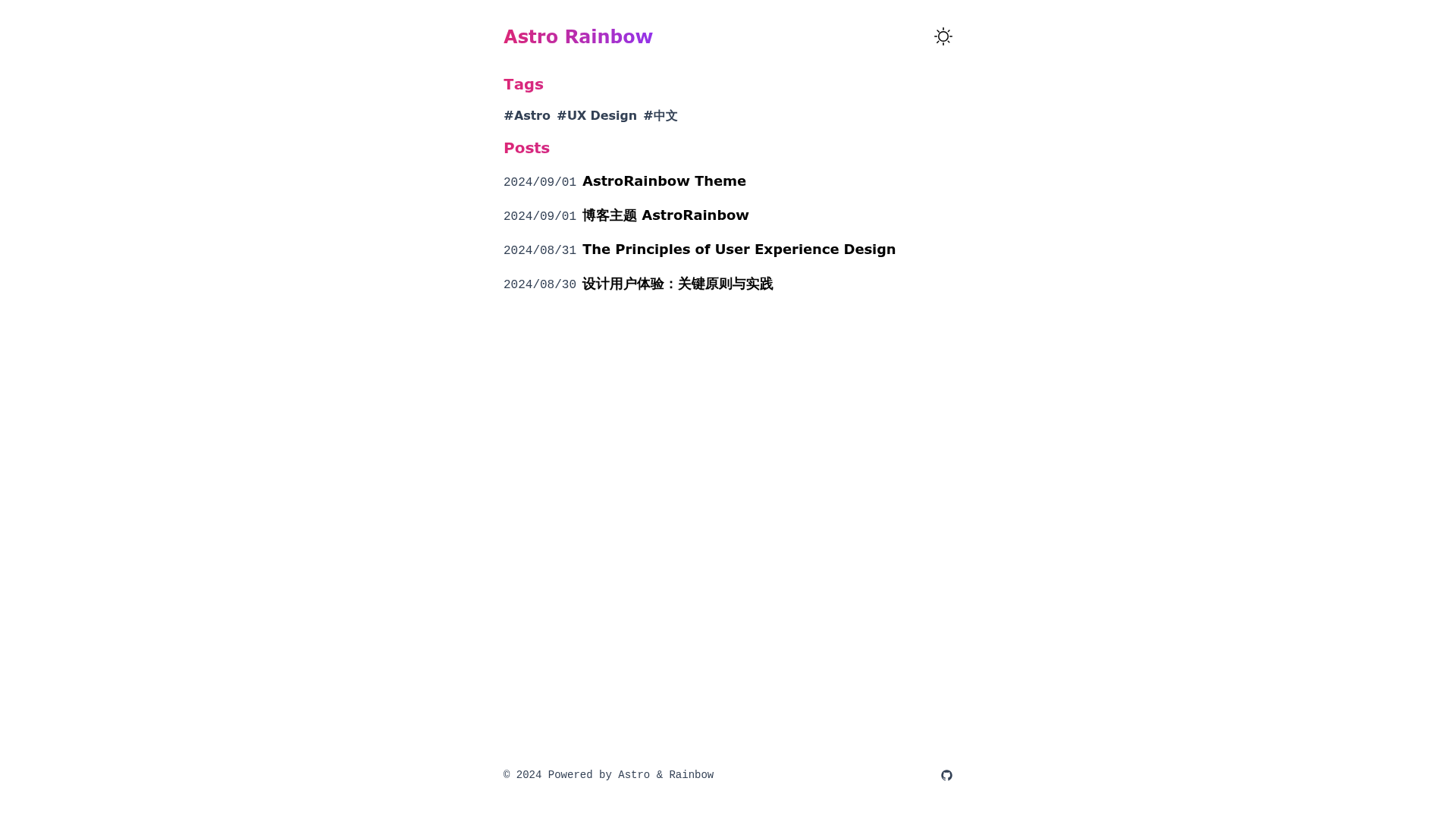
🌈 AstroRainbow is a clean and simple Astro theme designed for blogs.
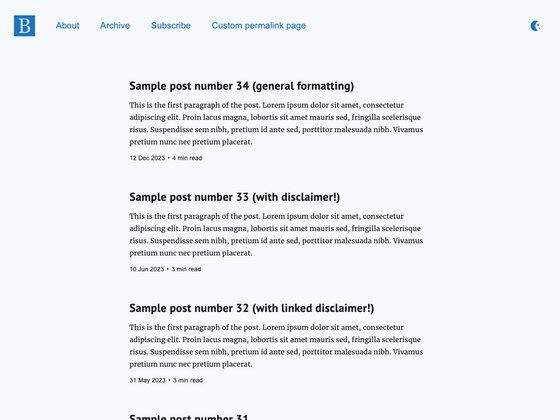
Single-column blog template for Eleventy with dark mode, Mastodon integration, PWA manifest, and automatic OpenGraph images.
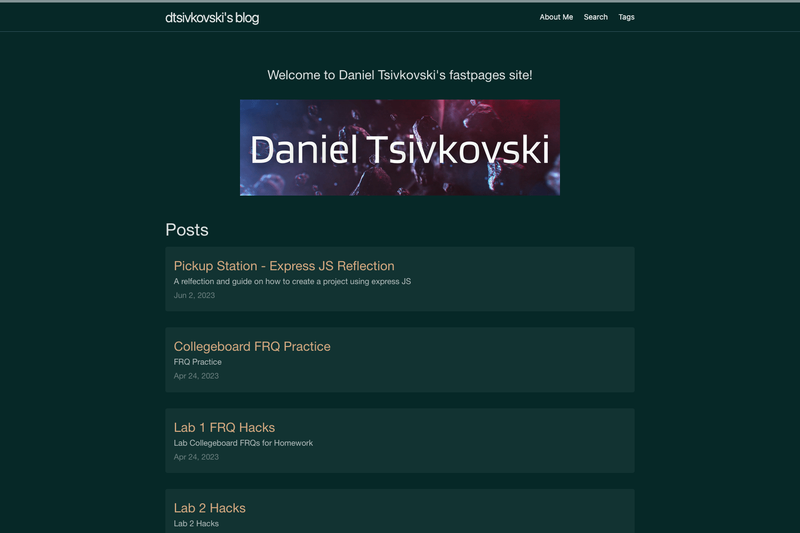
Webpage to keep track of my computer science progress through Jupyter notebooks and blogs.
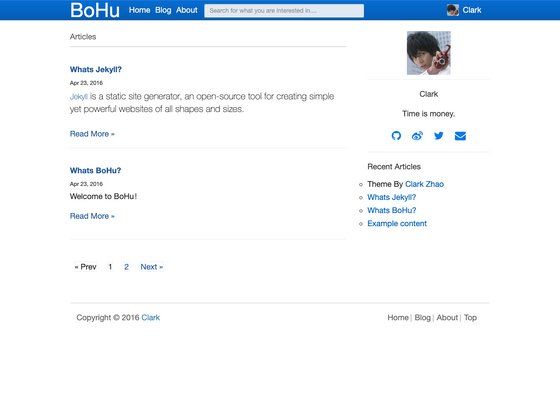
A simple Jekyll blog theme that brings Zhihu-style typography, search, and pagination to your personal blog.
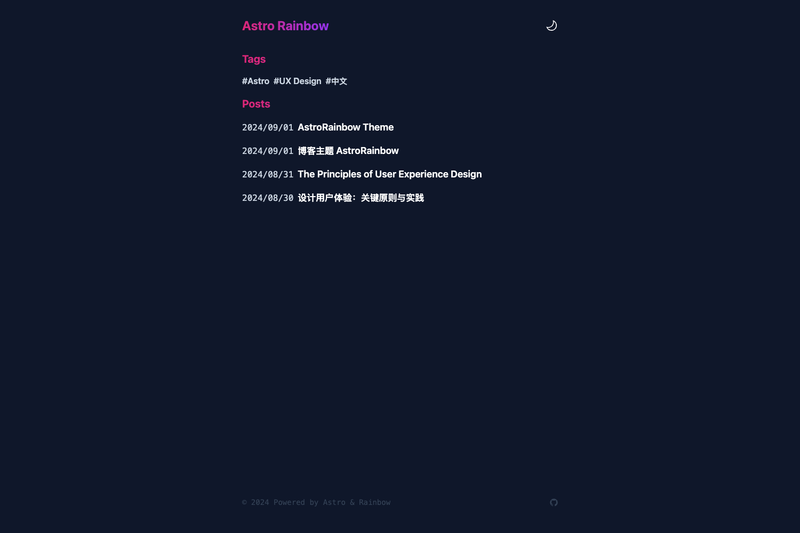
AstroRainbow is a free, open-source Astro theme for building clean, minimalist blogs, and it relies exclusively on Astro and Tailwind CSS with no extra packages. Designed as a starter theme by GitHub user w4n9hu1, it gives you a responsive, light/dark-mode blog out of the box, and it generates a fully static site from Markdown posts.
AstroRainbow is an Astro theme specifically for blog sites. It takes Markdown files as your blog post content and a src/config.json file for site configuration, and it outputs a static, production-ready blog website. The theme runs entirely on Astro's static site generation and uses Tailwind CSS for styling, so the final site has no JavaScript framework overhead beyond what Astro generates. The project is maintained on GitHub under the MIT License.
npm run new "post title" command scaffolds a new Markdown post file in the correct location, so you don't have to create files by hand.AstroRainbow is suited for developers, writers, and anyone who wants a clean, fast blog without configuring a full-featured CMS. Software developers can use it as a starter for a personal blog or documentation site. Writers who prefer Markdown can focus on content creation using the built-in post-generation command. Astro newcomers can study the template to see how Astro and Tailwind CSS work together in a minimal project.
npm create astro and the template flag, then deploy to Netlify or Vercel with the one-click buttons.To get started, you clone the template with the command npm create astro@latest -- --template w4n9hu1/astro-rainbow, then run npm install to install dependencies. After that, npm run dev starts the local development server, and npm run new "post title" creates a new Markdown post. Site configuration is done by editing src/config.json.
The theme is licensed under the MIT License, so you can use, modify, and redistribute it freely. The repository's author accepts bug reports and feature requests via GitHub issues.