Newsletter
Join the Community
Subscribe to our newsletter for the latest news and updates

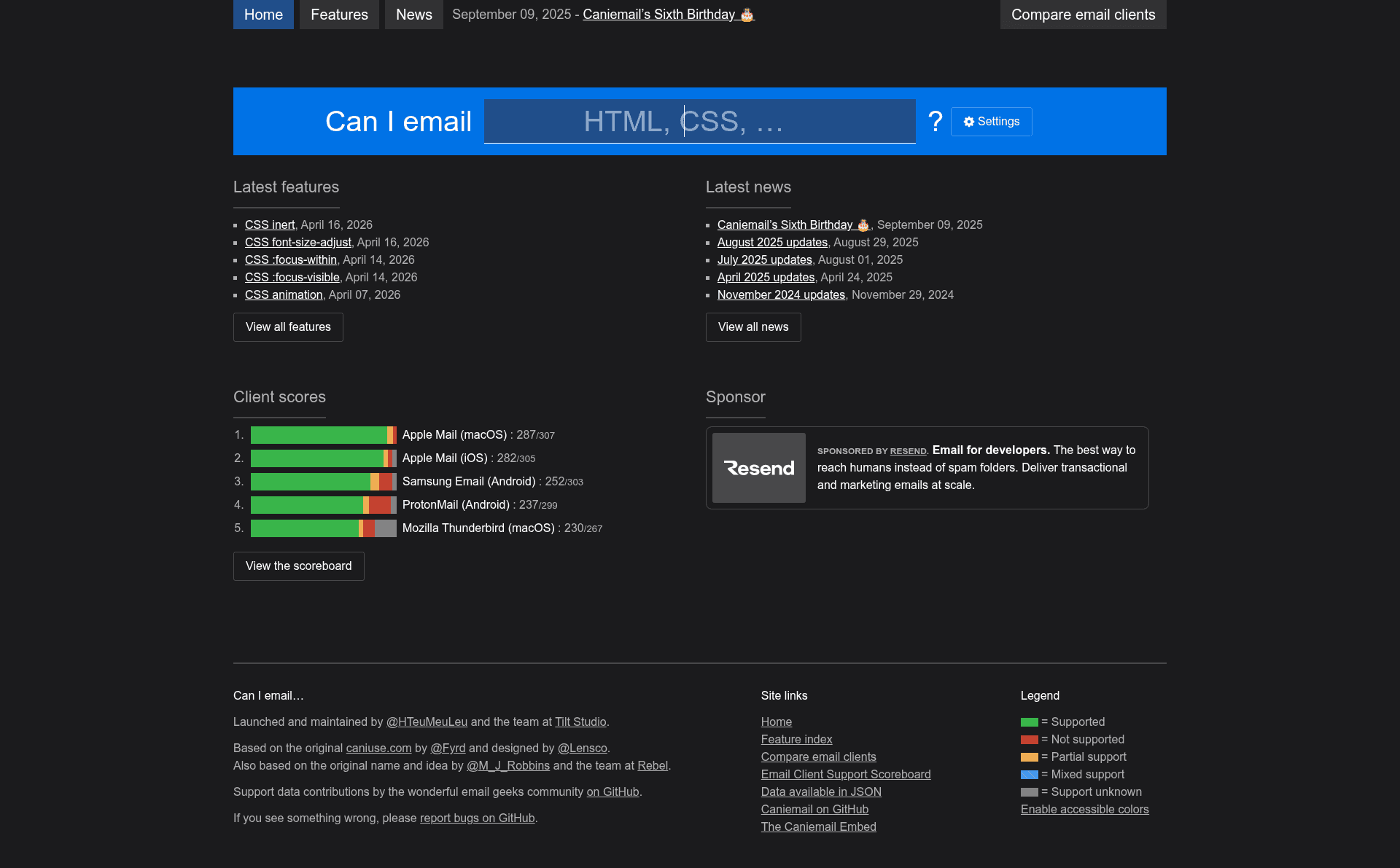
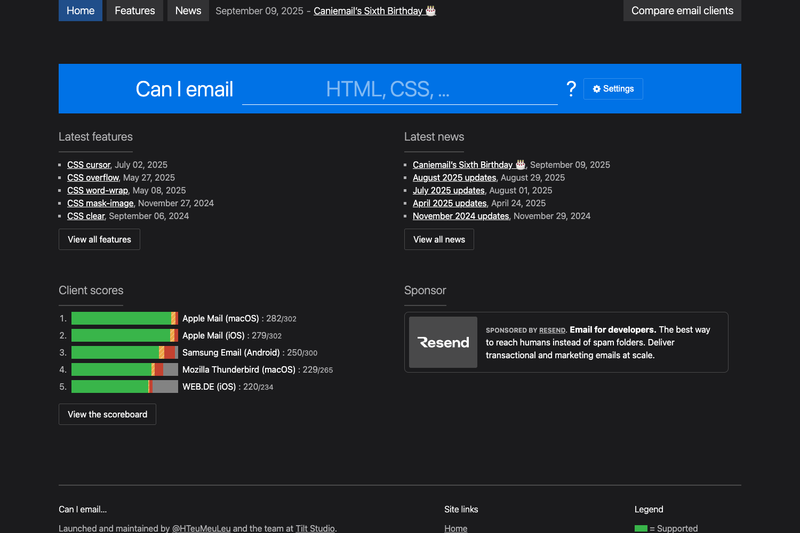
Support tables for HTML and CSS in emails, built with Jekyll.

Simplest possible examples of HTML, CSS and JavaScript.
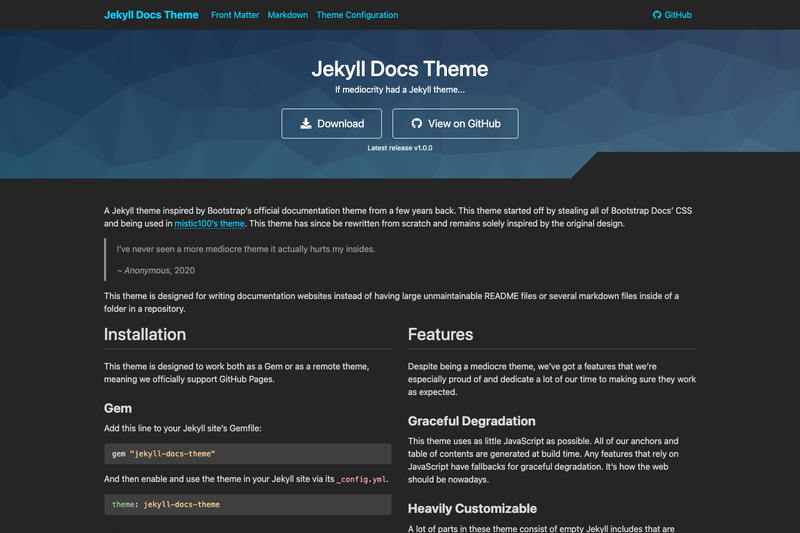
A Jekyll theme for building documentation websites, inspired by Bootstrap's old docs design, with light and dark modes.
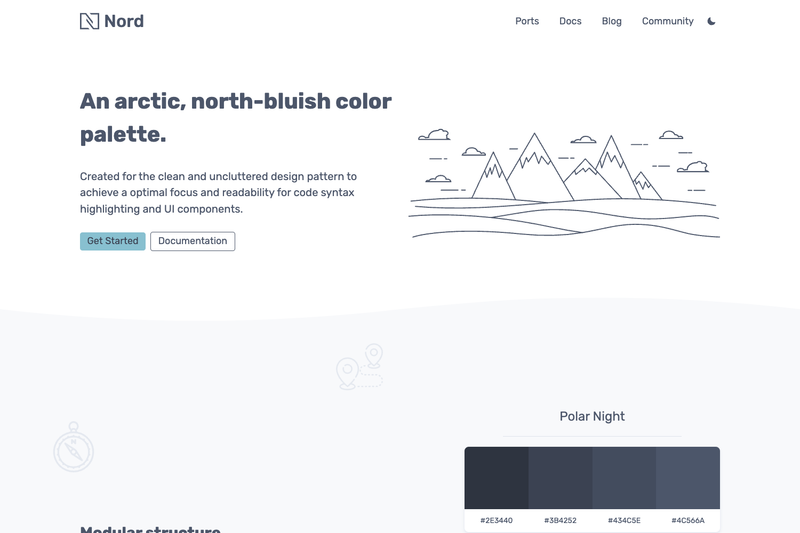
The official Nord website and documentation, built with Gatsby and React.
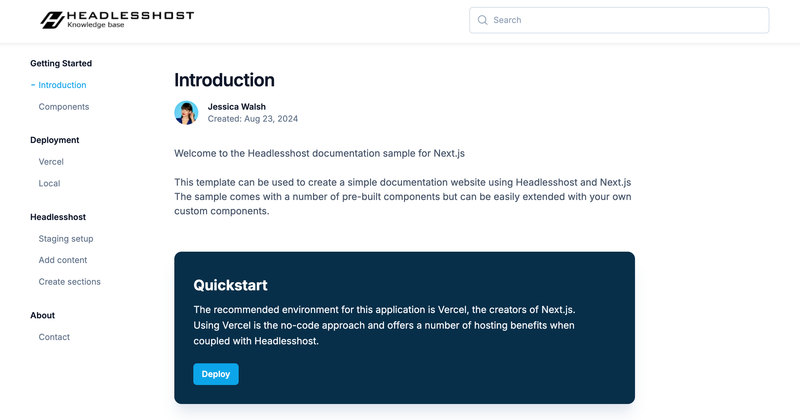
A lightweight MDX documentation builder for React and Next.js with auto-generated navigation and Prism syntax highlighting.
Can I email… is an open-source Jekyll website that publishes email client support tables for HTML and CSS features, built to answer the recurring question 'can I email this CSS property or HTML element?'. The project stores feature data in _features files and generates compatibility tables at caniemail.com, plus an embed-friendly version at embed.caniemail.com via a separate _config.embed.yml configuration. It is maintained on GitHub by user hteumeuleu, released under the MIT License, and sponsored by Resend, an email API service.
Can I email… is an open-source Jekyll site that provides support tables for HTML and CSS features in email clients. The project takes feature definitions stored in _features data files and renders them as searchable compatibility tables on the public website. It runs on GitHub Pages with a homemade theme, uses Sass for CSS compilation, and includes a separate embed build configured through _config.embed.yml.
_sass and compiled into one CSS file in assets/css/.bundle exec jekyll serve --config _config.embed.yml.tests folder for verifying HTML and CSS feature support._posts folder contains latest news entries so the site can announce updates.The site runs locally by cloning the repository, running bundle install to install Jekyll and dependencies, and starting a local server with bundle exec jekyll serve. For the embed version, use bundle exec jekyll serve --config _config.embed.yml. The static site is then deployable to GitHub Pages.
Yes. The source code is published under the MIT License, so it is free to use, modify, and distribute for personal or commercial projects.
Clone the GitHub repository, run bundle install, then bundle exec jekyll serve. Open http://localhost:4000 in your browser.
Create a feature data file in the _features directory and optionally add a corresponding HTML test in the tests folder. The site rebuilds automatically when Jekyll serves locally.