Newsletter
Join the Community
Subscribe to our newsletter for the latest news and updates

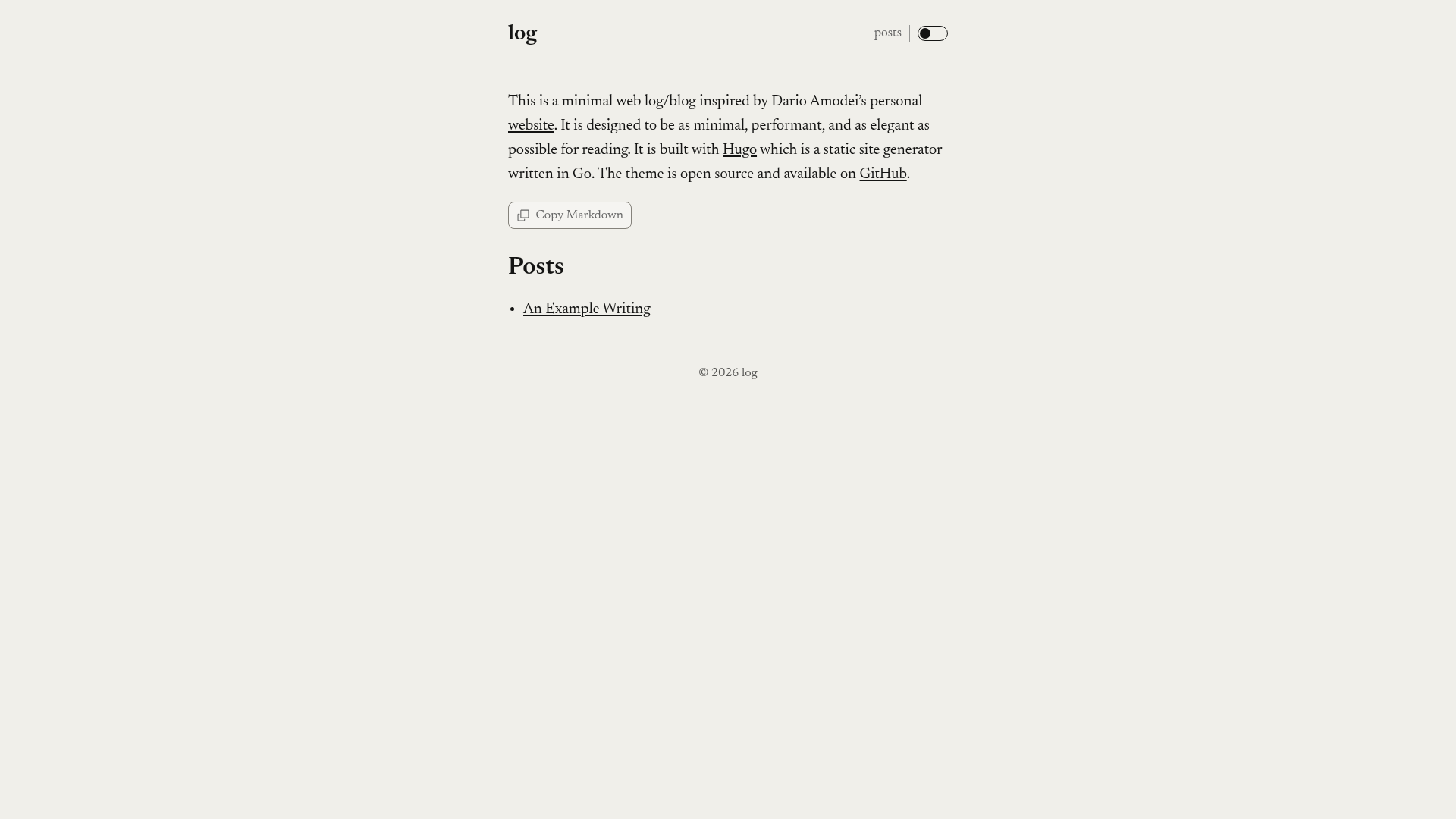
A minimal Hugo theme inspired by Dario Amodei's personal website, built for fast, elegant reading.
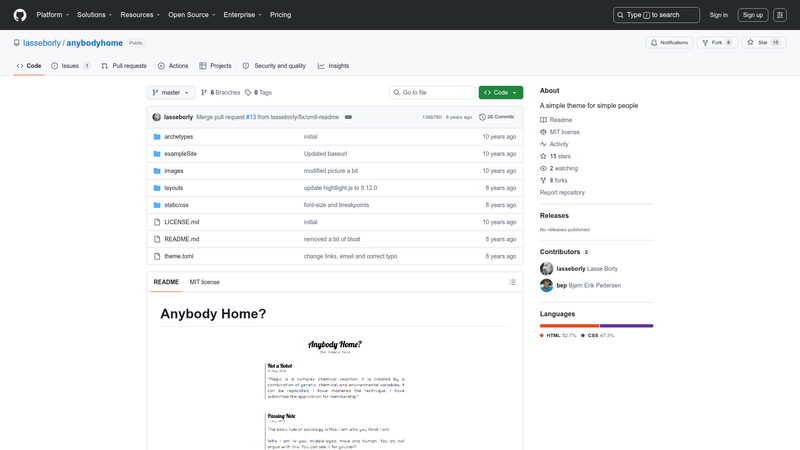
A minimal Hugo blog theme that displays only the 10 most recent posts and individual post pages.
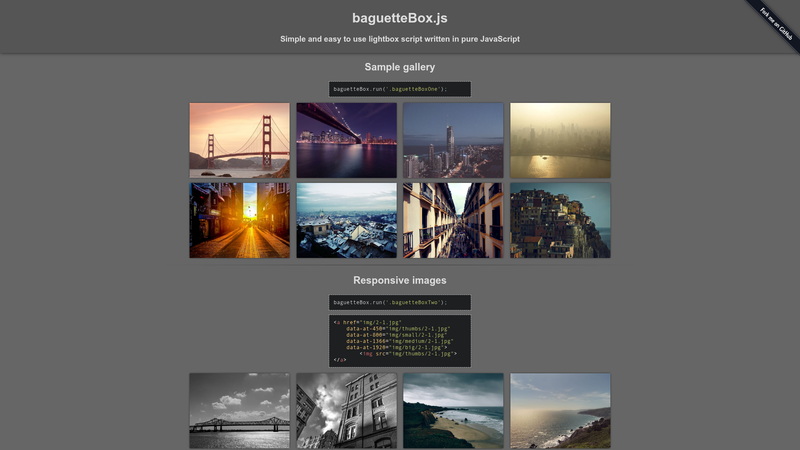
A clean, minimal Hugo theme for blogs with responsive images, lazy loading, and built-in shortcodes.
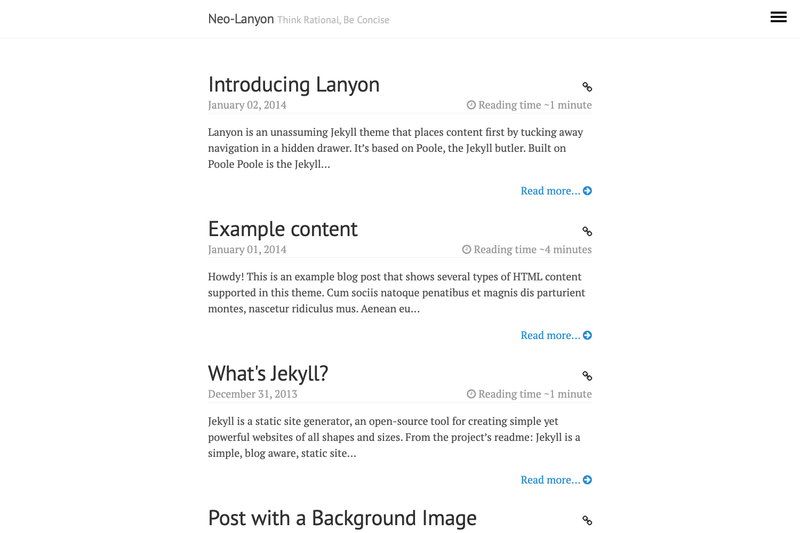
A Jekyll theme based on Lanyon that tucks navigation in a drawer, with eight base16 color themes and layout options.
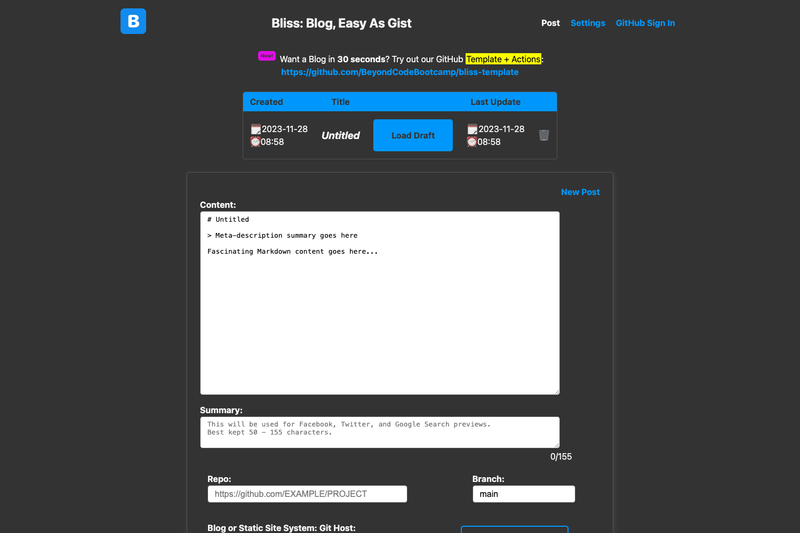
Start blogging in just 3 clicks with a zero-config Hugo blog on GitHub Pages.
A gem-based responsive simple texture styled Jekyll theme.
Dario is a minimalist Hugo theme for personal blogs, inspired by Dario Amodei's personal website, built for fast, distraction-free reading.
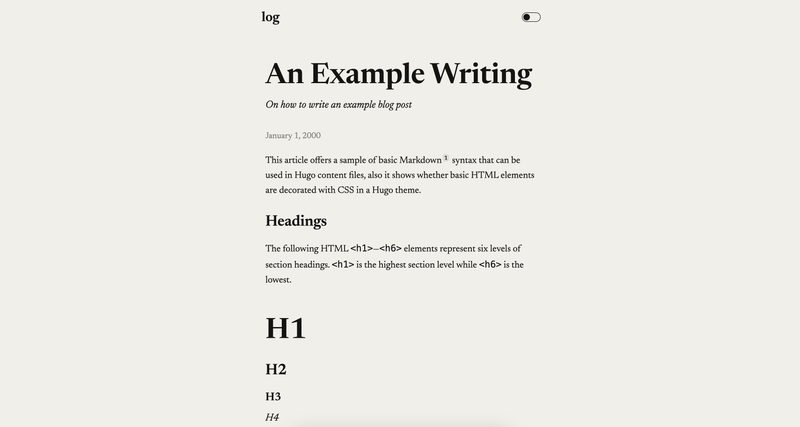
Dario is an open-source Hugo theme that transforms Markdown content into a static blog with a clean, single-column reading layout. It takes standard Hugo content files (posts with YAML front matter) and a config.toml file as input, and outputs a fully static website with light and dark modes, optional social meta tags, and a blog post listing. The theme is maintained by Grant Birki on GitHub, and a live demo is available at https://log.birki.io.
colorScheme parameter in config.toml to 'system', 'light', or 'dark' to follow the user's display preference or lock the scheme.ogTitle, ogDescription, and ogImage for per-post control; these can be disabled entirely with disableSocialMeta.mainSections parameter lets you select specific sections like posts, essays, or notes.assets/css/custom.css, allowing overrides such as custom bullet styles or font changes.content/_404.md with custom text and a subtitle.git submodule add, or using Hugo Modules with full commit-pinned updates via hugo mod get.layouts/partials/nonstdmeta.html.script/bootstrap, script/lint, script/test, script/build) and configure via config.toml.homePageIsPost: true in _index.md front matter to hydrate the landing page like a blog post, offering an alternative layout.Installation follows standard Hugo theme workflows. You can extract the source into themes/dario and set theme = "dario" in config.toml; or add it as a Git submodule with git submodule add; or use Hugo Modules by adding an import path in config.toml and pinning to a 40-character commit SHA via hugo mod get. After installation, you configure params, author details, and content pages in Markdown, then run Hugo to generate the static site.
Yes, Dario is an open-source theme hosted on GitHub under the GrantBirki repository. You can download the source, use it as a submodule, or add it as a Hugo module without a license fee.
The theme does not include built-in comment or analytics integrations. It focuses on minimal, static output; comment and analytics services can be added manually by editing layout templates or inserting custom HTML.
Set the colorScheme parameter in config.toml to 'toggle' (default), 'system', 'light', or 'dark'. The toggle mode displays a button and initially follows the user's system preference, while system, light, or dark lock the appearance.
Although Dario is blog-oriented, it supports arbitrary sections via the mainSections parameter. You can create sections for essays, notes, or other content types and list them on the home page.