Newsletter
Join the Community
Subscribe to our newsletter for the latest news and updates

eve agent template with long-term, per-user memory powered by Mem0, deployable to Vercel through the Marketplace integration.
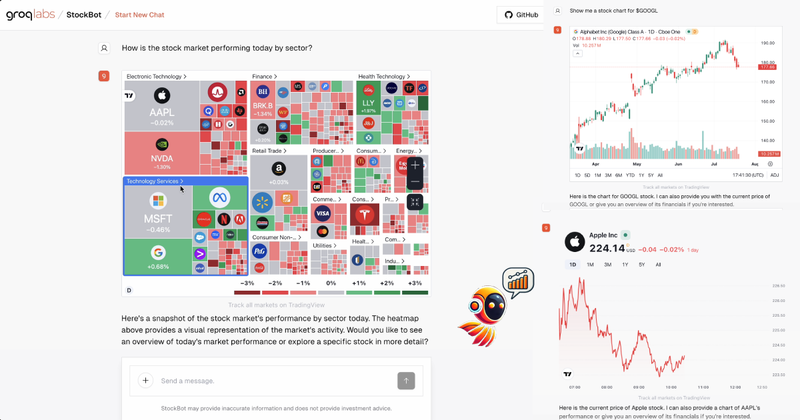
Open-source AI chatbot template powered by Groq, Llama 3 70B, Vercel AI SDK, and TradingView that answers with live stock charts, news, and screeners.

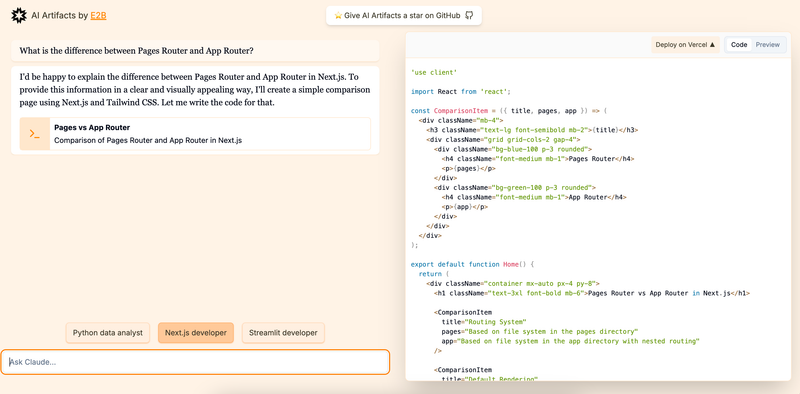
Open-source AI chatbot template built with Next.js, the AI SDK by Vercel, and Groq for streaming chat responses.

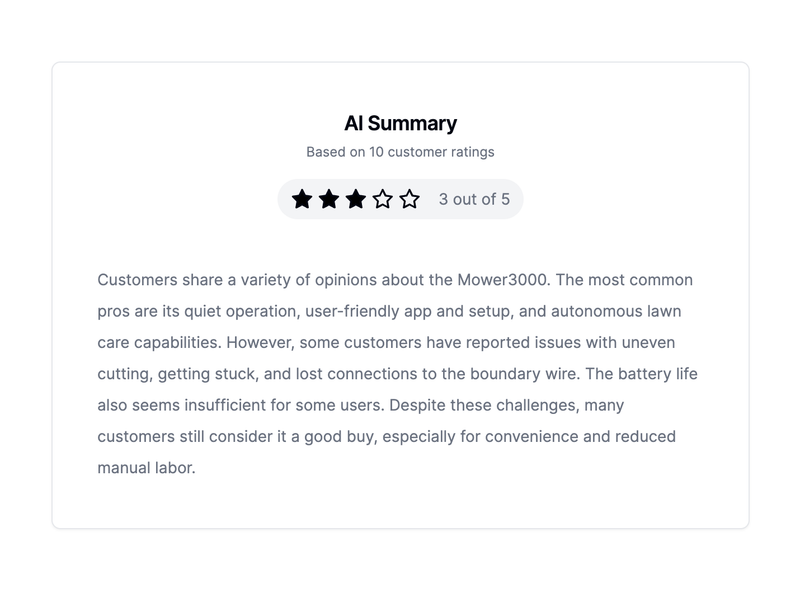
A Next.js example using the Vercel AI SDK's streamText function to automatically handle multiple tool call roundtrips in one chat turn.
Mem0 eve template is a Vercel eve agent starter that gives a backend AI agent long-term, per-user memory through Mem0, so it recalls facts and preferences across separate conversations instead of starting from scratch each session.
The Mem0 eve template is an agent template built on eve, Vercel's framework for durable backend AI agents, with long-term memory supplied by Mem0. Its input is a chat session and its output is a model response that is informed by previously stored facts about that user. Memory is written and retrieved through two tool calls, and the whole thing deploys to Vercel, where the Mem0 integration sets the MEM0_API_KEY environment variable on the project automatically. Model access runs through the Vercel AI Gateway tied to your linked project. The repository is published under the Apache-2.0 license.
remember saves a durable fact or preference via mem0.add, and recall_memories searches long-term memory via mem0.search.ctx.session.auth.current.principalId in agent/lib/mem0.ts, so each authenticated user gets a separate memory store without extra configuration.agent/instructions.md tells the model to recall memories before answering and to store durable facts it learns.MEM0_API_KEY on the new project.agent/channels/eve.ts ships with placeholderAuth(): local development works, your own Vercel deployments and the eve TUI can reach the agent, and anonymous browser traffic is blocked in production.vercelOidc() to open the agent to real users, or swap in none() for a throwaway public demo where everyone shares one memory.npm run dev opens the eve development REPL for testing the agent without deploying.Deploying clones the repo and installs the Mem0 integration, which writes MEM0_API_KEY into the project; the agent then answers via models reached through the Vercel AI Gateway. During a conversation the model calls recall_memories before answering and calls remember to persist durable facts, both scoped to the authenticated principalId. Locally you run npm install, vercel env pull to fetch MEM0_API_KEY, set AI_GATEWAY_API_KEY (or link a Vercel project for model access), then npm run dev. A quick test: tell the agent you are vegetarian and allergic to nuts, start a new session, and ask what you can eat.
placeholderAuth() with Auth.js, Clerk, or vercelOidc() and get per-user memory automatically.mem0.add and mem0.search in a real agent loop rather than a standalone snippet.none() gives a shared-memory public demo without auth setup.The template source is open source under the Apache-2.0 license, so the code itself costs nothing. Running it requires a Mem0 API key, which the Vercel Marketplace integration provisions, and model access through the Vercel AI Gateway on a linked Vercel project.
Memory is scoped per user through ctx.session.auth.current.principalId, read in agent/lib/mem0.ts. Once you add a real auth provider such as Auth.js, Clerk, or vercelOidc(), every authenticated user automatically gets an isolated memory store.
Yes. The default placeholderAuth() allows local development, and npm run dev opens the eve development REPL. You still need to pull MEM0_API_KEY with vercel env pull and supply model access through AI_GATEWAY_API_KEY or a linked Vercel project.
With placeholderAuth() in place, anonymous browser traffic is blocked in production, so the agent is not publicly reachable. For a public demo where all visitors share a single memory store, replace placeholderAuth() with none() — note that everyone then shares the same remembered facts.