Newsletter
Join the Community
Subscribe to our newsletter for the latest news and updates

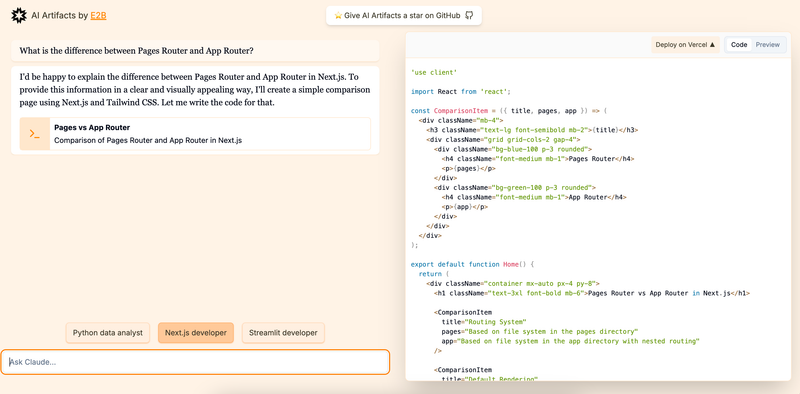
Open-source Next.js 14 template for AI apps that generate and execute code inside secure E2B sandboxes, like Claude Artifacts.
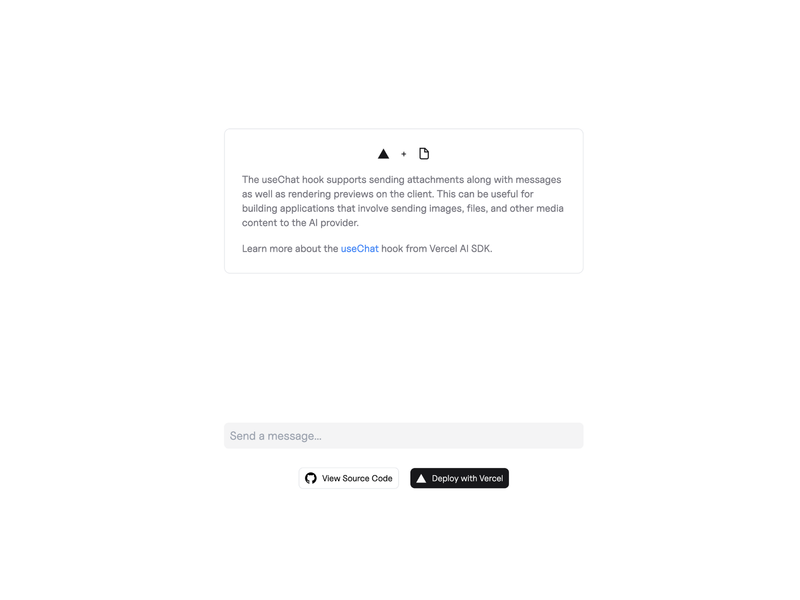
A Next.js starter from Vercel Labs that uses the Vercel AI SDK useChat hook to send and receive multi-modal chat messages with file attachments.
Vercel Labs Next.js template that runs a Model Context Protocol server with semantic search and document fetch tools for ChatGPT Deep Research.
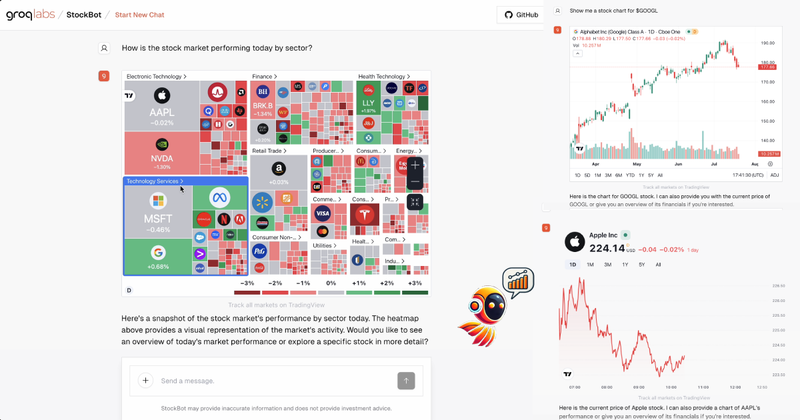
Open-source AI chatbot template powered by Groq, Llama 3 70B, Vercel AI SDK, and TradingView that answers with live stock charts, news, and screeners.

Open-source AI chatbot template built with Next.js, the AI SDK by Vercel, and Groq for streaming chat responses.
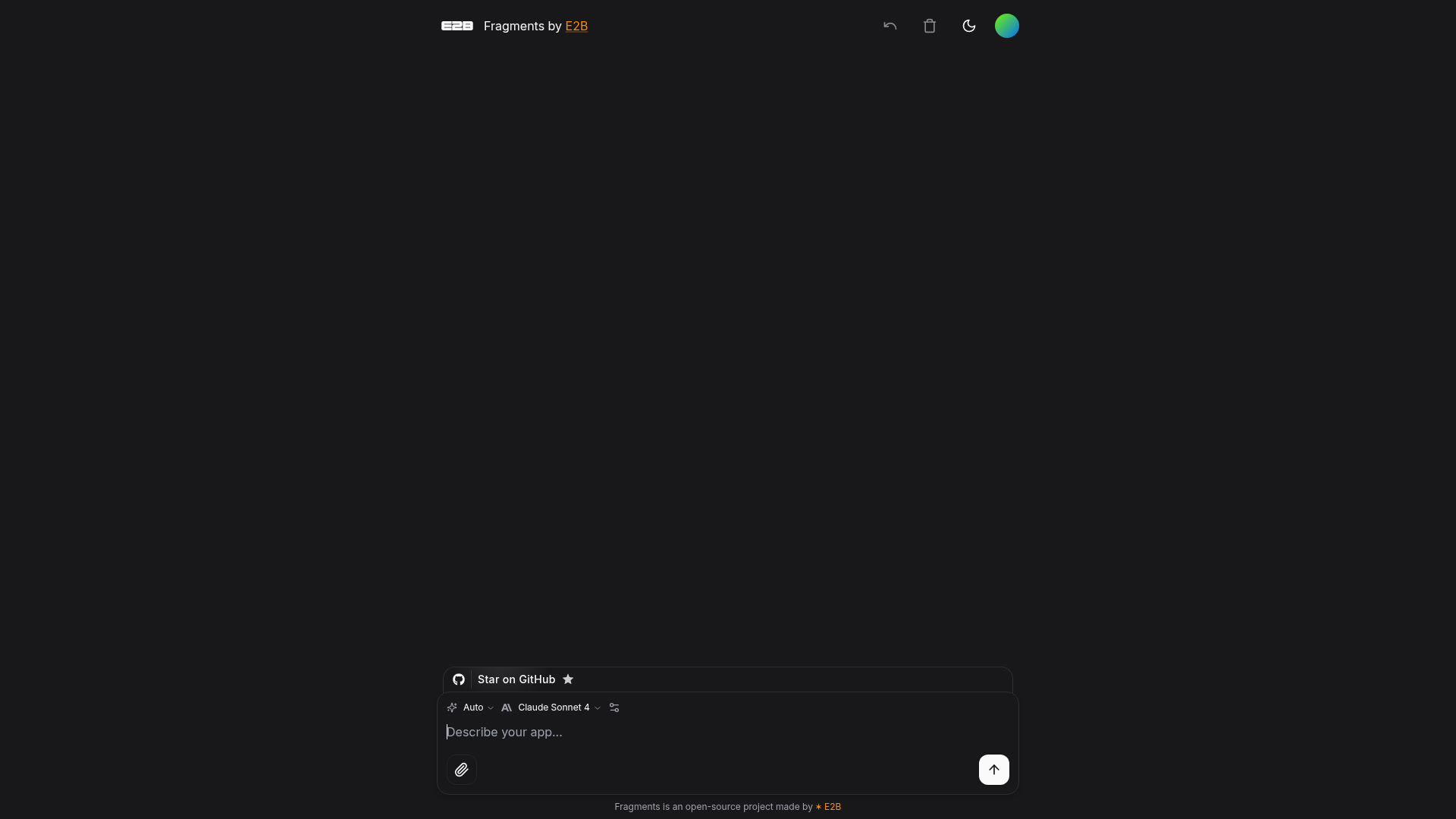
Fragments by E2B is an open-source Next.js 14 template for building chat apps that let an LLM write code and run it inside a secure E2B sandbox, producing a live preview of the generated app. It is E2B's open-source take on Anthropic's Claude Artifacts, Vercel v0, and GPT Engineer, and it is powered by the E2B SDK code interpreter.
Fragments by E2B is a Next.js 14 (App Router, Server Actions) web application template that turns a natural-language prompt into running code. The user types a request into a chat interface; the selected LLM streams generated code into the UI, and the E2B SDK executes that code inside a hosted sandbox, returning rendered output such as a web preview, a Python result, or a Streamlit or Gradio app. It is maintained by E2B, ships with shadcn/ui components and TailwindCSS, and a hosted demo runs at fragments.e2b.dev.
e2b template init and e2b template build, then registered in lib/templates.json with a name, dependency list, entry file, instructions, and optional port.You clone the repository, run npm i, create a .env.local file with an E2B API key plus at least one LLM provider key, then start the app with npm run dev or build it with npm run build. At runtime an E2B API key is required, and the optional NEXT_PUBLIC_NO_API_KEY_INPUT and NEXT_PUBLIC_HIDE_LOCAL_MODELS variables control whether users can type their own keys or see local models.
Claude Artifacts, Vercel v0, and GPT Engineer cover similar prompt-to-app territory; Fragments is the self-hostable option among them and requires you to bring your own E2B and model API keys.
The code is open source and free to self-host, but running it requires your own E2B API key and at least one LLM provider API key, so usage costs come from those services rather than from the template itself.
OpenAI, Anthropic, Google AI, Mistral, Groq, Fireworks, Together AI, and Ollama are listed as supported providers, and additional ones can be added by editing the provider configuration in lib/models.ts.
Python interpreter, Next.js, Vue.js, Streamlit, and Gradio templates ship by default, and you can add more personas by building a custom sandbox template with the E2B CLI.
Yes. Generated code can install and use any package from npm or pip inside the sandbox, which is why the shipped templates list their dependencies such as pandas, numpy, matplotlib, and plotly.