Newsletter
Join the Community
Subscribe to our newsletter for the latest news and updates

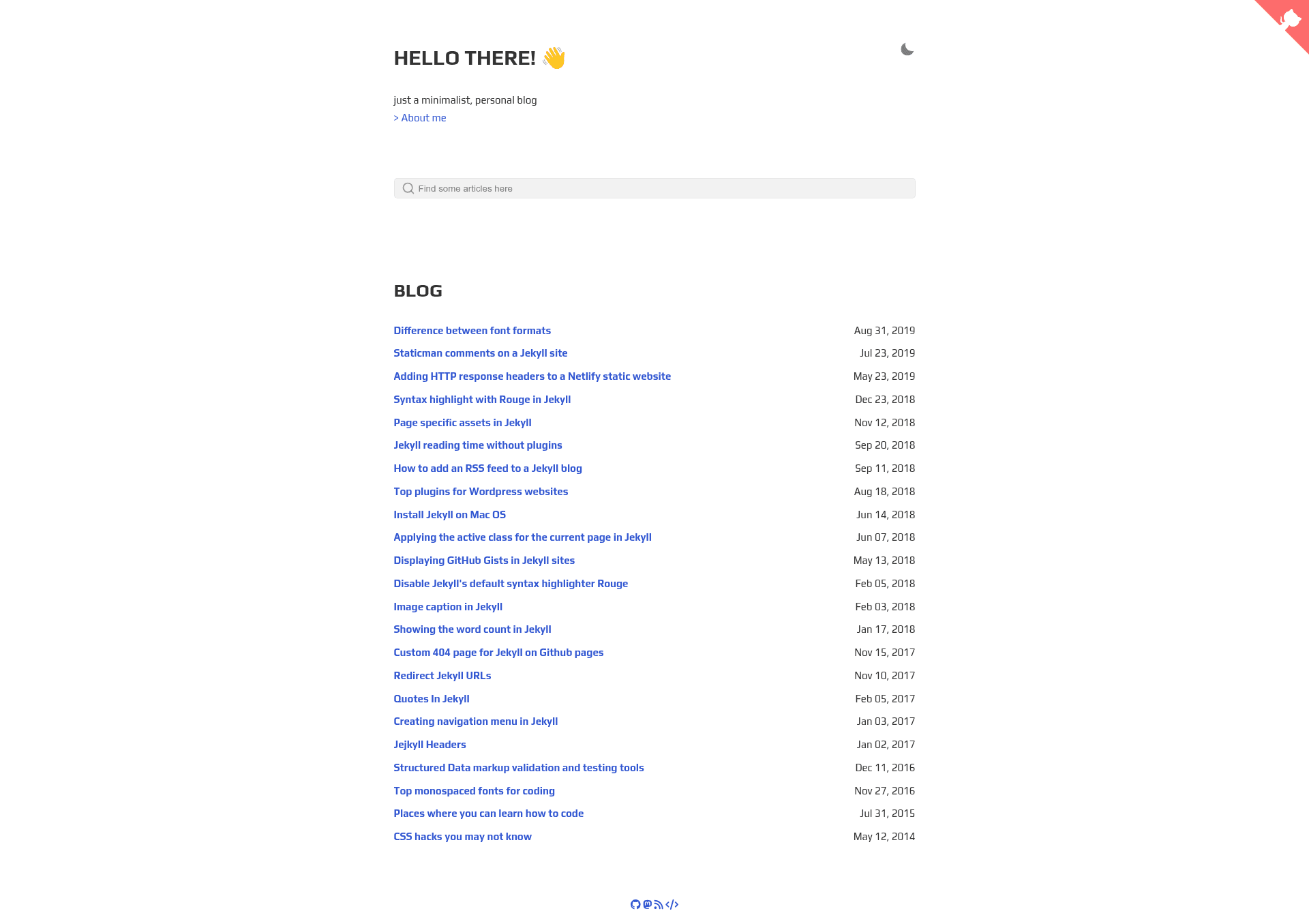
Gesko is a simple and minimalistic jekyll blogging theme.

A low-bandwidth, text-only Hugo theme for news and blog sites, with no JavaScript and a perfect PageSpeed score.
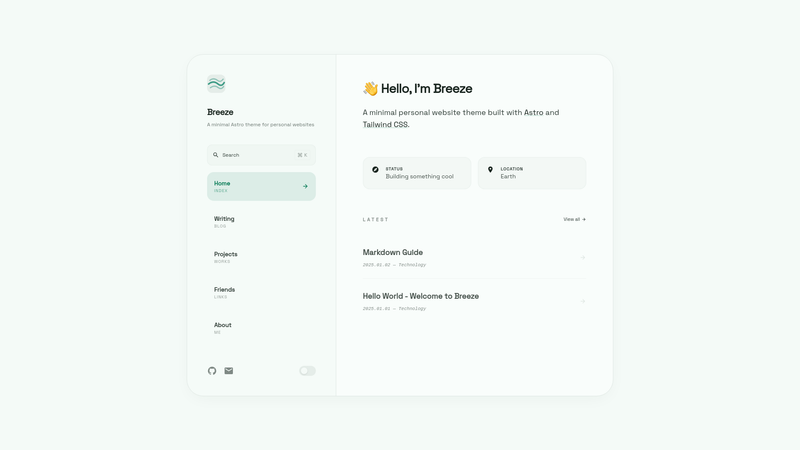
A minimal, clean Astro theme for personal websites and blogs. Built with Astro 5, Tailwind CSS v4, and TypeScript.

A Jekyll theme based on the super minimal Milligram CSS framework

Free responsive blogging website template with Bootstrap 4, 18 HTML pages, 6 homepage designs, and multipurpose blog layouts.
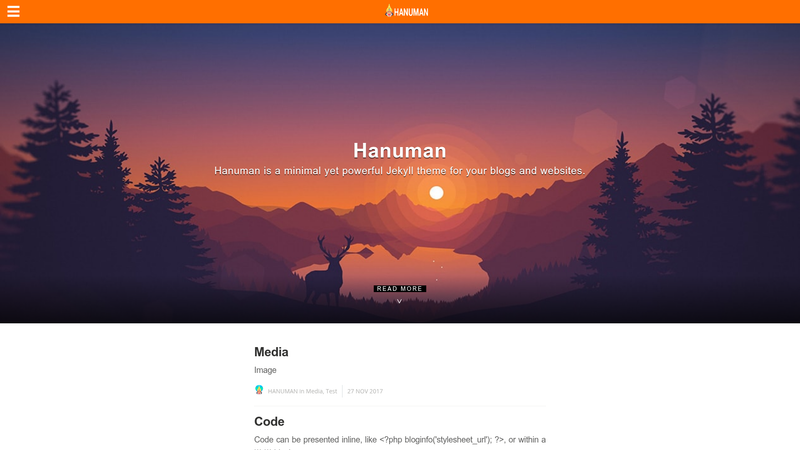
A minimal, AMP-powered Jekyll theme for fast blogs and websites.
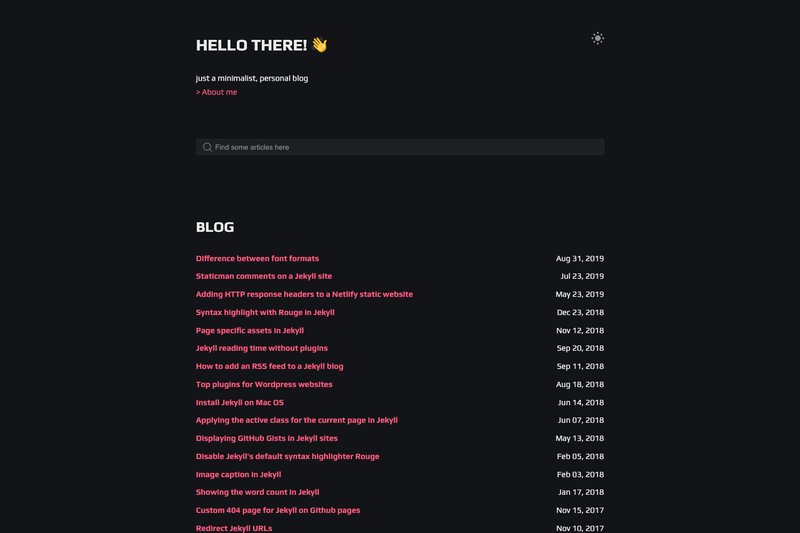
Gesko is a minimal, responsive Jekyll blog theme that ships with dark/light theme switching, inline CSS, tag pages, and Atom/JSON feeds, forked from Asko and originally based on Sidey.
Gesko is a simple and minimalistic Jekyll blogging theme designed for static site generation. It takes Markdown posts and Liquid templates as input and outputs a fully styled static website with tag archives, an about page with a timeline, and built-in feeds. The theme runs on Jekyll, has no database, and can be deployed directly to GitHub Pages. It is authored by DavideBri and distributed under the MIT License.
Gesko is aimed at bloggers and developers who want a clean, fast, no-JavaScript-heavy blog. It suits:
Installation follows the standard Jekyll workflow: clone the repository, run bundle install, then bundle exec jekyll build or bundle exec jekyll serve. To add a new tag, create a folder under tag/ with an index.html file containing a specific front matter header referencing the tag name. The README also instructs users to update _config.yml for GitHub Pages, and to remove a default Google Analytics tag from _layouts/default.html.
Gesko is free and open source under the MIT License. There are no paid tiers or premium features listed.
Yes, Gesko is released under the MIT License, so it is free to use, modify, and distribute, including for commercial projects.
Yes, Gesko is a Jekyll theme designed to work with GitHub Pages. You need to update the _config.yml file, and if your repository is a user site at yourusername.github.io, you may need to adjust the base URL settings.
Create a folder inside the tag/ directory with the name of the tag. Inside that folder, add an index.html file with the front matter layout tag and the tag name set to your desired tag, then rebuild the site.
Yes, the theme includes a client-side search bar that lets visitors filter posts without a server-side search engine.
Yes, Disqus comments are supported as an optional section. You can enable them by configuring the Disqus settings in your site's _config.yml (the README mentions the Disqus section is optional).