Newsletter
Join the Community
Subscribe to our newsletter for the latest news and updates

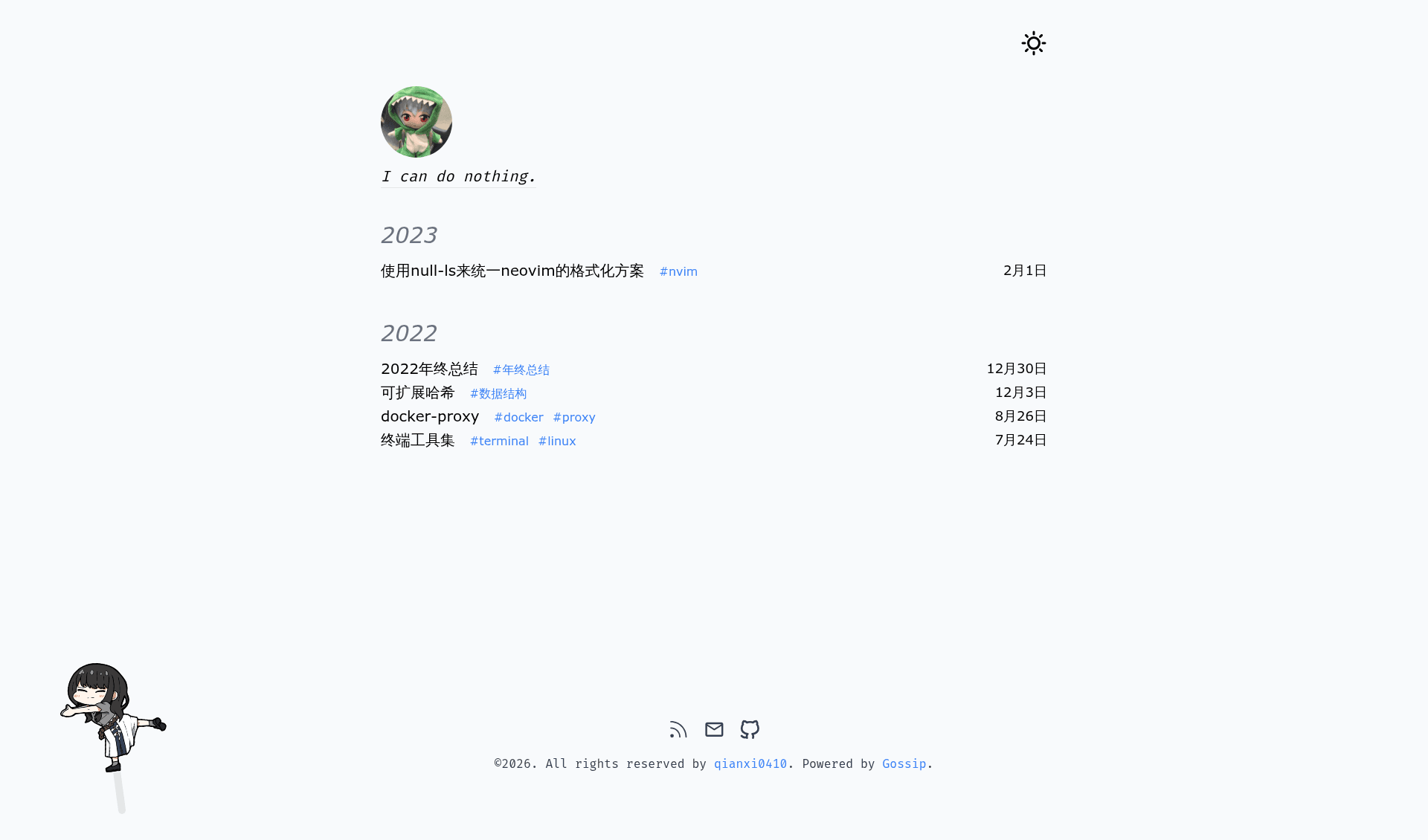
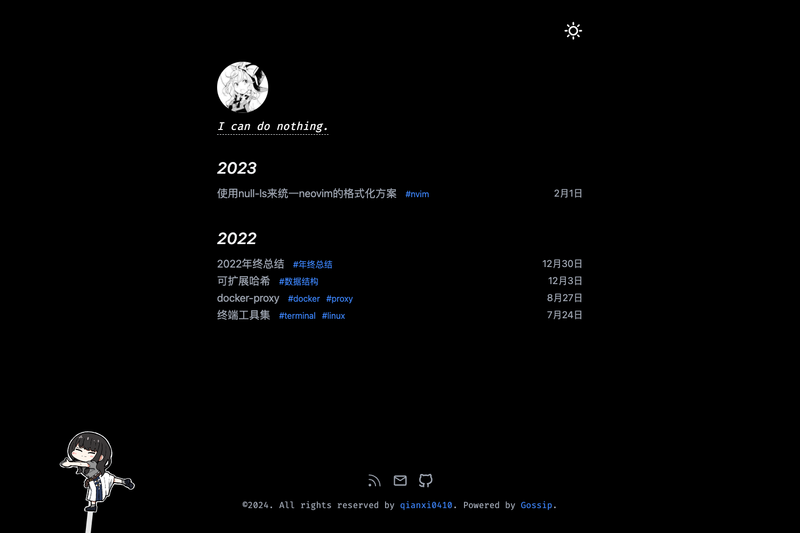
A serverless static blog engine based on GitHub Issue System.
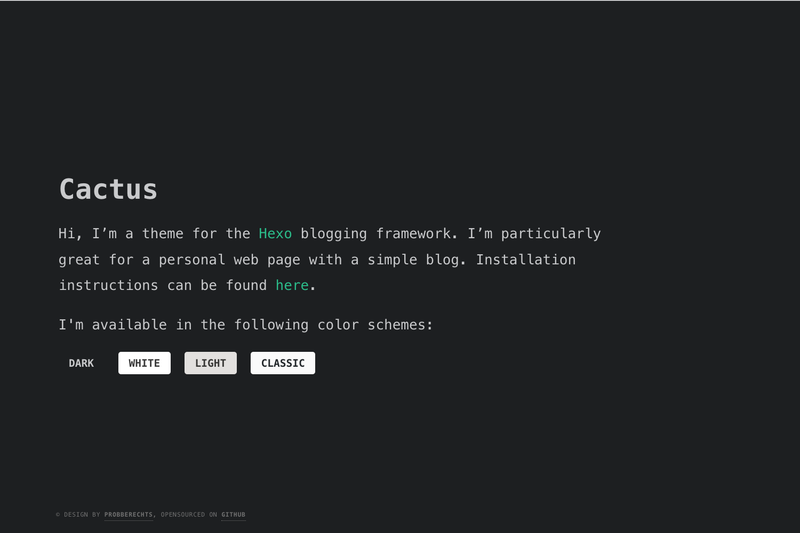
A responsive, clean and simple Hexo theme for personal websites with multiple color schemes, i18n, and comment support.
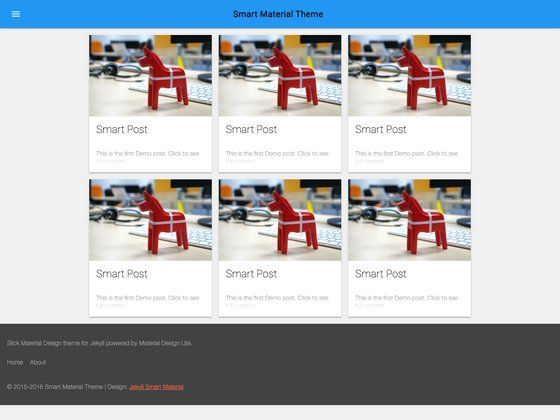
Material Design Lite-powered Jekyll theme for building Material Design-styled blogs and static sites.
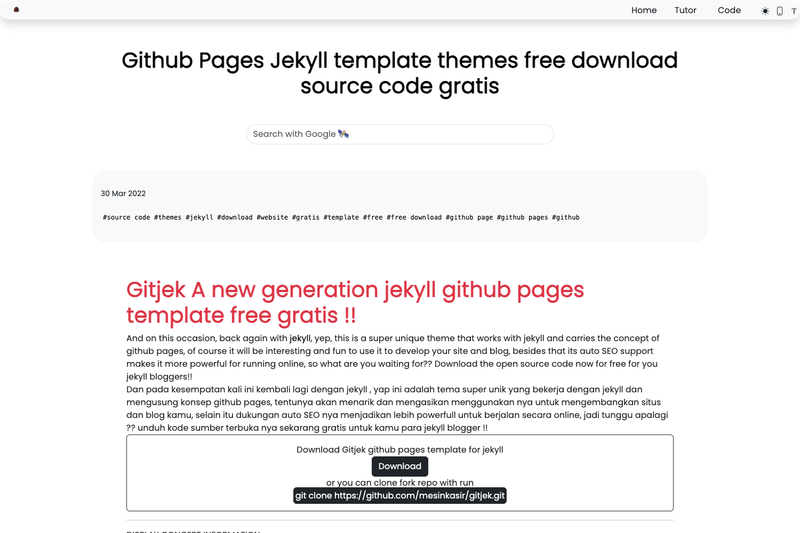
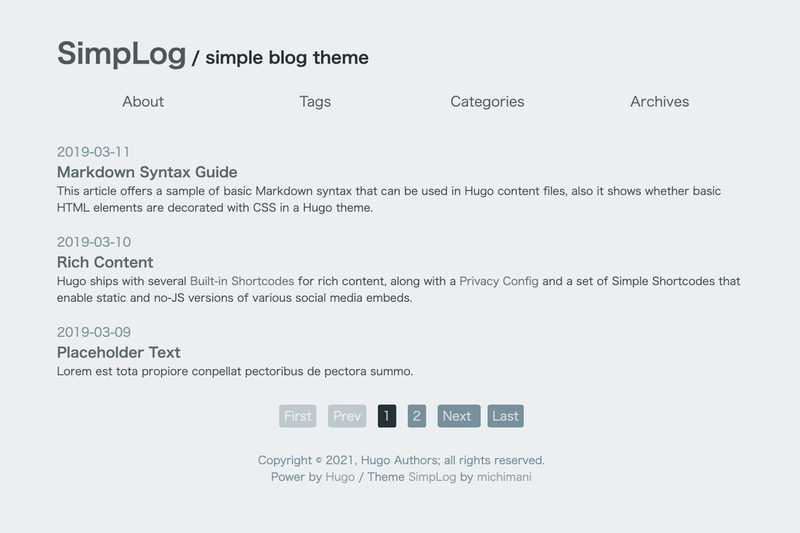
A free Jekyll blog theme for GitHub Pages with a clean home page, content area, and mobile-responsive design.

A minimal Jekyll theme for blogs with clean layout, GitHub Pages support, and simple config-based customization.
Gossip is a serverless static blog engine that turns GitHub Issues into blog posts, built with Next.js, React, Tailwind CSS, and PostCSS, and deployable as a static site.
Gossip is an open-source blog engine that uses GitHub Issues as its content management system. It takes GitHub issues labeled published as input and generates a static blog website as output. The project is maintained by qianxi0410 and runs entirely on serverless infrastructure, with a live preview hosted on GitHub Pages at https://qianxi0410.github.io/gossip. Its repository metadata lists it as a blog-engine, static-site-generator, and serverless project.
published becomes a post..github/workflows/ci-and-cd.yml) that builds and deploys the site automatically.The workflow is built around GitHub Issues: create an issue in the repository and add the published label; Gossip's static generation step reads all issues with that label and renders them as individual blog posts. The included GitHub Actions workflow automatically rebuilds and redeploys the site whenever the repository changes, so publishing is just merging a new issue or label.
Yes. Gossip is an open-source project with a public repository and an open-source license, so you can use, modify, and self-host it without paying any fees.
Create a GitHub Issue in your blog's repository and add the published label. When the site rebuilds, the issue content will be rendered as a new blog post.
No. Gossip generates static HTML files, so you can host it on any static hosting service like GitHub Pages, Netlify, or Vercel without maintaining a backend.