Newsletter
Join the Community
Subscribe to our newsletter for the latest news and updates

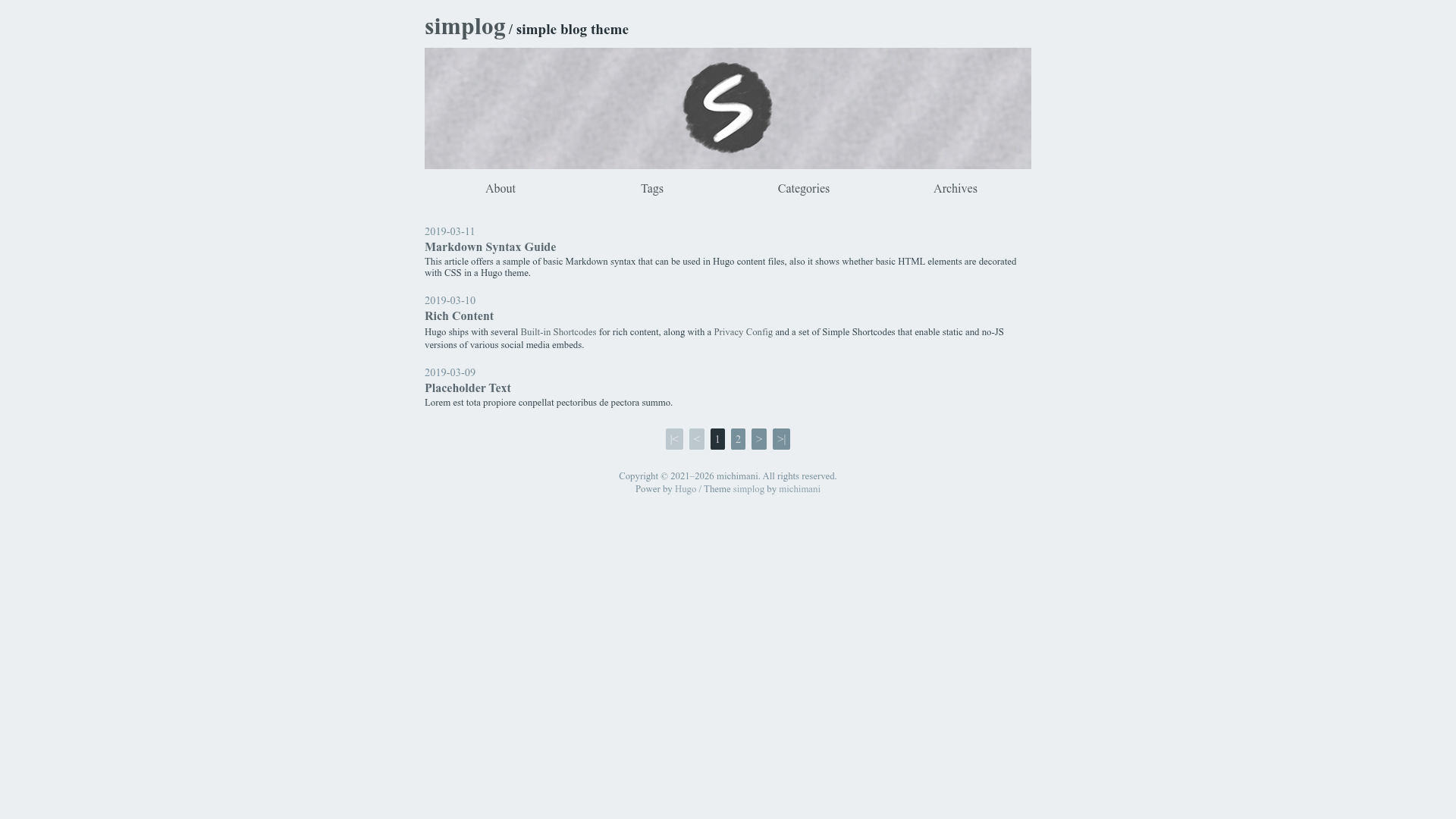
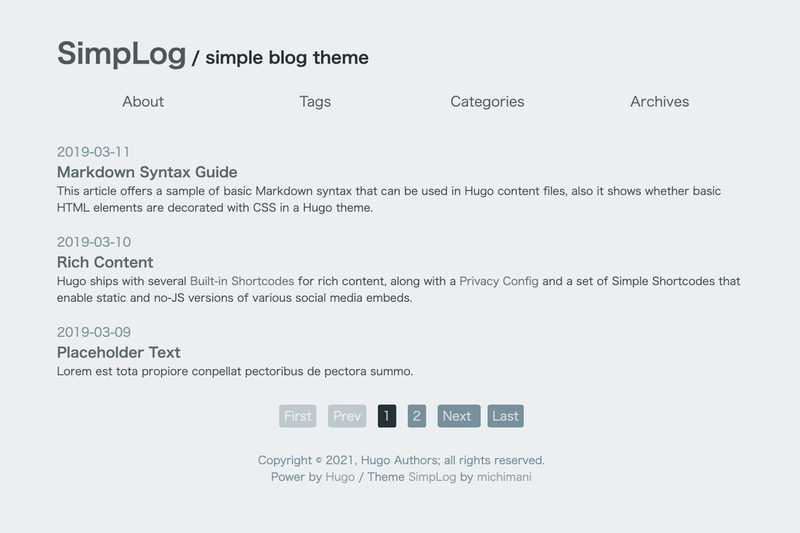
simplog is a simple blog theme for Hugo with theme colors, Disqus, Google Analytics, lazy-load images, and Mermaid support.
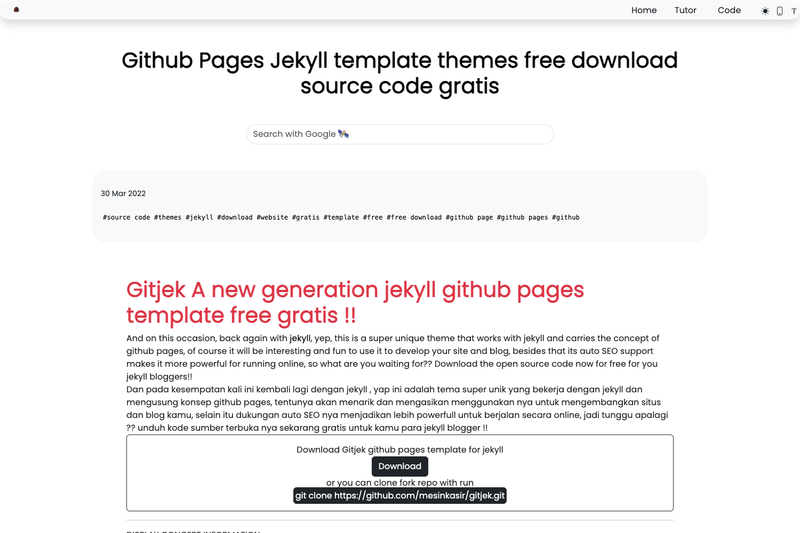
A free Jekyll blog theme for GitHub Pages with a clean home page, content area, and mobile-responsive design.

A minimal Jekyll theme for blogs with clean layout, GitHub Pages support, and simple config-based customization.
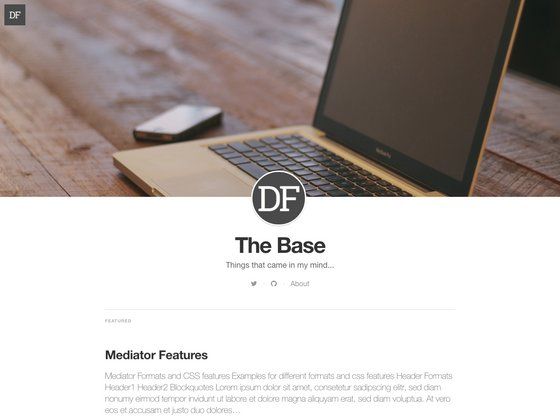
A Medium-inspired Jekyll blog theme with responsive layout, featured articles, and social sharing.
simplog is a Hugo blog theme that renders Markdown content into a responsive blog with tag, category, and archive pages, built by michimani.
simplog is a simple blog theme for Hugo, created by michimani. It accepts a Hugo site's Markdown content and configuration in config.toml, and generates a static blog with a default, dark, red, green, or blue color theme. The theme requires Hugo Extended v0.150.1 or later because it compiles SCSS to CSS at build time using Hugo's built-in processor. It is distributed as a Git repository that you add as a submodule under ./themes/simplog.
{{< lazy src="filename.jpg" alt="description" >}} to defer images placed in the images directory, or add abs="y" for full URLs.simplog suits Hugo users who want a lightweight, customizable blog theme without pulling in a large UI framework. Bloggers who need built-in Google Analytics and Disqus comments can enable both by editing config.toml. Developers who want to tweak the theme can use the included devcontainer configuration for VS Code, which sets up Hugo Extended automatically. Writers who need visual diagrams can rely on the Mermaid shortcode instead of generating images separately.
hugo server --themesDir ../.. --theme simplog from the exampleSite directory.Installation uses a git submodule: run git submodule add https://github.com/michimani/simplog.git ./themes/simplog. After configuring config.toml, you can run hugo server --themesDir ../.. --theme simplog to preview, or use the devcontainer for an automated setup.
Add the repository as a submodule in your Hugo project's themes directory: git submodule add https://github.com/michimani/simplog.git ./themes/simplog. Then set theme = "simplog" in your config.toml.
Yes, via Disqus. You must set the disqusShortname in config.toml and set comment = true in both the site's [params.enabled] section and in each post's front matter where you want comments.
Set the colorTheme parameter in config.toml to one of default, dark, red, green, or blue. The theme applies this color scheme globally.
Yes, set your Adobe Fonts Kit ID with adobeFontsKitId and provide matching custom CSS. The theme will load the kit from Adobe's CDN.
Yes, it needs Hugo Extended v0.150.1 or later, because the theme's SCSS is compiled to CSS at build time by Hugo Extended's built-in SCSS processor. No Node.js tooling is required.