Newsletter
Join the Community
Subscribe to our newsletter for the latest news and updates

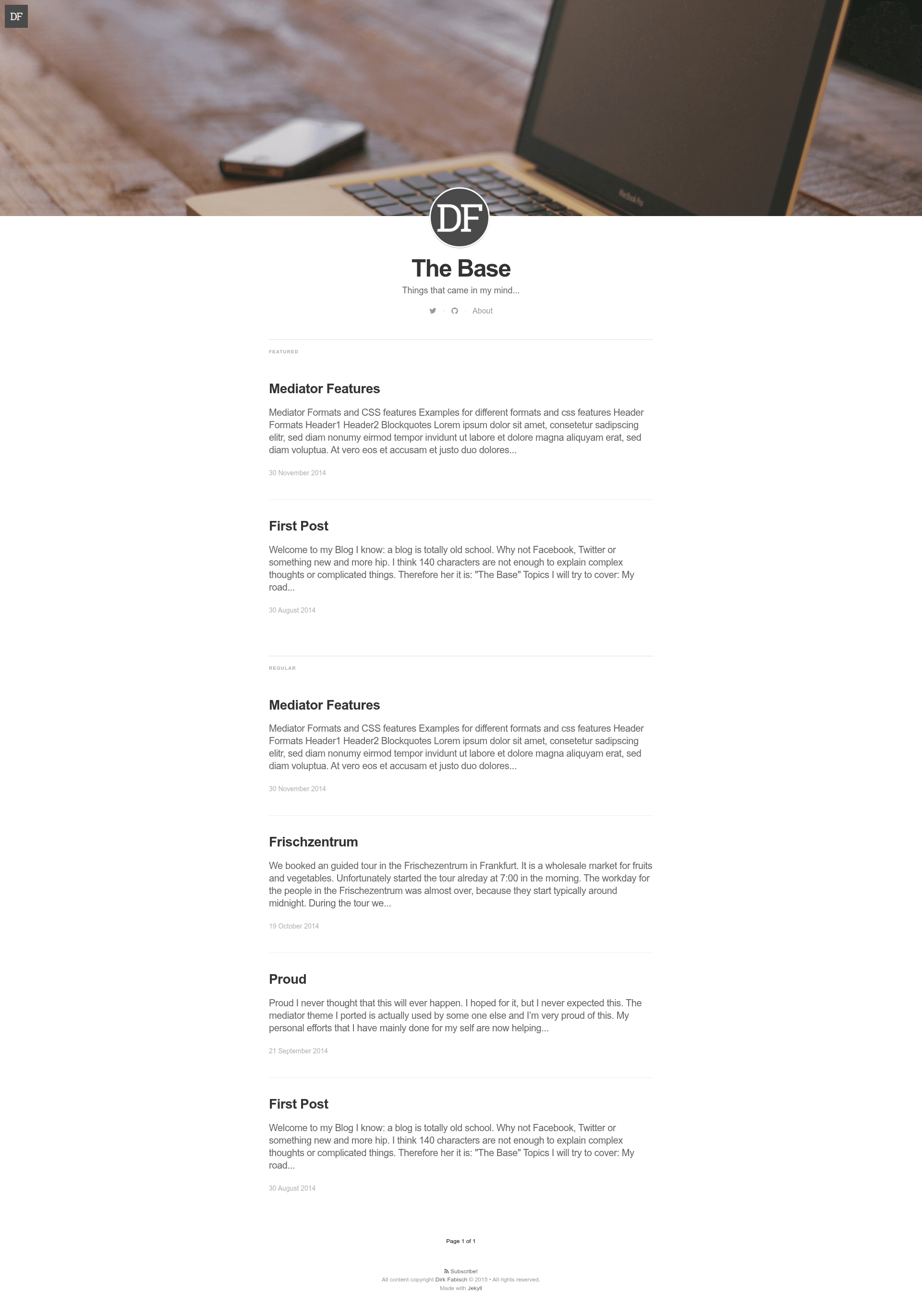
A Medium-inspired Jekyll blog theme with responsive layout, featured articles, and social sharing.

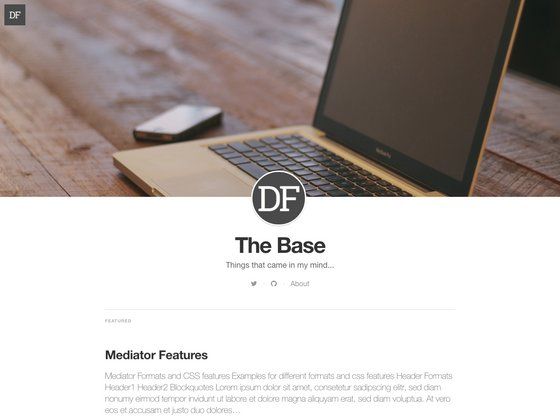
A minimal Jekyll theme for blogs with clean layout, GitHub Pages support, and simple config-based customization.
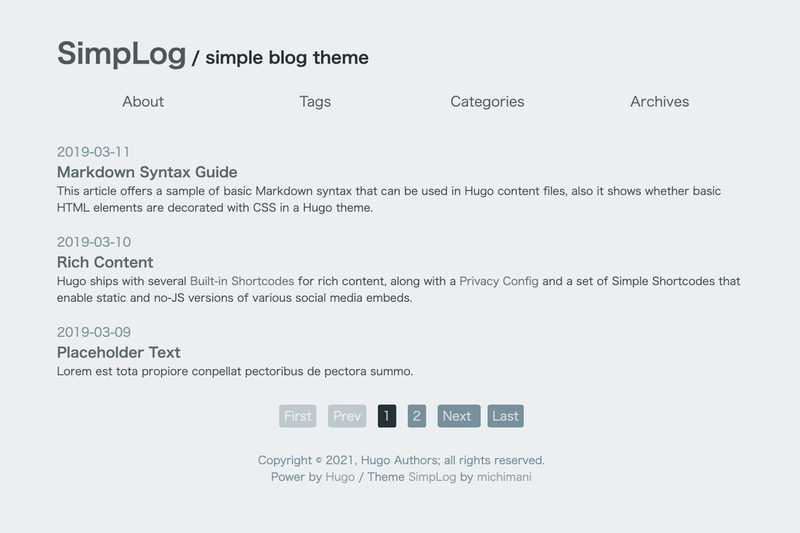
simplog is a simple blog theme for Hugo with theme colors, Disqus, Google Analytics, lazy-load images, and Mermaid support.
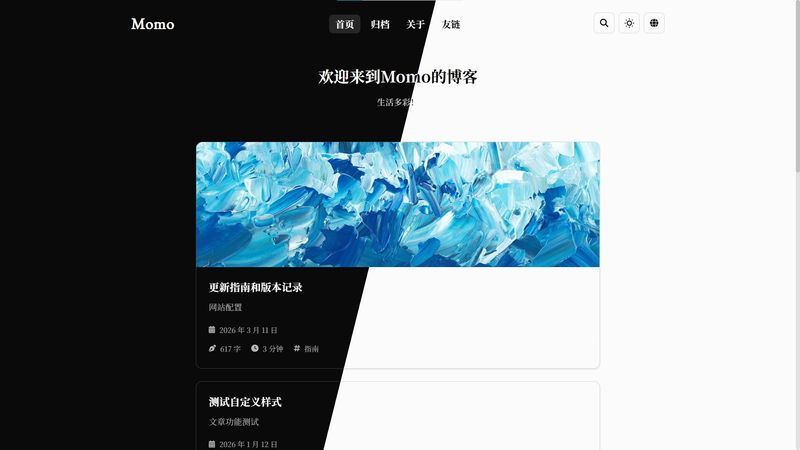
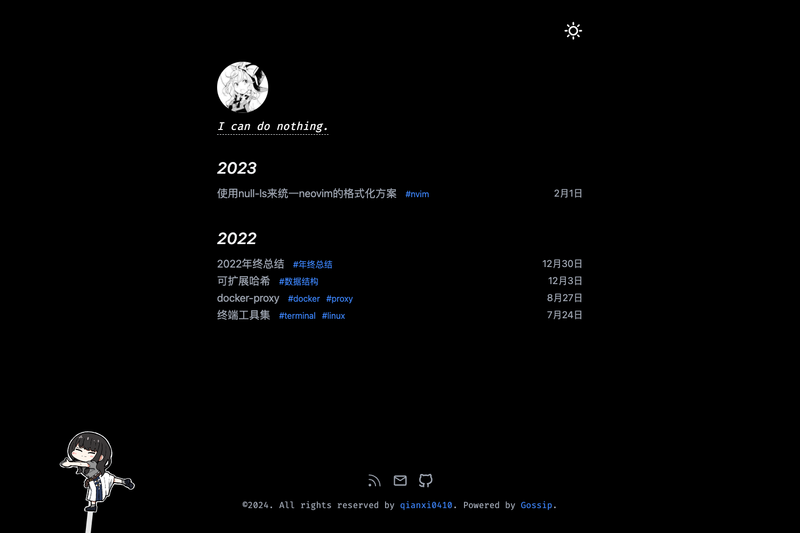
A minimalist blog template built with Astro, featuring dark mode, search, i18n, and rich Markdown support.
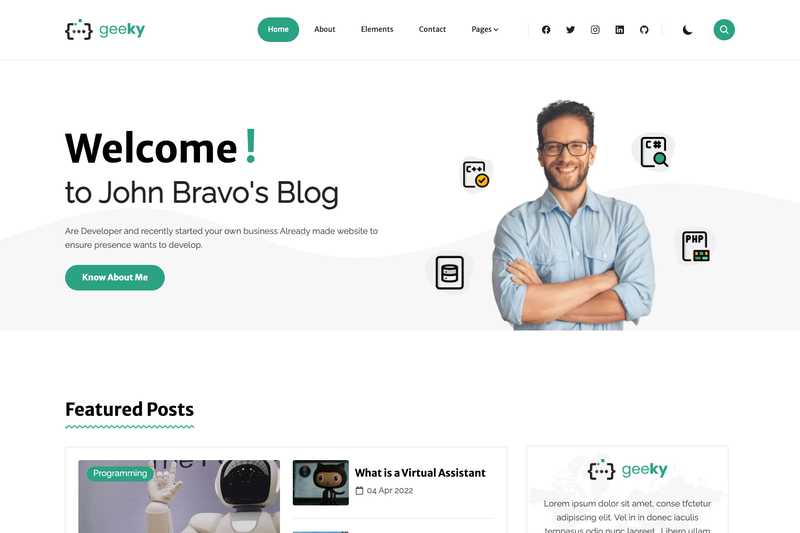
Free Next.js personal blog template with MDX support, Disqus comments, and a 100/100 Google PageSpeed desktop score.
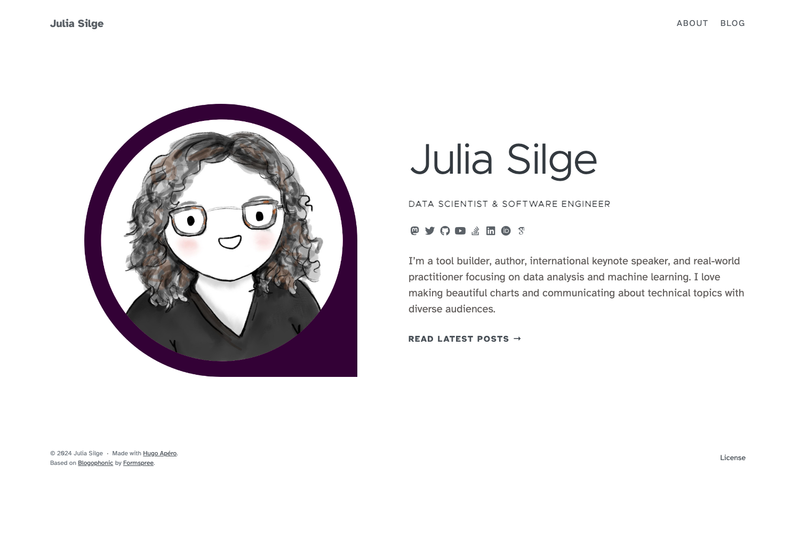
An older Jekyll blog built on the So Simple theme.
Mediator is a Medium-inspired Jekyll blog theme that gives personal blogs a clean, responsive, typographic layout with featured articles and social sharing.
Mediator is an open-source Jekyll blog theme created by Dirk Fabisch, modeled after the look of Medium. It takes a standard Jekyll site with Markdown posts and produces a fully responsive static blog with featured article support, per-post header images, and configurable social sharing buttons. The theme runs on Jekyll and requires the GitHub Pages gem, Bourbon, Jemoji, and Jekyll itself. It is distributed under the MIT license with no attribution requirement.
image tag with a URL in a post's front matter displays a cover image on that article's page.share_url, share_title, and share_link for platforms like Twitter; sharing buttons appear below posts unless you leave the share fields empty.disqus field in _config.yml to enable Disqus comment forums on your posts._config.yml and front matter._config.yml, and deploy a static blog with no server-side dependencies.Fork the repository on GitHub, clone it locally, then run bundle install to install the required gems. Start the development server with bundle exec jekyll serve and view the site at localhost:4000. Customize the site title, description, logo, cover image, author details, and social links in _config.yml, then write posts in Markdown with the appropriate front matter.
Mediator is free to use, modify, and distribute under the MIT license. There are no paid tiers or premium features.
Yes, Mediator is released under the MIT license, which means you can use it for personal or commercial projects free of charge and without needing to link back to the author.
In the front matter of your post, add a line like image: /path/to/image.jpg with the URL or relative path of the image. The theme will use it as the cover image for that article.
Yes, you can enable comments by setting the disqus field in _config.yml to your Disqus forum name. The theme then embeds Disqus on your posts.
The theme requires the GitHub Pages gem, Bourbon, Jemoji, and Jekyll itself. Running bundle install after cloning the repository installs all dependencies.
Fork and clone the repository, install dependencies with bundle install, then run bundle exec jekyll serve. Your site will be available at localhost:4000.