Newsletter
Join the Community
Subscribe to our newsletter for the latest news and updates

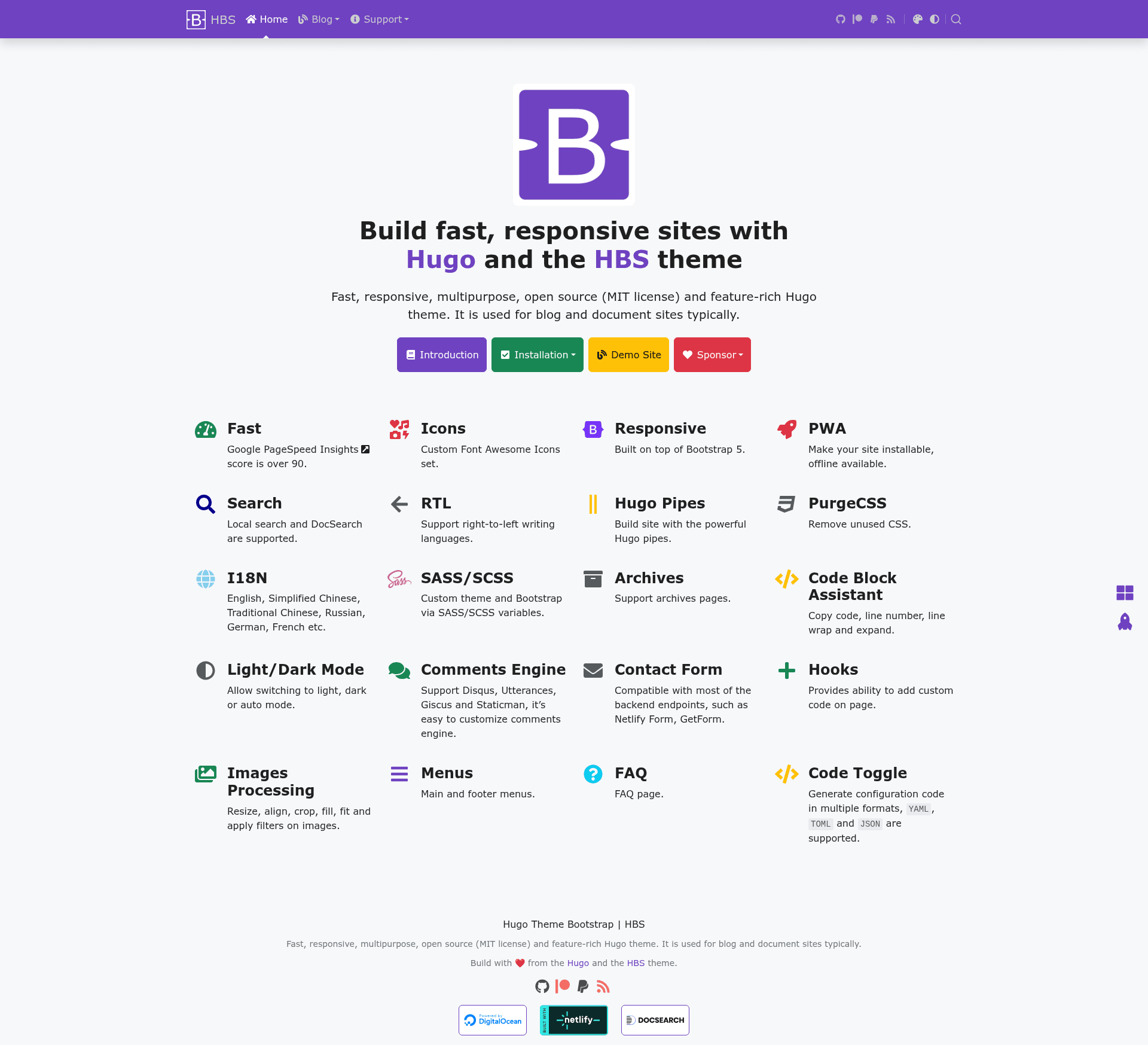
A fast, responsive, feature-rich Hugo theme for personal blogs and documentation sites, built with Hugo and Bootstrap 5.

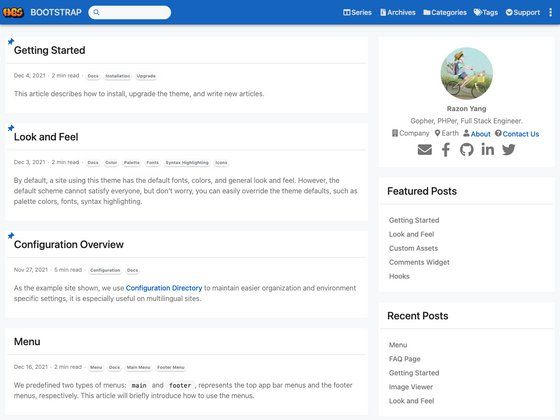
A tag-based Ghost theme that organizes publications into visual collections with beautifully designed tag columns.
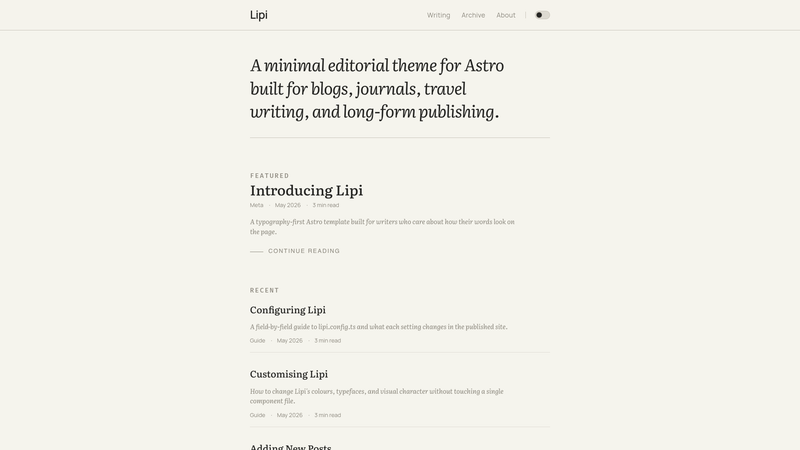
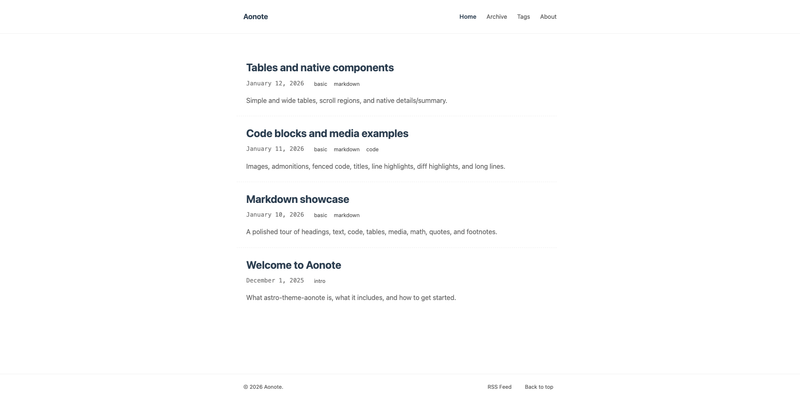
A typography-first Astro template for long-form writing, built for essays, travel notes, developer journals, and personal archives.
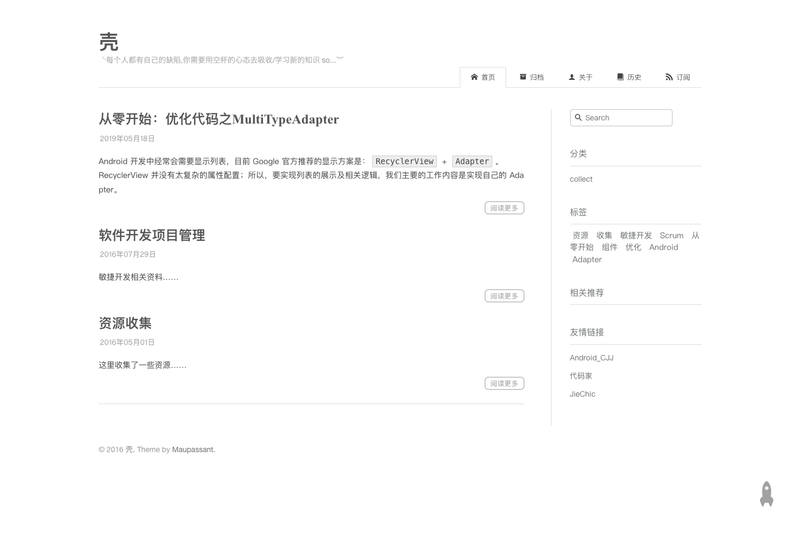
A minimalist Jekyll blog theme focused on performance across devices, with ports to WordPress, Hexo, Ghost, and more.
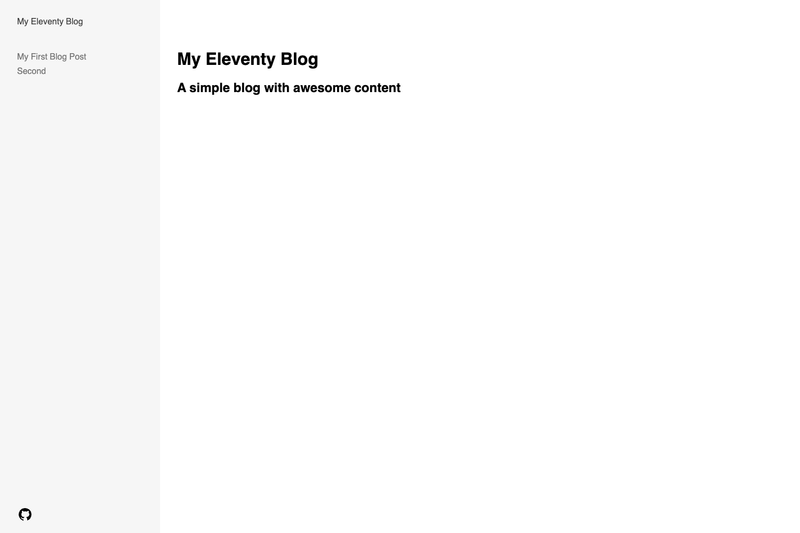
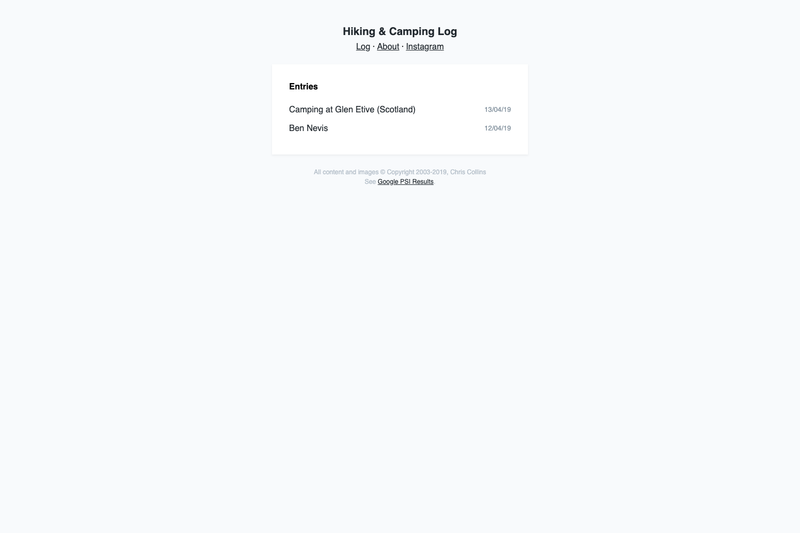
A GitHub-hosted starter project for building a static blog with the Eleventy (11ty) static site generator.
Hugo Bootstrap Theme is an open-source Hugo theme by Razon Yang that generates fast, responsive personal blog and documentation sites. It takes Markdown content and Hugo configuration as input and outputs a static website styled with Bootstrap 5, with optional Progressive Web App behavior and built-in local search. The project is hosted on GitHub with 554 stars and is distributed through a public repository.
Hugo Bootstrap Theme is an open-source Hugo theme for building personal blogs and documentation sites. It uses Bootstrap 5 for its responsive layout and integrates with Hugo's static site generator, turning Markdown content into a deployable static website. The theme is developed by Razon Yang and is available on GitHub, with documentation in three languages.
Hugo Bootstrap Theme is open source and free to use, hosted on GitHub with a public license file. The documentation site and demo sites are also publicly accessible at no charge.
Yes. The theme is open source, hosted on GitHub, and available to use without cost. The demo sites and documentation are publicly accessible as well.
Yes. PWA support is built in and covered in a dedicated documentation page, allowing your site to be installed on devices and work offline.
The docs are available in English, Simplified Chinese, and Traditional Chinese, which also indicates the theme can render multilingual content.
The maintainer states that no new feature requests will be accepted unless critical. Bug fixes and adaptations to new Hugo versions will still be implemented.
The hugo-theme-bootstrap-skeleton repository provides a starter template to quickly begin a new site using the theme.