Newsletter
Join the Community
Subscribe to our newsletter for the latest news and updates

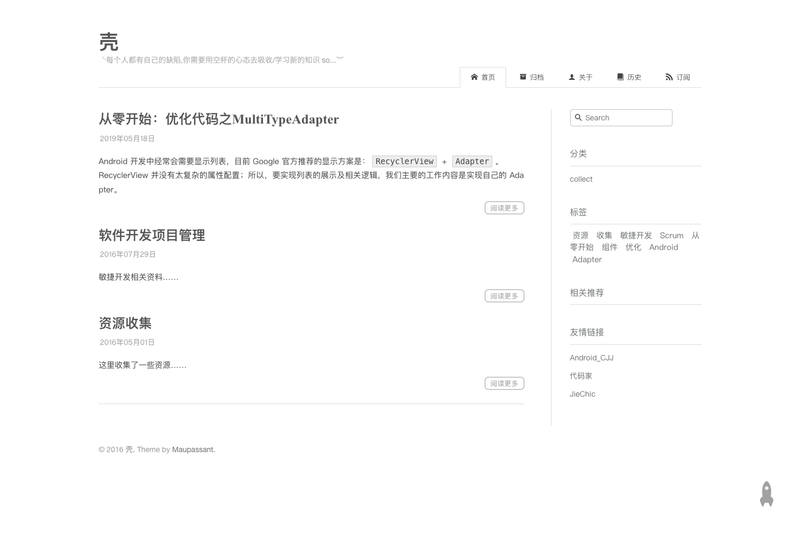
A minimalist Jekyll blog theme focused on performance across devices, with ports to WordPress, Hexo, Ghost, and more.
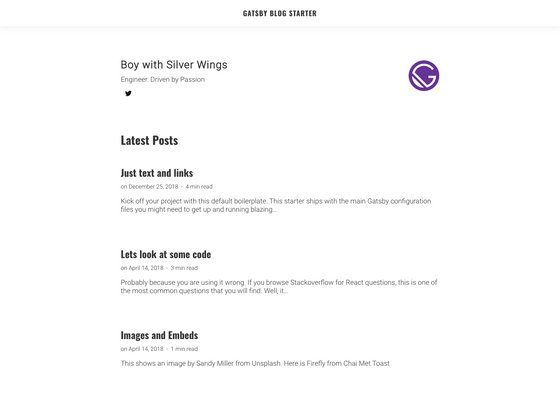
A Gatsby blog starter with styled-components, markdown content, and one-click Netlify deployment.

A tag-based Ghost theme that organizes publications into visual collections with beautifully designed tag columns.
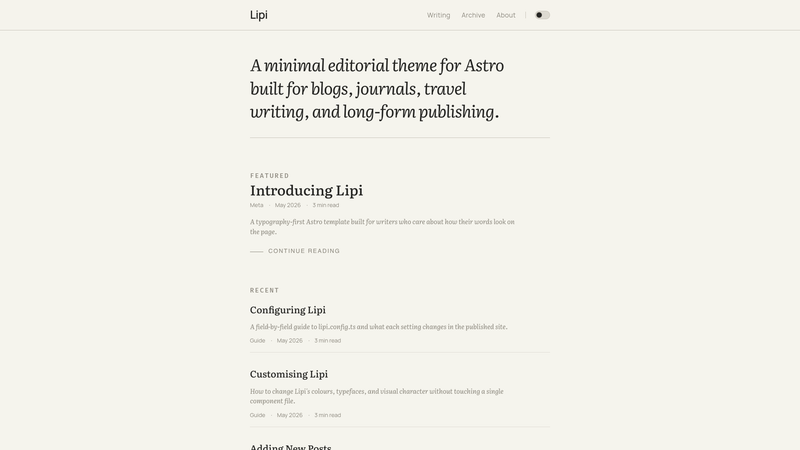
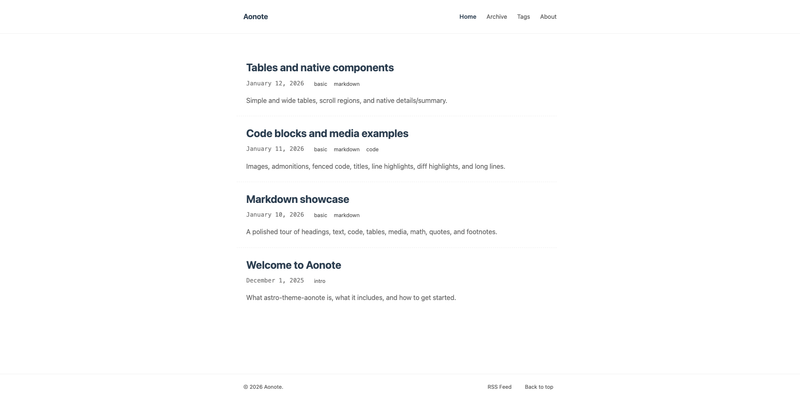
A typography-first Astro template for long-form writing, built for essays, travel notes, developer journals, and personal archives.
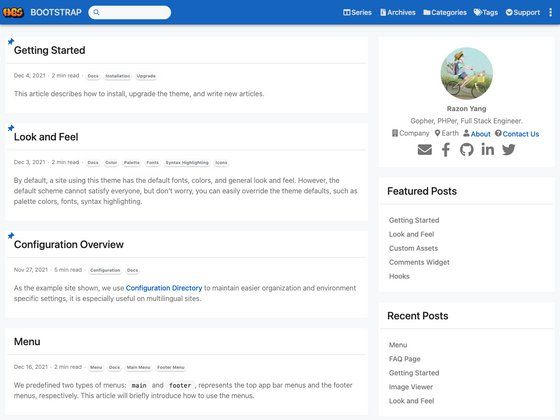
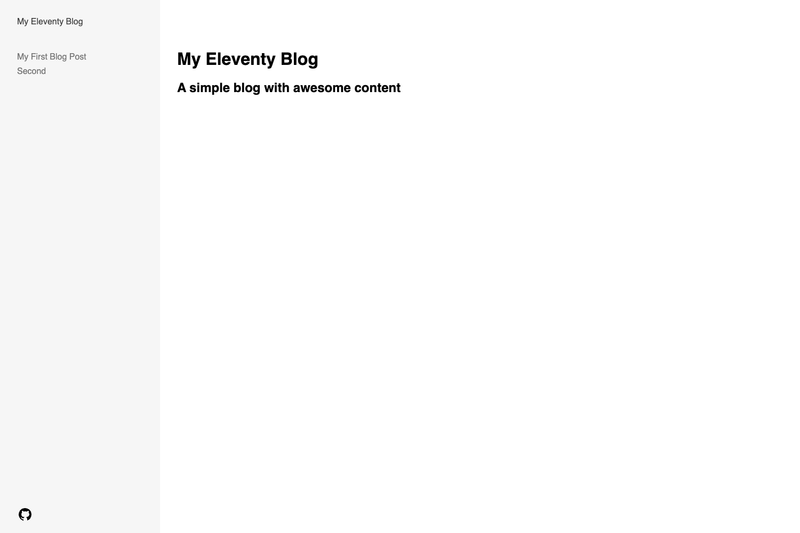
A fast, responsive, feature-rich Hugo theme for personal blogs and documentation sites, built with Hugo and Bootstrap 5.
Maupassant Jekyll is a minimal, performance-oriented Jekyll theme for personal blogs, available on GitHub and ported to seven publishing platforms.
Maupassant Jekyll is a simple Jekyll template designed to deliver great performance on different devices. It takes Jekyll's static site generator as its foundation and produces a fast-loading blog site. The theme is maintained on GitHub, and the repository includes installation instructions for building and serving the site locally.
jekyll build, then jekyll server to serve locally.Bloggers who use Jekyll and want a lightweight, fast theme will find this a good fit. Developers who maintain a blog and prefer a minimal aesthetic can use it as a base to customize. It also suits users migrating between platforms because the theme offers ports to several other systems.
jekyll build and jekyll server commands.The template follows standard Jekyll workflow. Start by cloning the repository with git clone https://github.com/alafighting/maupassant-jekyll.git maupassant, change into the directory, then run jekyll build to generate static HTML files, and jekyll server to preview the site locally.
Yes. The project is publicly available on GitHub and can be cloned without charge. No licensing or payment details are mentioned in the repository.
The repository does not specify a minimum Jekyll version, but it relies on standard Jekyll commands (build and server) that work with current Jekyll releases.
Yes. The theme has been ported to Typecho, Octopress, Farbox, WordPress, Hexo, and Ghost. Each port has its own GitHub repository linked from the main README.
Use the commands in the README: git clone https://github.com/alafighting/maupassant-jekyll.git maupassant, then cd maupassant, followed by jekyll build and jekyll server.