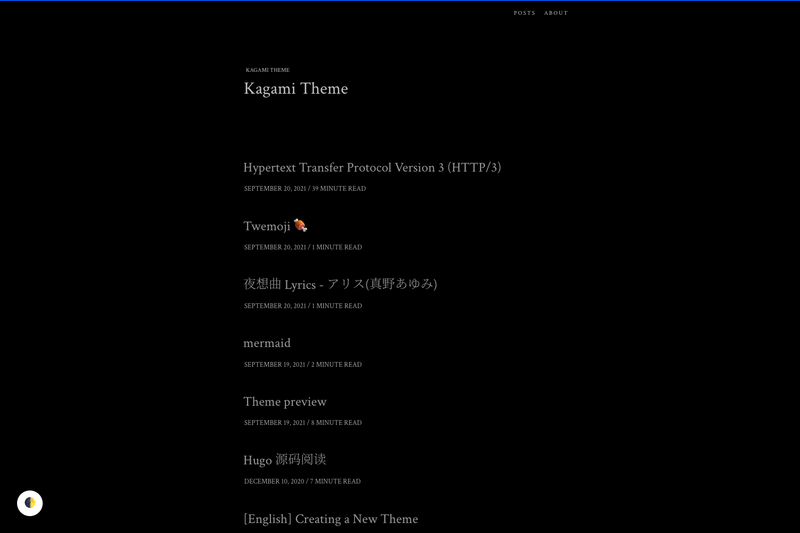
Hugo Theme Kagami is a static blog theme for the Hugo site generator, ported from the Kagami Jekyll theme. It provides a ready-made blog layout that takes Markdown content and Hugo configuration as input and outputs a static site.
What is Hugo Theme Kagami?
Hugo Theme Kagami is a Hugo theme designed for blogging, originally created by mayocream as a port of the Kagami Jekyll theme by kamikat. It runs on the Hugo static site generator, which means it uses Hugo's templating system to render pages. The theme is distributed as an open-source repository on GitHub under the name hugo-theme-kagami, and it includes a live preview at the project's GitHub Pages site for testing before installation. The repository metadata lists 'blog', 'hugo', and 'theme' as topics, confirming its intended use.
Key Features
- Hugo compatibility — Built specifically as a Hugo theme, so it works out of the box with Hugo's static site generator and standard Hugo content structures.
- Blog-focused layout — The theme is tailored for blogs, as indicated by the 'blog' topic, with a design suited for personal or editorial posts.
- Live preview — A live demo is available at the GitHub Pages site linked in the repository, allowing you to see the theme's appearance before installing it.
- GitHub Actions integration — The repository includes a GitHub Actions workflow that automatically builds and previews the theme, as shown by the 'pages' badge.
- Jekyll port — The theme is a direct port of kamikat's Jekyll theme, making it a useful reference for migrating a Jekyll site to Hugo.
Who is it for?
- Hugo users — anyone using Hugo who wants a pre-built blog theme without having to design and code a layout from scratch.
- Bloggers — individuals or small teams who need a simple, static blog setup with a clean visual presentation.
- Jekyll migrants — users transitioning from Jekyll who want to preserve a similar design while moving to Hugo's ecosystem.
- Theme developers — developers interested in seeing how a Jekyll theme can be ported to Hugo, using this repository as a practical example.
Use cases
- Personal bloggers: create a personal blog by adding this theme to a Hugo site and writing posts in Markdown.
- Portfolio sites: adapt the blog layout to showcase articles or project updates in a static format.
- Theme testers: use the live preview to evaluate the theme's responsiveness and features before committing to it.
- Open-source contributors: study the codebase to understand how Hugo themes are structured and contribute to the project.