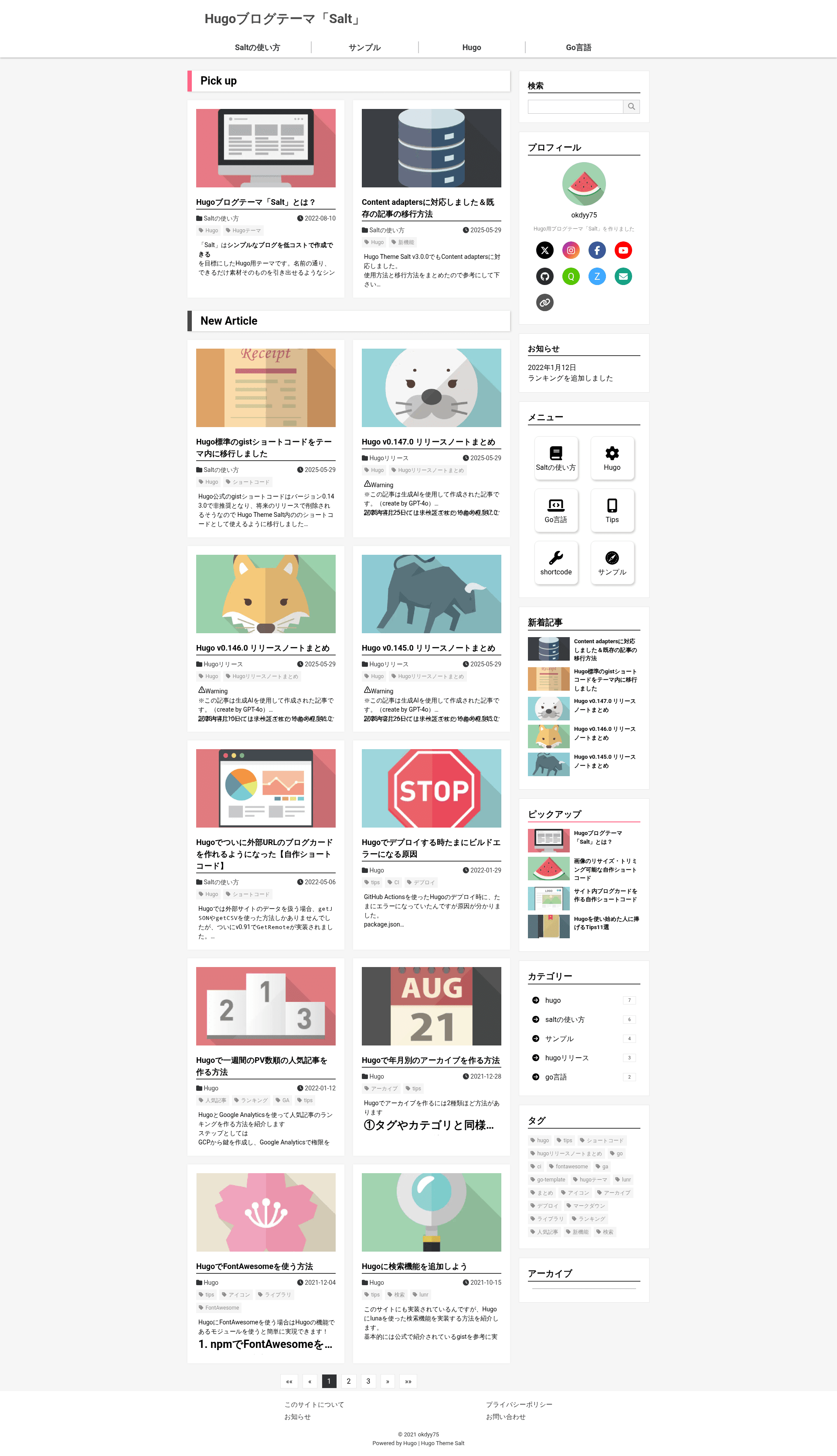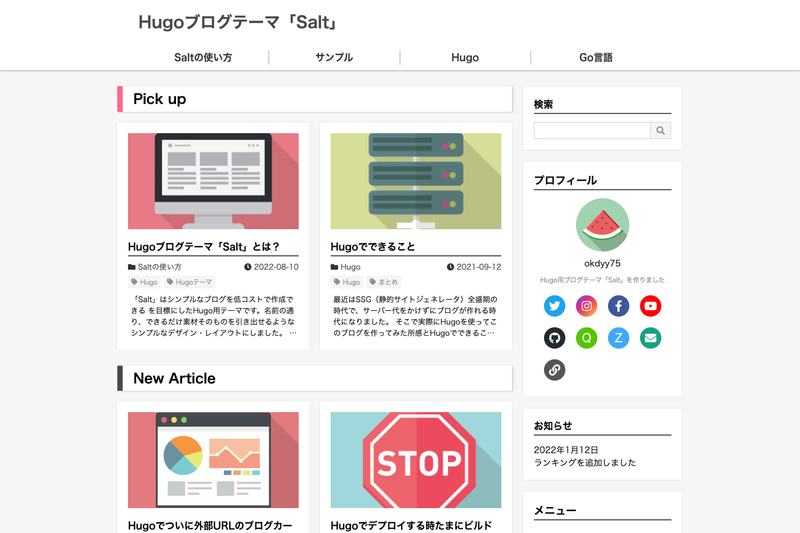
Hugo Theme Salt is a minimal blog theme for the Hugo static site generator, designed to produce a simple, text-focused blog from Markdown content. It is made by the developer behind the Zenn book that documents it, and is distributed as a GitHub repository with 29 stars at the time of analysis.
What is Hugo Theme Salt?
Hugo Theme Salt is a Hugo theme that turns Markdown content into a static blog. It is explicitly described as "simple" (Japanese: シンプル) by its author, indicating a minimal design focused on readability rather than feature-packed layouts. The theme runs on Hugo, meaning it takes content files (typically Markdown) and generates static HTML output. It ships with an example content directory called exampleContent and a dedicated development configuration file, config.org.yml, which are used to preview the theme during development.
Key Features
- Minimal design philosophy — The theme is described by its author as "シンプル" (simple), suggesting a clean, content-first layout for blogs.
- Example content directory — The repository includes an
exampleContentdirectory, used with the commandhugo server -c exampleContent --config config.org.ymlto preview the theme. - Custom development configuration — A separate config file named
config.org.ymlis provided, which allows developers to run Hugo with a distinct setup for development purposes. - Structured development workflow — The project documents a Git branching and versioning workflow: merge feature branches into
develop, then intomain; after amainmerge, tag releases using a vX.Y.Z format and publish release notes; keep thevXbranch updated by pulling frommain.
Who is it for?
- Bloggers — People who want a minimal, no-frills blog theme built on Hugo, and who are comfortable writing content as Markdown files.
- Hugo developers — Developers looking for a simple, readable theme to fork and customize, with a clear example content setup for testing changes.
- Japanese-speaking users — The theme's description and its usage guide (published as a Zenn book) are in Japanese, so it is particularly accessible to Japanese-speaking Hugo users.
What can you do with it?
- Set up a personal blog: Use the theme as a quick starting point for a static blog hosted on any platform that supports Hugo output, then publish Markdown posts through Hugo's normal build process.
- Preview with sample content: Run
hugo server -c exampleContent --config config.org.ymlto see how the theme looks with the included example posts before adding your own. - Create new articles: Use the command
hugo new article/sample/hoge/index.md -c exampleContent --config config.org.ymlto scaffold a new post inside the example content directory.
How does Hugo Theme Salt work?
Hugo Theme Salt works like any Hugo theme: you place the theme in your site's themes directory, then run Hugo to generate static pages from your content. The repository's development workflow suggests using the exampleContent directory specifically for testing: run the server command to preview, and use the new command to create placeholder articles. The config.org.yml file is used during these development commands, allowing the theme to be evaluated independently of a user's main site configuration.
FAQ
What does Hugo Theme Salt do?
Hugo Theme Salt is a minimal blog theme for the Hugo static site generator. It converts Markdown content files into a static blog site, prioritizing simplicity and readability. The theme is described as "simple" by its author and includes example content to demonstrate how it works.
How do I preview Hugo Theme Salt?
You can preview the theme locally by running hugo server -c exampleContent --config config.org.yml from the theme's repository. This command starts a local Hugo server using the example content directory and the development config file, so you can see the theme in action.
Where can I find detailed usage instructions for Hugo Theme Salt?
Detailed usage instructions are published in a Zenn book by the author, available at https://zenn.dev/okdyy75/books/fe9188ccfd6ae3. The repository's description points to this book for further guidance.
Does Hugo Theme Salt include example content?
Yes, the repository includes an exampleContent directory. This directory contains sample posts that you can use to preview the theme, and it is also the target directory for the hugo new command shown in the development usage section.