Newsletter
Join the Community
Subscribe to our newsletter for the latest news and updates

Minimalist Hugo template for academic websites, built on PaperMod and deployable to GitHub Pages via GitHub Actions.

Sample GatsbyJS portfolio website integrated with DatoCMS for content management.

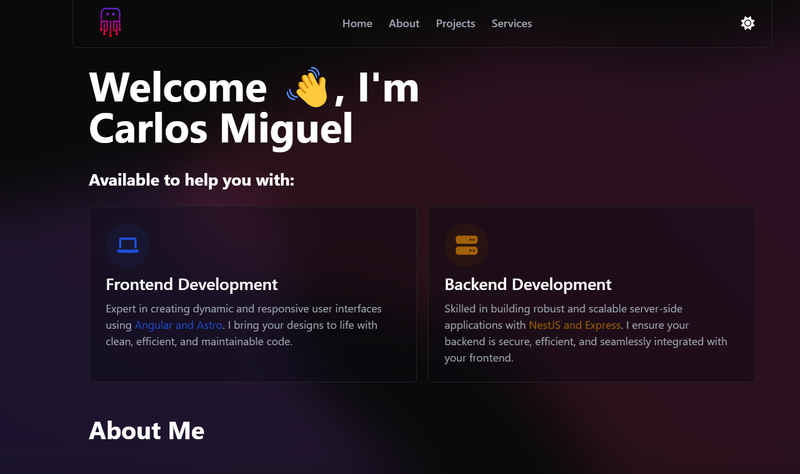
Free Bootstrap 4 HTML5 portfolio template with hero header, parallax effect, modal video player, and portfolio grid.

A Vue.js + VuePress homepage template with particle backgrounds, markdown content, and multi-language support for personal sites.
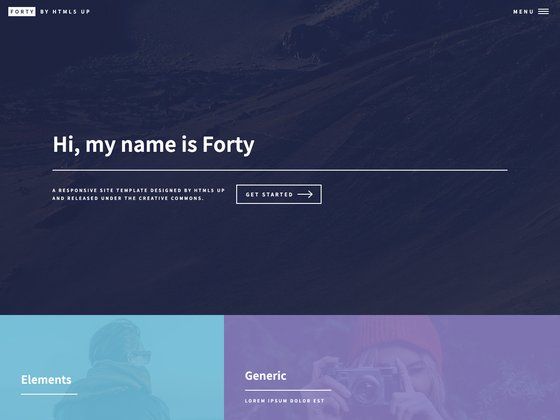
A Jekyll port of HTML5 UP's Forty theme with tile-grid layout, Formspree contact form, and configurable social profiles.
hugo-website is a minimalist Hugo template for building personal academic websites, built on the PaperMod theme and deployed automatically to GitHub Pages via GitHub Actions.
The template is a starting point for creating an academic personal website with Hugo. It takes your content as Markdown files and a config.yml configuration, processes them through Hugo v0.147.2, and produces a static website that can be hosted anywhere, with GitHub Pages as the documented target. The template is maintained by Pascal Michaillat, who also provides documentation at pascalmichaillat.org/b/ and a live illustration at pascalmichaillat.org/hugo-website/. It was originally designed for academic homepages, stripping the PaperMod theme down to a minimalist look.
.github/workflows/hugo.yml builds the site with Hugo and publishes it to GitHub Pages on every push to the main branch.hugo server from the repository directory serves the site at http://localhost:1313 with automatic rebuilds as you edit content.baseURL live in a single config.yml file, and you update the URL to match your chosen domain.hugo server to preview changes instantly at http://localhost:1313 without uploading anything until you are ready.The workflow is straightforward: clone the repository using the "Use this template" button, then clone the new repository to your local machine via GitHub Desktop. Update baseURL in config.yml to your planned website URL (the default is https://username.github.io). Run hugo server locally to develop, or simply commit and push; the GitHub Actions workflow then builds the static site and deploys it to GitHub Pages. On the first push, you must configure GitHub Pages to publish via a GitHub Action—the ready-made "Deploy Hugo site to Pages" action is referenced in the README.
The template is free. It is licensed under the MIT License, and the recommended hosting path—GitHub Pages for public repositories—is free of charge. No pricing tiers are mentioned.
Yes, this template is released under the MIT License, so you can use, modify, and distribute it freely. The recommended hosting platform (GitHub Pages for public repositories) also offers free static hosting.
After cloning the repository, update baseURL in config.yml. Push your content to GitHub and ensure you enable GitHub Actions and Pages—GitHub offers a ready-made "Deploy Hugo site to Pages" action. Each subsequent push triggers a workflow that builds the site and deploys it to GitHub Pages.
This template was developed and tested with Hugo v0.147.2. The README notes that other Hugo versions may require minor adjustments, so it is safest to use v0.147.2 or follow the Hugo version used in the GitHub Actions workflow.
No. You create content as Markdown files and adjust settings in config.yml. For Git operations, the README recommends GitHub Desktop, which avoids command-line usage. Local preview is a single terminal command: hugo server.
Yes, because the template is based on the PaperMod theme and is open source, you can edit Hugo templates, CSS, and other files to customize the look. The template has already modified PaperMod to be more minimalist and academic-oriented.