Newsletter
Join the Community
Subscribe to our newsletter for the latest news and updates

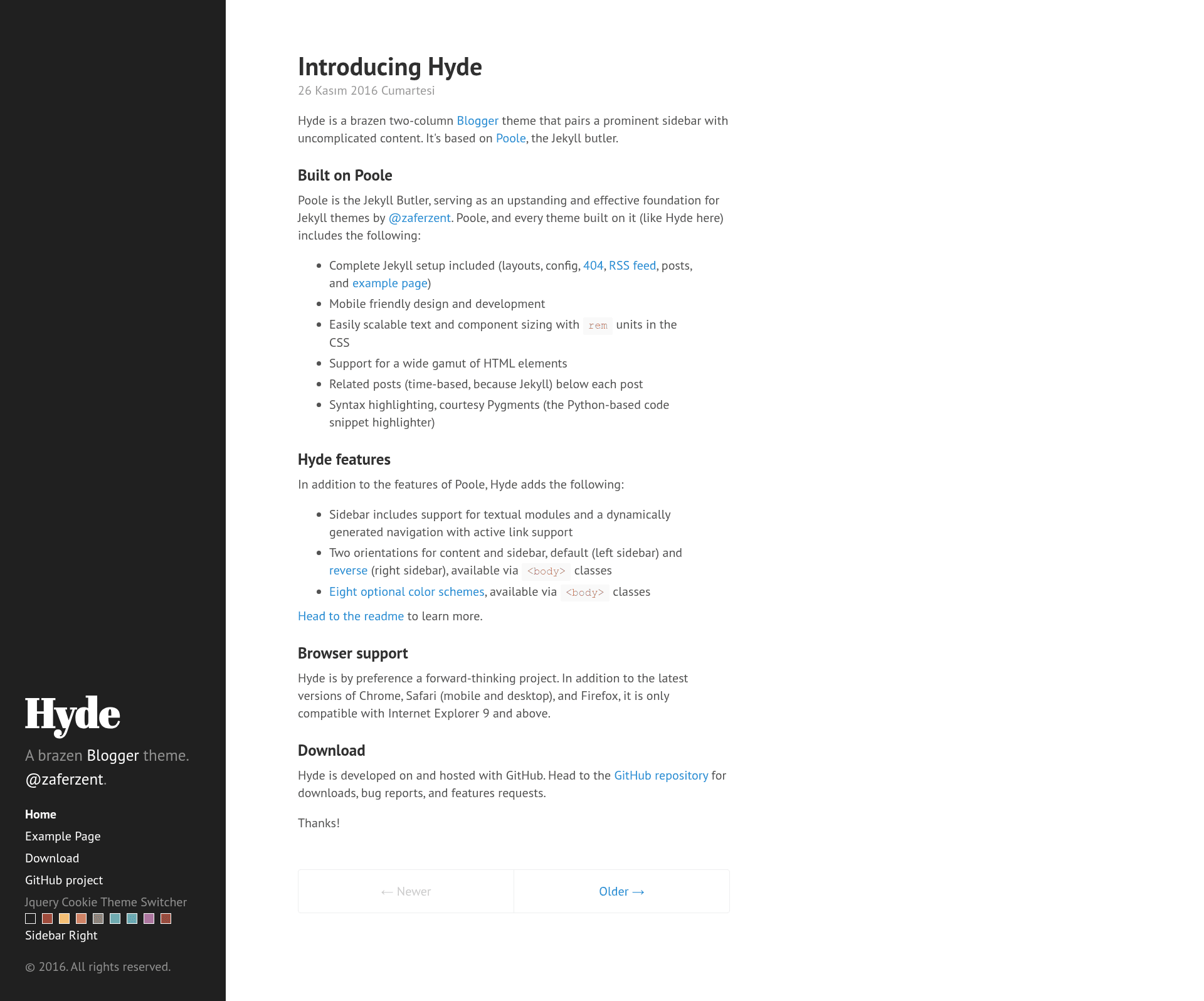
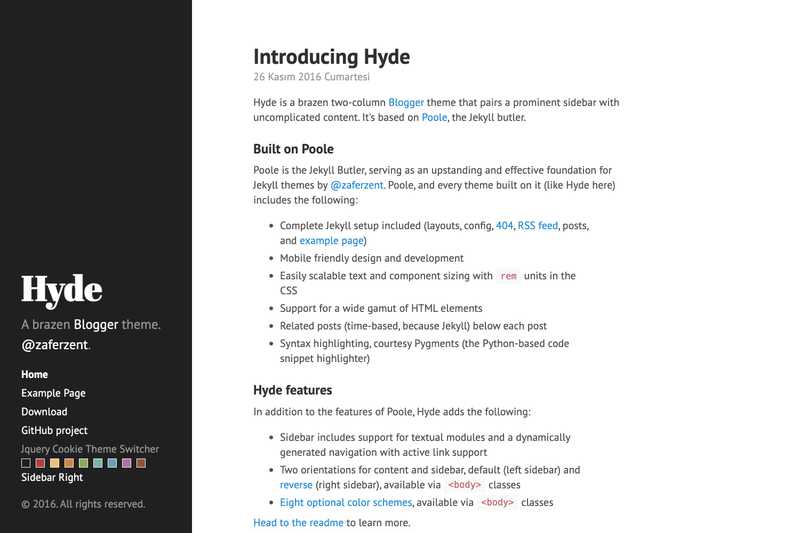
Hyde adapted into the Blogger from Jekyll.
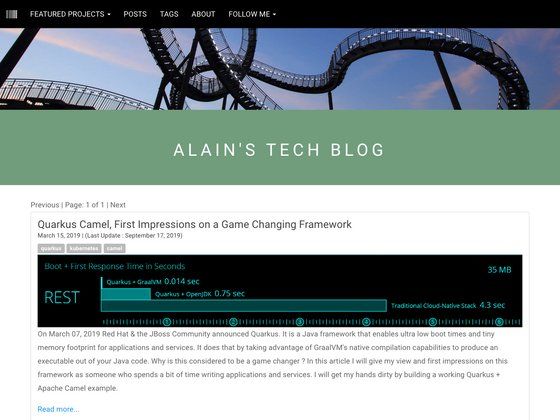
A simple green personal blog built in plain HTML to present projects and thoughts on GitHub Pages.
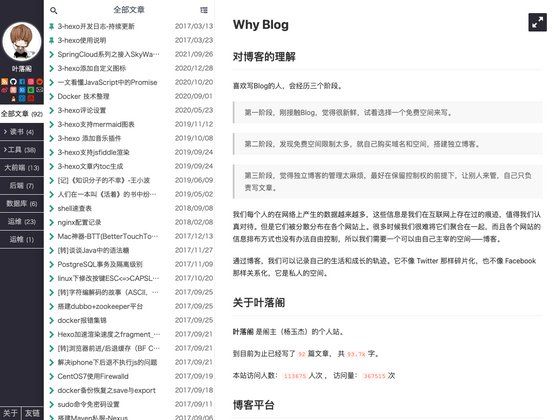
A minimalist Hexo blog theme with a three-stage layout, unified category/tag/title search, multi-author mode, and mobile support.
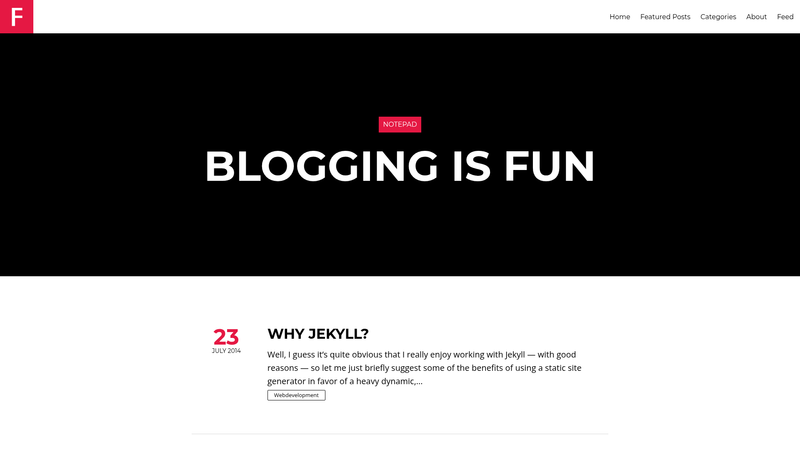
A simple, clean Jekyll blog theme with Zurb Foundation 5, fullscreen post covers, and Disqus comments.
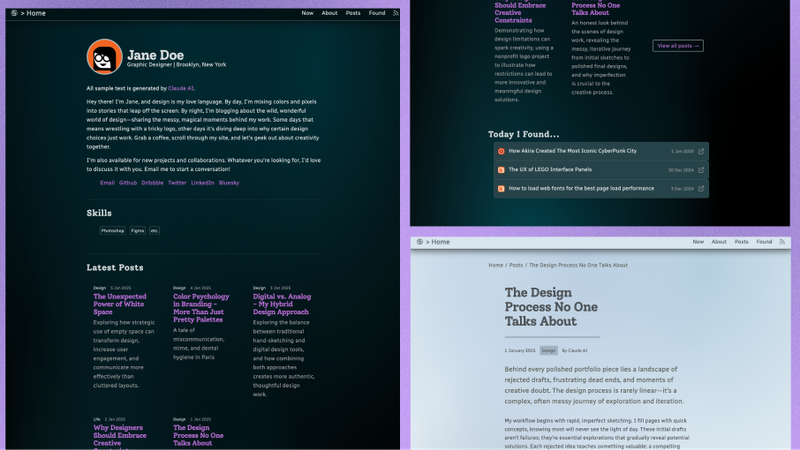
A minimal, modern personal blog theme for Astro with PWA, dark/light mode, and MDX content.
Hyde Blogger Template is a two-column blog theme for Blogger that adapts the popular Jekyll Hyde layout into an XML template, pairing a prominent sidebar with straightforward content. The template is maintained by Zafer Zent, open-sourced under the MIT license, and is designed specifically for Blogger and Blogspot blogs.
Hyde Blogger Template converts the Jekyll Hyde design into a Blogger XML theme, giving Blogspot users the same big sidebar and minimal post layout without running Jekyll. You install the template's XML file through the Blogger dashboard, and it outputs a blog with a responsive two-column structure, a sidebar area, and built-in customization classes. The template was authored by Zafer Zent and is based on the original Hyde theme by the Poole project.
theme-base-08 to the body element.layout-reverse class flips the sidebar from the left to the right side of the page..sidebar-sticky class pins sidebar content to the bottom of the sidebar; removing the class makes the sidebar flow normally from top to bottom.active class available to highlight the current page.master for development and gh-pages for the hosted site.layout-reverse class for a different visual orientation.Installation requires only two steps: download the XML file from the repository, then upload it through Blogger Dashboard > Template > Backup / Restore, or paste it into Template > Edit HTML. After installation, all configuration happens by editing the body classes or the navigation list inside the template HTML, with no build tools or server-side setup.
Yes, the template is open-sourced under the MIT license, so you can use, modify, and redistribute it freely.
It works only on Blogger and Blogspot blogs. It does not run on WordPress, Ghost, or static site generators directly, though the original Jekyll version is available for those who want that platform.
Add one of the eight base16 theme classes, such as theme-base-08, to the body element in the template HTML. The README includes screenshots showing the available colors.
Yes, add the layout-reverse class to the body element to flip the sidebar from the left to the right side of the page.
The theme switcher stores the visitor's choice with a cookie, but the README notes it does not change the page on refresh — the selection remains only until the page is reloaded.