Newsletter
Join the Community
Subscribe to our newsletter for the latest news and updates

A minimal, responsive Jekyll blog theme inspired by the Swedish concept of 'just the right amount'.
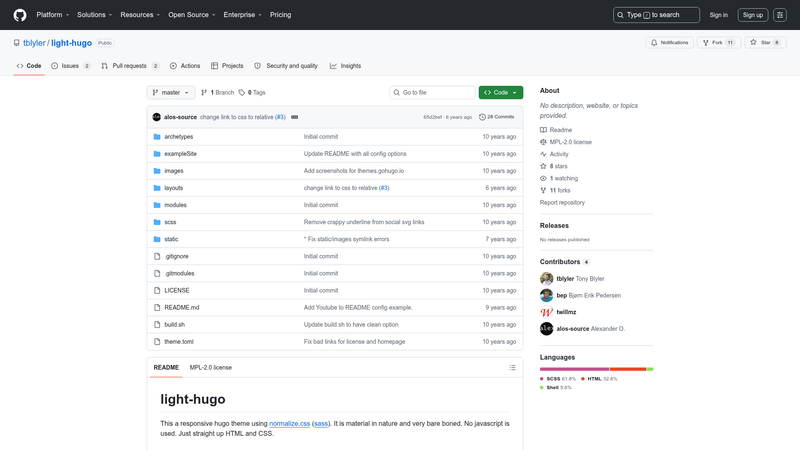
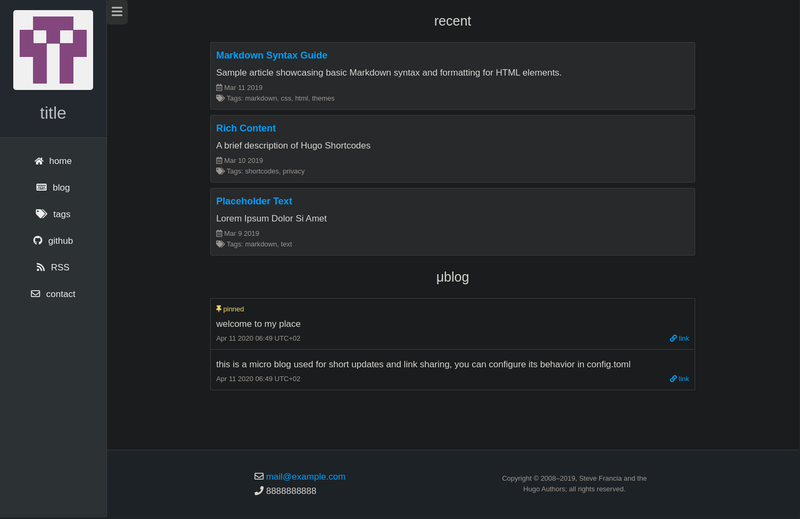
Minimal, responsive Hugo theme with no JavaScript, normalize.css styling, and support for posts and pages.

A Jekyll theme for GitHub Pages that combines Bootstrap 4 and fullpage.js to build responsive scrolling static websites and blogs.
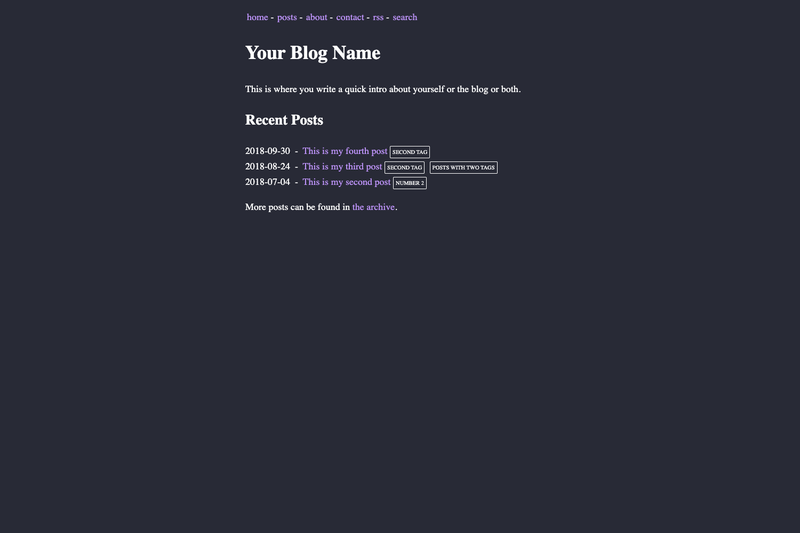
A very minimal developer blog theme using Eleventy.
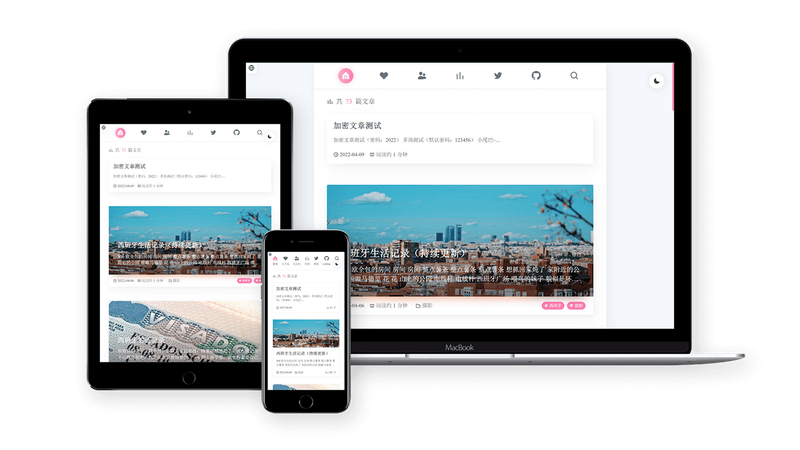
A performance-first, SEO-friendly Hugo blog theme with Tailwind CSS, dark mode, PWA, and local search.
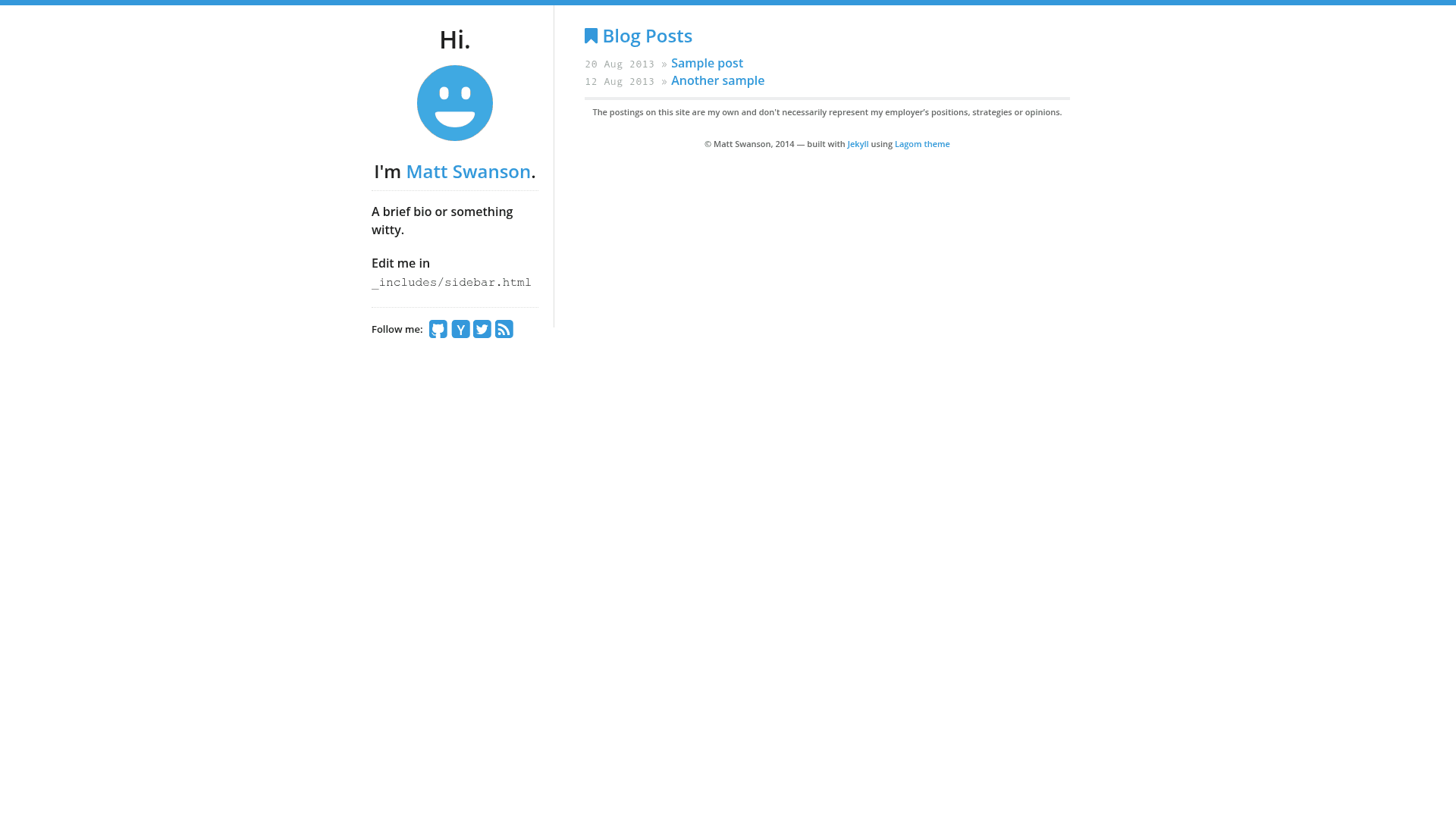
Lagom is a free, open-source Jekyll blog theme built for personal publishing, extracted by Matt Swanson from the source of his own site at mdswanson.com. The name comes from the Swedish word for 'just the right amount,' and the theme's styling matches that idea: a responsive, minimal layout with a focus on content.
Lagom is a Jekyll theme for blogs and personal sites. It takes a standard Jekyll project (posts written in Markdown, configuration in _data/theme.yml) and produces a static site with a responsive layout, an Atom feed, and Font Awesome icons. It runs on any Jekyll environment, including GitHub Pages via the gh-pages branch, and is distributed under the MIT license with no attribution required.
CNAME file for custom domains and works by renaming your repo to username.github.io.git clone and bundle install, so it suits technically inclined users who want a Jekyll theme they can tweak.jekyll serve locally, and push to GitHub Pages to go live.theme.yml, replace logo.png and favicon.png, and set your domain in CNAME.Fork and clone the repository, then run bundle install to get the GitHub Pages gem (which includes Jekyll). Start the local server with jekyll serve, and edit the files under _data/theme.yml and _posts to shape the site. To deploy, rename your GitHub repository to your username.github.io and push; everything on the gh-pages branch is served automatically.
Yes. The theme is released under the MIT license with no added caveats, so you can use it on personal or commercial sites without paying or linking back to the author.
No. The repository includes everything you need. Running bundle install installs the GitHub Pages gem, which includes Jekyll and the dependencies, then jekyll serve starts a local server at http://localhost:4000.
Yes. Edit the CNAME file in the repository to contain only your domain name (for example, example.com), then push to GitHub Pages. The theme will respect the custom domain when your repository is set up correctly.
Yes. Social links are configured in the _data/theme.yml file, and they render using Font Awesome icons in the header and footer.
Lagom's responsive layout is based on Skeleton, a lightweight CSS framework. It doesn't use a build step or preprocessor; the CSS is plain and served as-is by Jekyll.