Newsletter
Join the Community
Subscribe to our newsletter for the latest news and updates

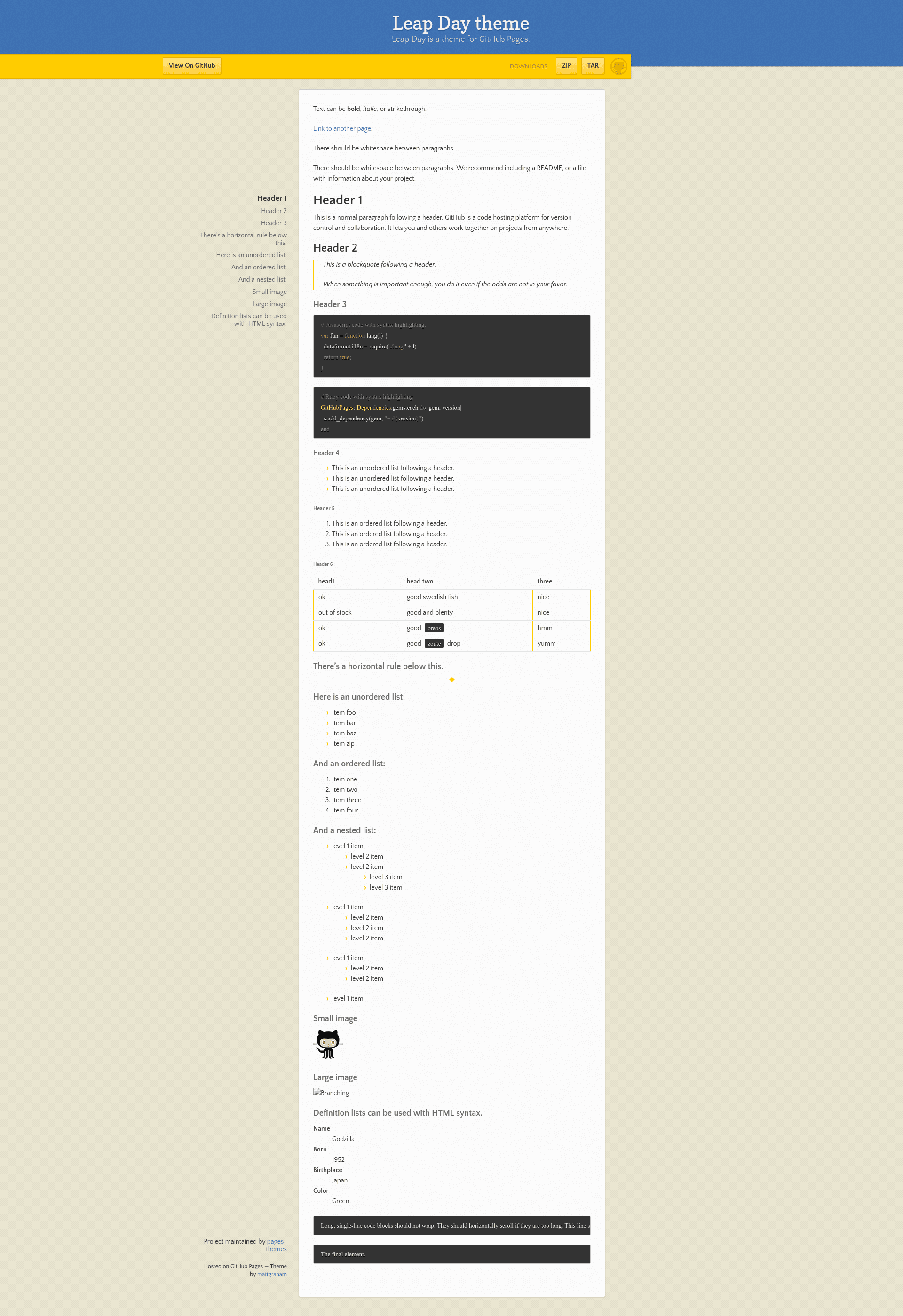
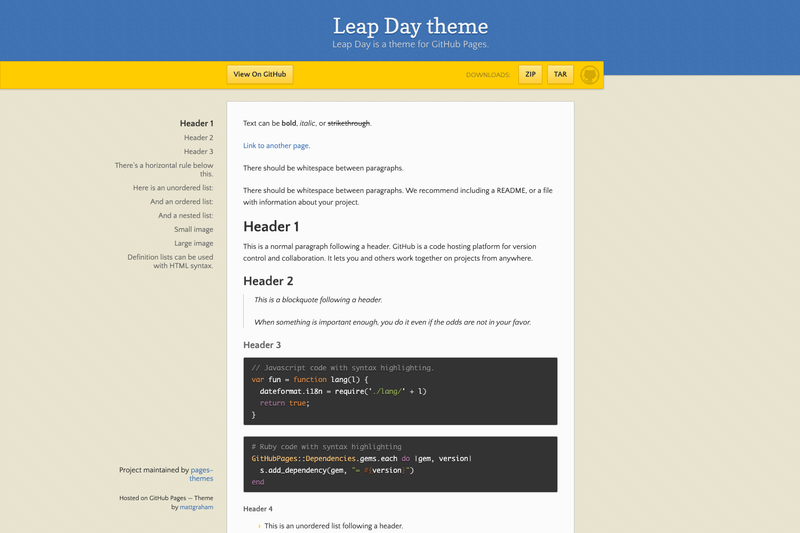
Leap day is a Jekyll theme for GitHub Pages
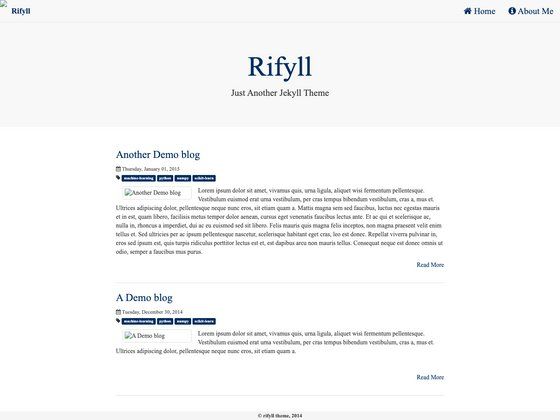
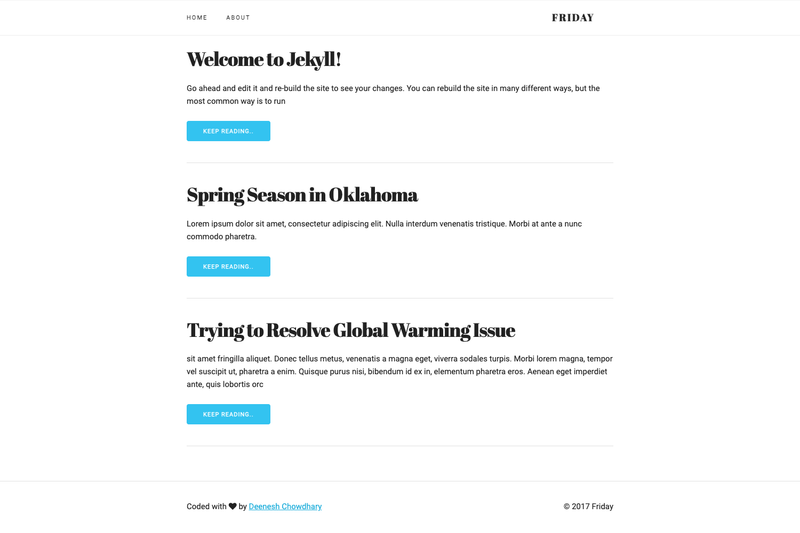
A simple blog template for Jekyll based on Twitter Bootstrap 3.

A minimal Hugo theme for blogs, styled with water.css and featuring multilingual and AMP support.

Hacker-like Jekyll theme for notes, CVs, and personal sites with code highlighting, math, and encryption.
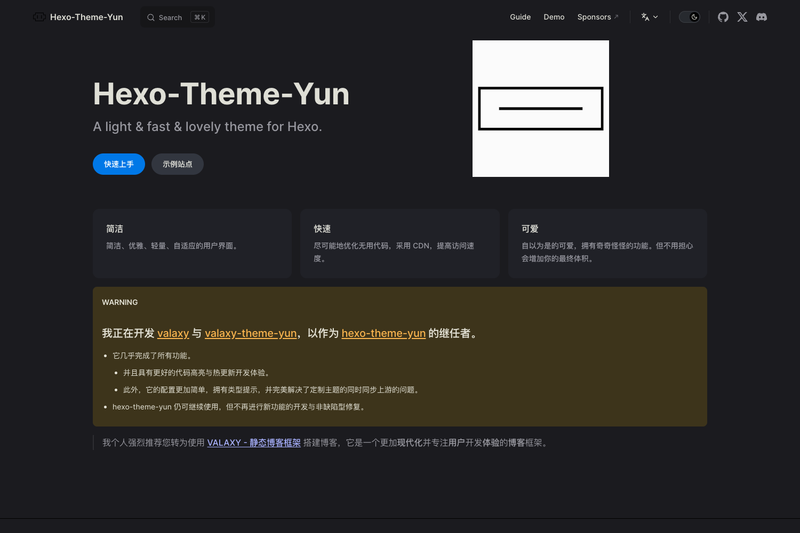
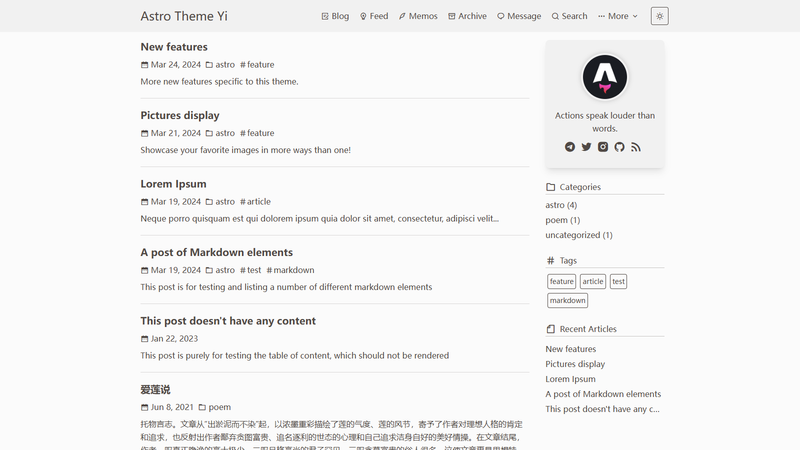
A light & fast & lovely theme for Hexo. 一个对可爱自以为是的 Hexo 主题。
Leap day is a Jekyll theme for GitHub Pages that lets you publish a simple, clean static site by adding a single remote_theme line to your Jekyll configuration.
Leap day is a Jekyll theme maintained by the GitHub Pages team (the pages-themes organization). It takes a Jekyll site's _config.yml as input and produces a static website served on GitHub Pages, using the default layout and styles included with the theme. The theme is open source and distributed as a Ruby gem (jekyll-theme-leap-day), with versioned releases such as v0.2.0 referenced via the remote_theme directive.
remote_theme: pages-themes/[email protected] to _config.yml; no need to clone or fork the theme repository.title and description in _config.yml; optionally enable show_downloads (true/false) and add a google_analytics tracking ID.assets/css/style.scss in your site and importing the theme with an @import line, then adding your own Sass or CSS._layouts/default.html into your own _layouts folder to modify the HTML structure, or add files to _includes for partial changes like a custom favicon._includes/head-custom-google-analytics.html in your Jekyll site.github: key in _config.yml, as shown in the theme's documentation.script/bootstrap to install dependencies, then bundle exec jekyll serve to preview the theme at localhost:4000.script/cibuild to verify a site using the theme builds successfully.show_downloads: true to display a download button pointing to your project's zip archive, and override GitHub URLs as needed.remote_theme: pages-themes/[email protected] to your site's _config.yml, and include jekyll-remote-theme in your plugins list.gem "github-pages", group: :jekyll_plugins to your Gemfile, then run bundle install and bundle exec jekyll serve.Yes, Leap day is an open-source theme released under the pages-themes organization. You can use it on any GitHub Pages site without cost, and the source code is available on GitHub.
Add remote_theme: pages-themes/[email protected] to your _config.yml and make sure jekyll-remote-theme is in your plugins list. GitHub Pages will automatically apply the theme when you push your site.
Yes. You can create a file at assets/css/style.scss in your site, import the theme's styles with an @import statement, and add your own CSS or Sass overrides after that import. You can also change the theme's Sass variables by setting them before the import line.
Yes. The theme reads a google_analytics variable from _config.yml, and you can provide a custom analytics snippet by creating _includes/head-custom-google-analytics.html in your Jekyll site.
Yes. The theme uses GitHub-provided URLs, but you can override them by adding a github: section in _config.yml. For example, set github.zip_url to point to a custom download link.