Newsletter
Join the Community
Subscribe to our newsletter for the latest news and updates

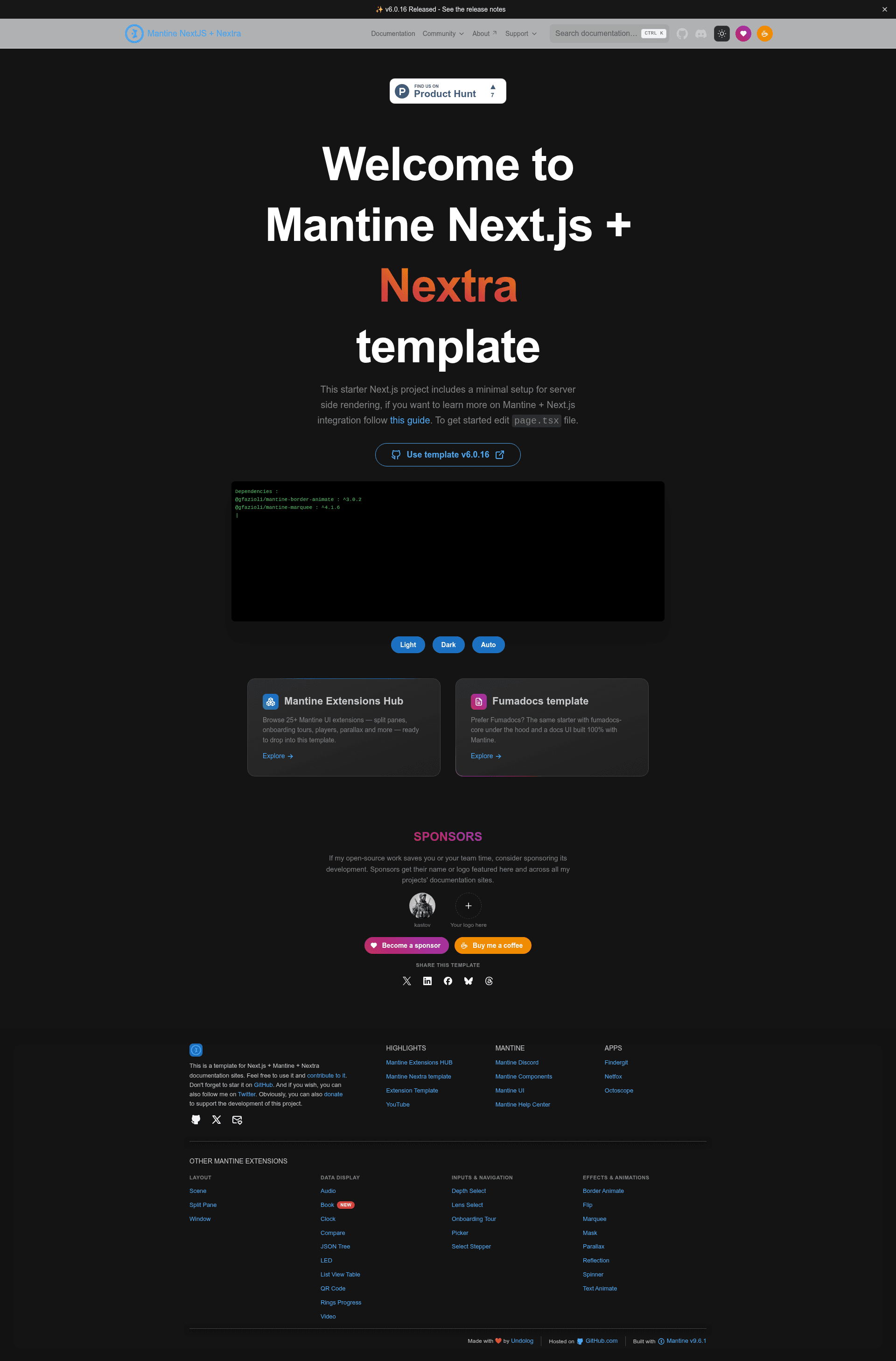
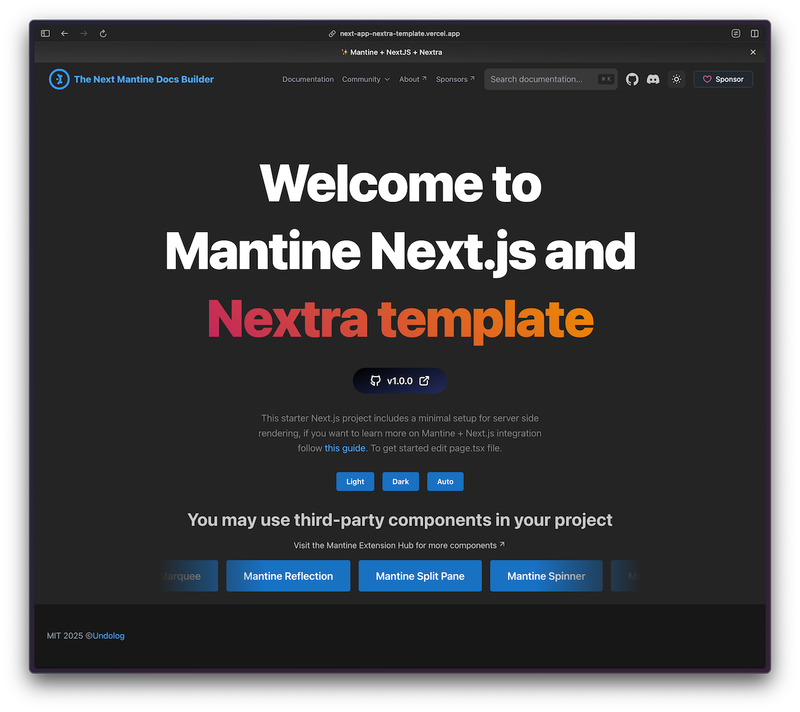
Next.js 16 App Router starter combining Mantine 9 UI components with a Nextra 4 documentation site, TypeScript 6, Storybook, Jest, and Pagefind search.
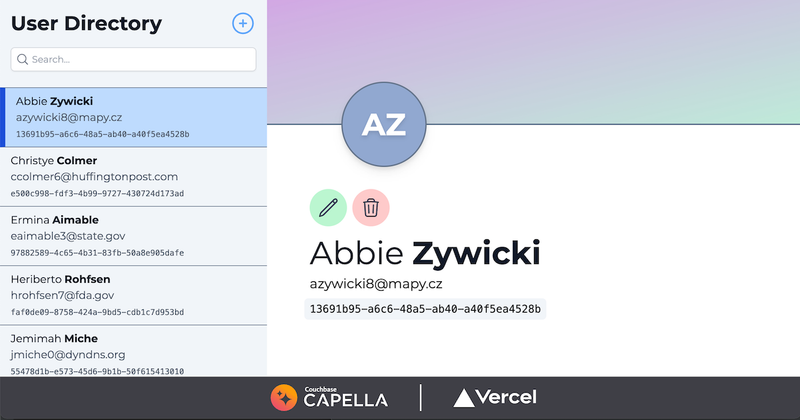
Next.js application that enables you to create, read, update, and delete user profiles stored in a Couchbase Capella database.
Vercel example showing feature flags in Next.js with the Flags SDK's Hypertune adapter and Flags Explorer overrides.
MIT-licensed NestJS TypeScript starter repository that scaffolds a Node.js server-side application with pnpm build, watch, production, and test scripts.
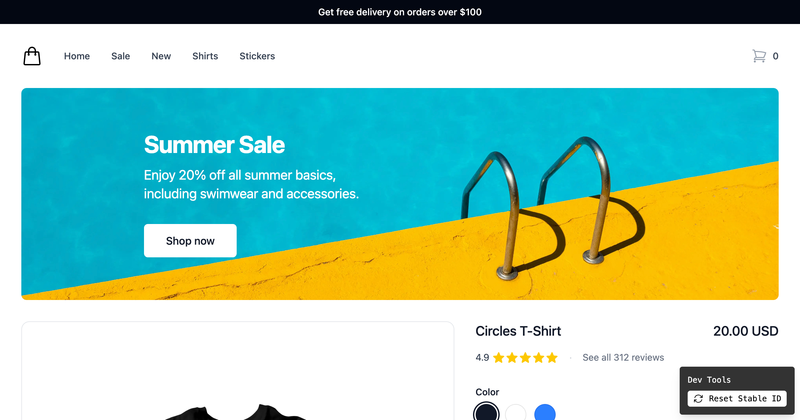
Next.js ecommerce demo by Vercel that toggles two promotional banners with code-defined Flags SDK feature flags, Flags Explorer, and Vercel Analytics.
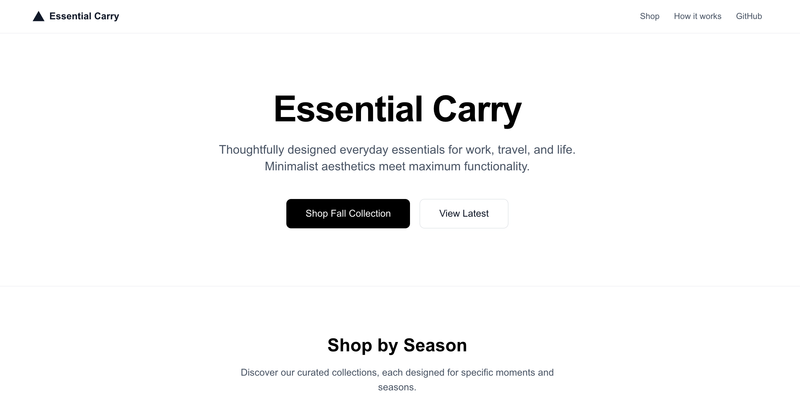
Curated collection of Vercel example apps, starter projects, and reference solutions you can clone, configure, and deploy.
The Mantine Next.js + Nextra template is a starter repository that combines the Next.js 16 App Router with the Mantine 9 component library and a Nextra 4 documentation site, so an application and its docs live in one codebase with a shared theme and dark mode.
It is a documented project scaffold for building a Next.js app alongside a Nextra-based documentation site, maintained by GitHub user gfazioli. You start from its folder layout, drop your own pages into the App Router and your documentation into .mdx files, and run the included npm scripts to produce a production bundle that also contains a Pagefind search index. The output is a single deployable Next.js application whose docs section is themed with Mantine rather than the default Nextra look.
app directory and are bundled with Turbopack.mantine-postcss-preset..mdx files with _meta.ts navigation files, and dark mode is synchronized between the Mantine application and the Nextra docs.components directory holds components usable in both the application and the documentation site, plus custom Nextra Navigation and Footer components.storybook, and a production Storybook bundle is written to storybook-static; Jest runs with a watch mode.build script and served through a server-side search API.config folder alongside site metadata and search settings.turbopack-inline-svg-loader handles SVG imports inline.app and documentation pages under content, and both appear in one Next.js deployment.components, add Storybook stories, and reference the same components inside MDX docs.build gives the docs site a server-side search API.analyze script inspects the application bundle with @next/bundle-analyzer.Clone the repository, then run dev to start the Next.js dev server; documentation lives in the content folder and shared components in components. Before shipping, build bundles the application and generates the Pagefind search index, while test chains format:test, lint, typecheck, and jest.
The template is a free, open-source repository. The author offers an optional GitHub Sponsors page to fund maintenance, bug fixes, and new features; no paid tiers gate any of the listed functionality.
It targets Next.js 16 with the App Router and Turbopack, Mantine 9 for UI components, and Nextra 4 for the documentation site. TypeScript 6 is used throughout, and PostCSS is configured with the Mantine PostCSS preset.
Yes. It is a public template repository, and sponsorship through GitHub Sponsors is optional rather than required. The sponsorship page states that contributions fund maintenance, security updates, test coverage, and documentation.
Yes. Search is powered by Pagefind through a server-side search API, and the search index is generated when you run the build script, so it is part of the production output.
The components folder is intentionally shared between the Next.js application and the Nextra documentation site. The template also ships custom Navigation and Footer components specifically for the Nextra docs, and dark mode stays in sync across both.