Newsletter
Join the Community
Subscribe to our newsletter for the latest news and updates

MIT-licensed NestJS TypeScript starter repository that scaffolds a Node.js server-side application with pnpm build, watch, production, and test scripts.
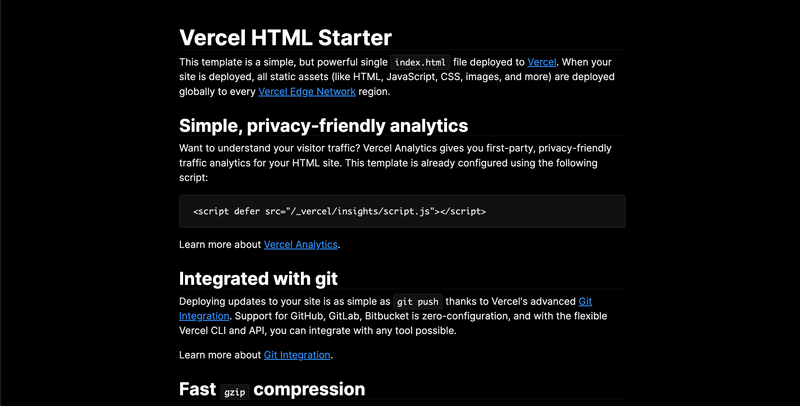
Vercel-maintained HTML5 starter template preloaded with Vercel Analytics and Edge Middleware routing.
A Turborepo monorepo starter pairing an Expo React Native app with a Next.js web app that share one React Native component library.
Vercel example wiring OpenFeature providers into the Flags SDK, with two 50/50 banner flags and Flags Explorer overrides.

Next.js ecommerce demo by Vercel that toggles two promotional banners with code-defined Flags SDK feature flags, Flags Explorer, and Vercel Analytics.
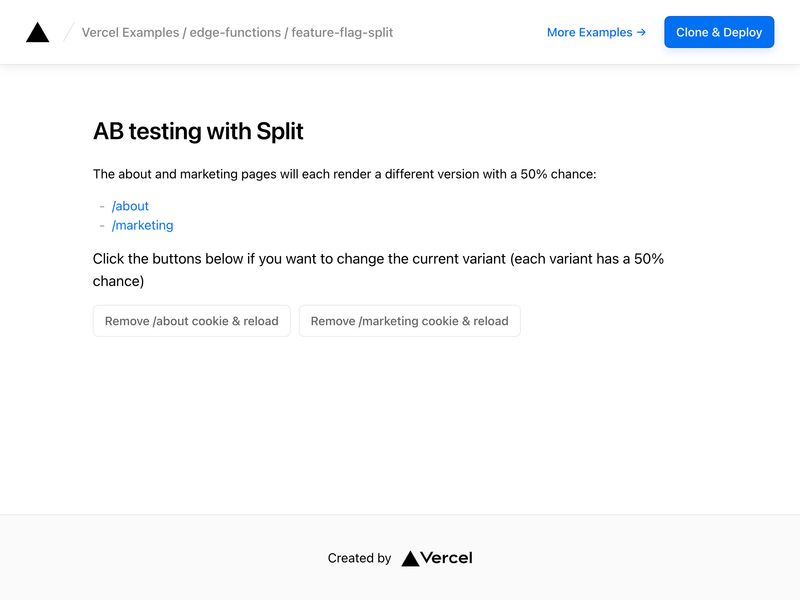
Next.js Edge Middleware example that uses Split feature flags to A/B test a marketing page and an about page, styled with Tailwind CSS.
Minimal Flask example that runs a WSGI Python API on Vercel Serverless Functions using the Python Runtime.
NestJS TypeScript Starter is the official MIT-licensed starter repository for the NestJS framework, giving you a TypeScript project skeleton for a Node.js server-side application together with pnpm scripts for development, watch mode, production, and testing.
It is a TypeScript starter repository published by the NestJS organization (github.com/nestjs/nest), where the framework's author Kamil Myśliwiec is listed as the maintainer. The repository supplies a bare project structure rather than a finished app: you install dependencies with pnpm, then run scripts that compile and boot the application. NestJS itself is described on the page as a progressive Node.js framework for building server-side applications, and the starter is the default starting point for that framework on the Node.js runtime.
pnpm install; no other package manager is configured in the repository's instructions.pnpm run start (development), pnpm run start:dev (watch mode), and pnpm run start:prod (production mode).pnpm run test for unit tests, pnpm run test:e2e for end-to-end tests, and pnpm run test:cov for coverage.pnpm install, and begin writing server-side code in TypeScript instead of wiring up a build toolchain by hand.pnpm run start:dev and explore the framework before committing to it.pnpm install to fetch dependencies.pnpm run start, or use pnpm run start:dev for watch mode during development.pnpm run start:prod for production mode.pnpm run test, pnpm run test:e2e, and pnpm run test:cov.Yes. The repository ships under the MIT license, so you can use, modify, and redistribute it, including in commercial products. Development is funded voluntarily through Open Collective backers and sponsors and through PayPal donations rather than through paid licensing.
The setup, run, and test commands shown in the repository all use pnpm, including pnpm install, pnpm run start:dev, and pnpm run test:e2e. Other package managers are not documented on the page, so sticking with pnpm keeps you on the commands the starter was written for.
Use pnpm run test for unit tests, pnpm run test:e2e for end-to-end tests, and pnpm run test:cov to produce a coverage report. All three are preconfigured scripts, so no test runner setup is required before your first run.
The page lists the official documentation at docs.nestjs.com, a Discord community server, video courses at courses.nestjs.com, and a paid enterprise support channel. There is also an official jobs board and accounts on X and LinkedIn for release updates.