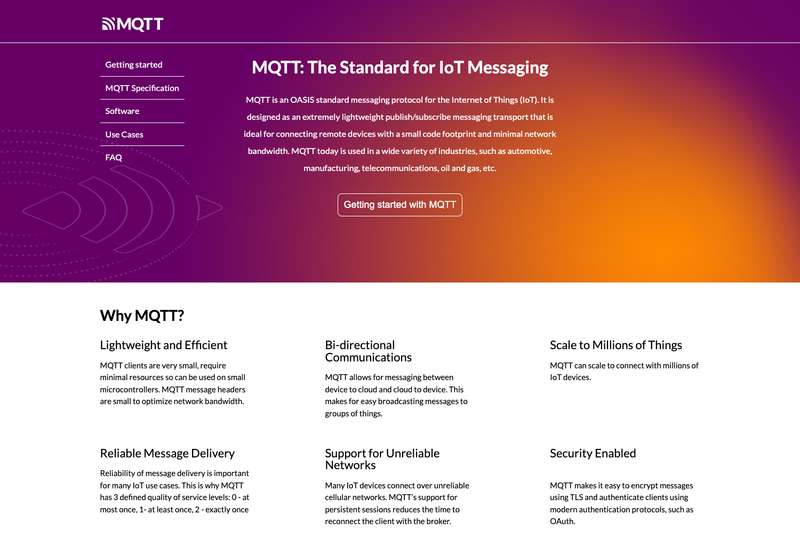
Mqtt.org is a Jekyll-based website template that serves as the official home of the MQTT messaging protocol, generated from a public GitHub repository with over 5,100 stars. The repository, named mqtt-org, contains the source code for a complete static website built with Jekyll, a Ruby-based static site generator, and styled with SCSS, a CSS preprocessor. The project is positioned as a redesign for MQTT.org, meaning it offers a modern, maintainable foundation for the protocol's web presence.
What is Mqtt.org?
Mqtt.org is the website template for the MQTT protocol, developed using Jekyll and SCSS. It takes content files and layouts, processes them through Jekyll, and outputs static HTML files that can be hosted on any web server or CDN. The repository is publicly available on GitHub, allowing anyone to view or use the source. As with all Jekyll sites, the workflow involves writing pages in Markdown or HTML with Liquid templates and front matter, then building to a _site directory. The template is maintained by the MQTT community and is the basis for the official MQTT website.
Key Features
- Static site generation with Jekyll — The site uses Jekyll, which compiles content into static HTML, requiring no server-side database or application runtime.
- SCSS styling — Stylesheets are written in SCSS, allowing for variables, nesting, and mixins before being compiled to plain CSS.
- Local development server — The included command
bundle exec jekyll servestarts a local server for previewing changes during development. - Dependency management via Bundler — Dependencies are managed with Ruby's Bundler, and can be updated with
bundle update. - Community-backed repository — With over 5,100 GitHub stars, the repository demonstrates substantial community interest and adoption.
- Redesign of MQTT.org — The code specifically implements a redesign of the MQTT protocol website, providing a relevant template for protocol projects.
Who is it for?
- MQTT protocol maintainers — Those who manage the official MQTT website can use this template to publish protocol specifications and community resources.
- Technical writers — Writers responsible for documentation can leverage the Jekyll structure to organize and maintain content.
- Developers learning Jekyll — Developers interested in static site generation can examine a real, popular Jekyll project that uses SCSS and a clean layout.
- Open-source project teams — Teams building a website for their own open-source protocol or standard can adapt this template for their needs.
What can you do with Mqtt.org?
- Publish protocol documentation: Write specifications and guides in Markdown and generate a static documentation site with Jekyll.
- Create a project website: Use the design and structure to launch a website for an open-source project with minimal setup.
- Study Jekyll and SCSS: Explore how a production website is organized, from layouts to stylesheets, in a known repository.
How does Mqtt.org work?
The workflow is centered around local development. After cloning the repository, you run bundle update to install and update Ruby dependencies, then bundle exec jekyll serve to start a local server at a development URL. Jekyll watches for file changes and rebuilds the site automatically, letting you preview changes instantly. When ready, the built static files can be deployed to any hosting platform.
FAQ
Is Mqtt.org free to use?
The repository is publicly available on GitHub, so anyone can access and use the source code. Since it is the official website template for MQTT, it is meant to be a public resource. There is no indication of a commercial license.
What does Mqtt.org include?
The repository contains the complete source code for the MQTT.org website, including Jekyll layouts, pages, and SCSS stylesheets. It is designed to be a starting point for building the protocol's web presence.
What technology does Mqtt.org use?
It uses Jekyll, a Ruby-based static site generator, and SCSS for styling. The site is generated into static HTML, which requires no server-side processing.
How do I run Mqtt.org locally?
You start by cloning the repository, then run bundle update to install dependencies, and finally bundle exec jekyll serve to launch the local development server.
Is Mqtt.org suitable for other protocols?
Yes, the template can be adapted for any protocol or open-source project, though it is specifically designed for MQTT. The Jekyll structure allows easy customization of content and styling.