Newsletter
Join the Community
Subscribe to our newsletter for the latest news and updates

A minimal, no-JavaScript theme for the Hugo static site generator, with dark mode, syntax highlighting, and LaTeX support.

Not for profit themed Jekyll template with Donorbox donations, MailChimp newsletters, SEO tags, and CloudCannon editing.

A Serverless JAMstack Virtual Lolly App with Gatsby, Storybook, FaunaDB, GraphQL, and TypeScript.

Free Bootstrap 4 UI kit with 100 handcrafted components, 3 example pages, and 3 plugins for building responsive websites.
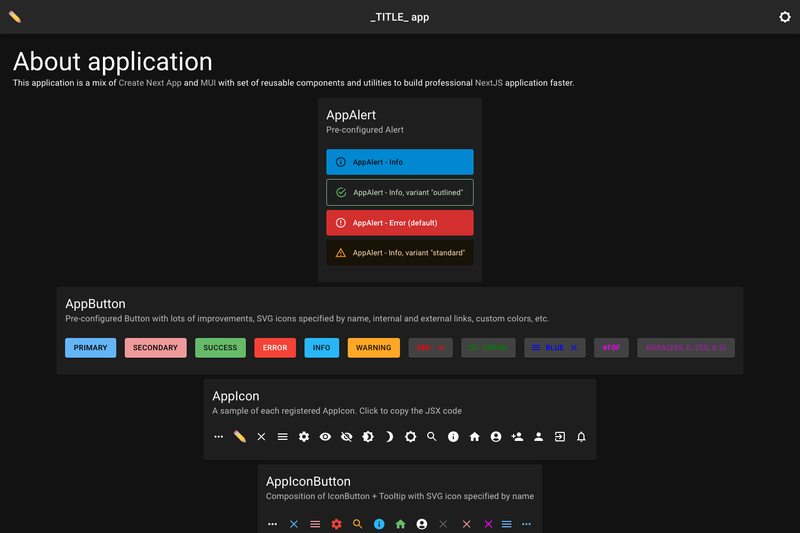
Starter for Next.js with Pages Router + Material UI + TypeScript
noJS is a minimal Hugo theme for the static site generator Hugo that builds pages without any client-side JavaScript, created by Andy Sukowski-Bang.
The noJS Hugo theme is a minimal, no-JavaScript theme for the Hugo static site generator, authored by Andy Sukowski-Bang and hosted on GitLab. It takes Markdown content and outputs static HTML/CSS pages, with a live demo at nojs.andy.sb. The repository includes archetypes, layouts, an assets/css folder, images, a nojs.svg logo, and a theme.toml manifest.
noClasses = false in the Hugo markup configuration.<figcaption> element under the image.[[menus.main]] entries specifying name, pageRef, and weight.themes/ directory, set theme = "nojs", and get a minimal layout for posts, tags, and home pages.\[...\] or $$...$$ and inline delimiters \(...\) to include LaTeX that is processed by transform.ToMath.themes/ directory with the command git clone https://git.andy.sb/nojs.git.theme = "nojs" in your site's hugo.toml.[[menus.main]] entries for navigation.noClasses = false.Yes, the theme is open-source and hosted on GitLab. You can clone it freely and use it in personal or commercial Hugo projects.
Yes, the theme is designed to have zero client-side JavaScript. LaTeX and syntax highlighting are processed by Hugo at build time, and the only external resource is katex.css for styling math output.
In your hugo.toml, set noClasses = false under the [markup.highlight] section. This lets the theme's custom syntax.css apply its modified algol_nu color scheme to code blocks.
No, the theme is built specifically for Hugo. It relies on Hugo-specific structures like theme.toml, layouts, and archetypes, so it cannot be installed in Jekyll, Eleventy, or other generators.