Newsletter
Join the Community
Subscribe to our newsletter for the latest news and updates

Yet Another Tailwind Alpine Starter
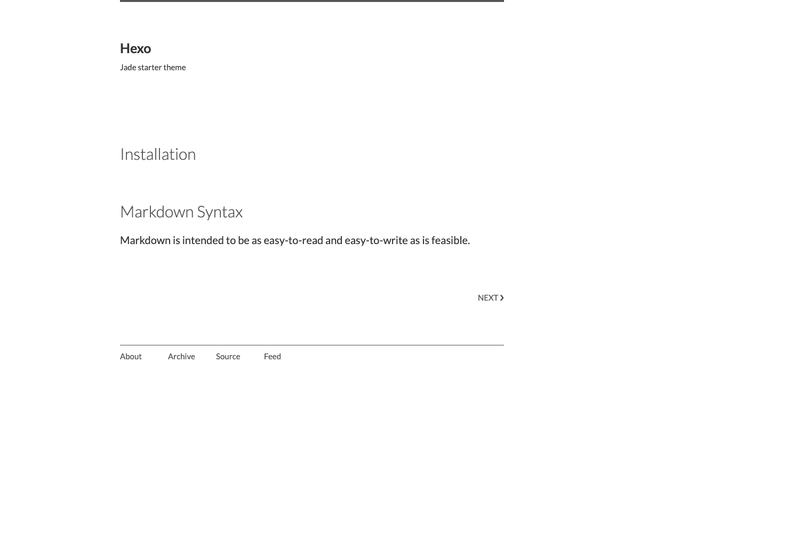
Starter theme for Hexo implemented with Jade and Less.

Not for profit themed Jekyll template with Donorbox donations, MailChimp newsletters, SEO tags, and CloudCannon editing.

A Serverless JAMstack Virtual Lolly App with Gatsby, Storybook, FaunaDB, GraphQL, and TypeScript.

A minimal, no-JavaScript theme for the Hugo static site generator, with dark mode, syntax highlighting, and LaTeX support.
YATAS (Yet Another Tailwind Alpine Starter) is a minimal Eleventy (11ty) v2 starter project that builds CSS with the Tailwind CSS v3 CLI and JavaScript with esbuild, and pairs the static site generator with Alpine.js v3 for lightweight interactivity.
YATAS is a bare-bones starter template for building static websites with the Eleventy static site generator. It takes markdown content, HTML templates, Tailwind CSS source files, and JavaScript modules as input, and outputs a minified production-ready site. The project is maintained by GitHub user yhaefliger and is deployed as a live demo at yatas.netlify.app.
The stack is intentionally small: Eleventy v2 for templating and content collections, Tailwind CSS v3 compiled via its standalone CLI, and Alpine.js v3 for sprinkling interactivity into HTML. No React, Vue, or other heavy frameworks are used. The build pipeline is orchestrated with npm scripts: npm install, npm run start for local development, and npm run build for a minified production build.
styles.734a7607648afdb.css instead of styles.css. This ensures browsers fetch fresh files when content changes, avoiding stale caches._data/hash.json. Templates can retrieve the versioned path using a simple lookup expression, for example with the url filter.hash.js script in the root directory has an assets array listing /css/styles.css and /js/scripts.js by default. You can add more paths to include them in the versioned output.After cloning the repository, run npm install and then npm run start to launch a local development server with live reload. During a production build, npm run build runs the asset versioning script, which hashes the built CSS and JS files, writes the mapping to _data/hash.json, and then generates the final site to the output directory. Templates use the global hash data to reference the versioned asset paths.
YATAS is free and open-source. No purchase, subscription, or license fee is required; you can clone the repository and use it for any project. The only potential cost is the Netlify hosting plan you choose when deploying.
Yes, YATAS is an open-source starter on GitHub. There is no charge to use it in personal or commercial projects.
It stands for "Yet Another Tailwind Alpine Starter" — a playful name indicating it is another starter in the long line of "Yet Another [stack] Starter" projects.
It does not use a full framework like React or Vue. It uses Alpine.js v3, a minimal JavaScript library that adds interactive behavior to HTML attributes, which keeps the site fast and lightweight.
Use the "Deploy to Netlify" button from the GitHub page. It will set up a new Netlify project, clone the repo, and configure the build command (npm run build) and publish directory for you automatically.
Yes. Open hash.js in the root directory and append additional paths to the assets array. By default it includes /css/styles.css and /js/scripts.js.