Newsletter
Join the Community
Subscribe to our newsletter for the latest news and updates

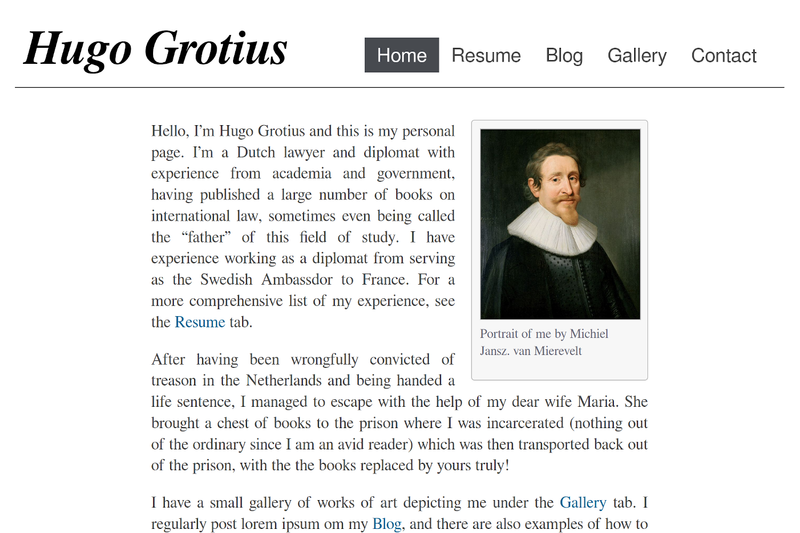
A libre Hugo personal webpage theme without reliance on third parties and no tracking.
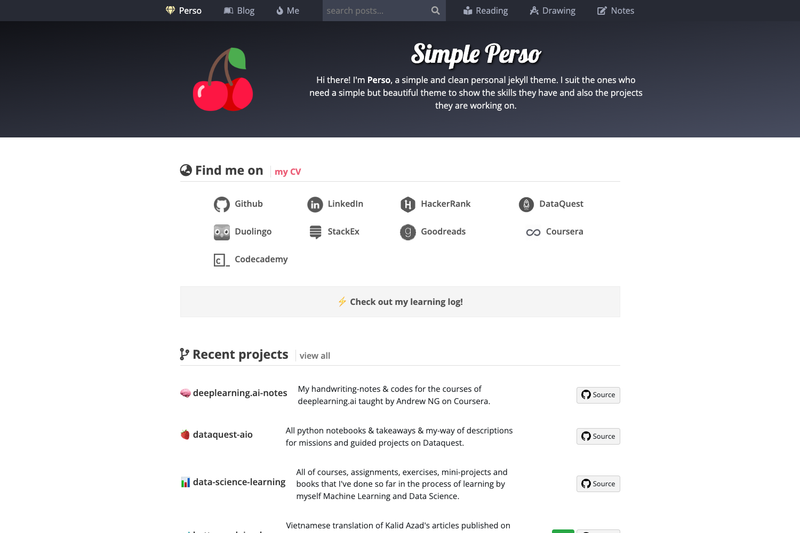
A simple and beautiful personal Jekyll theme built with Bootstrap 4.
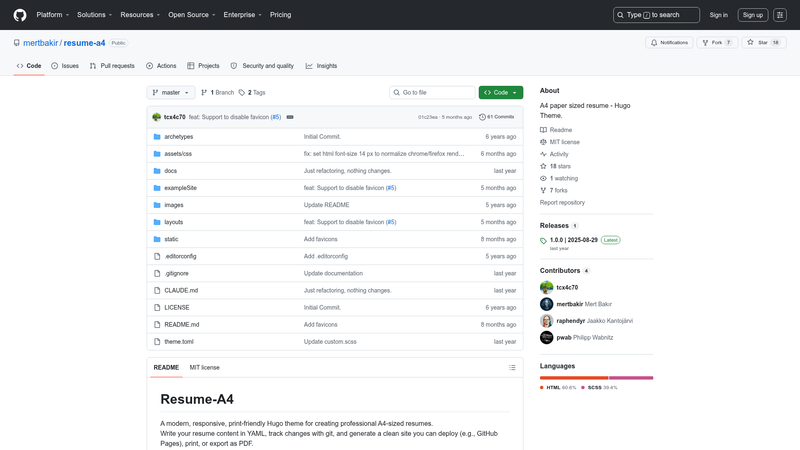
A Hugo theme for creating A4-sized, print-ready resumes from YAML content.
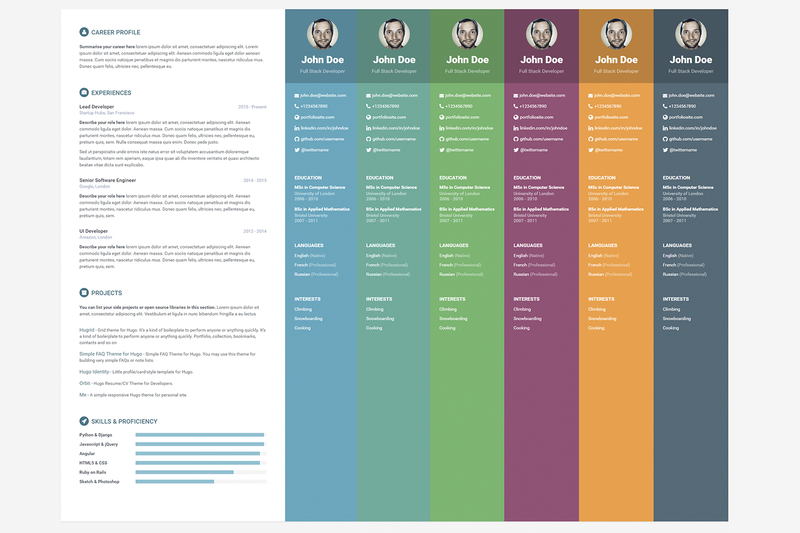
A responsive resume/CV theme for Hugo, ported from the Orbit template by Xiaoying Riley.
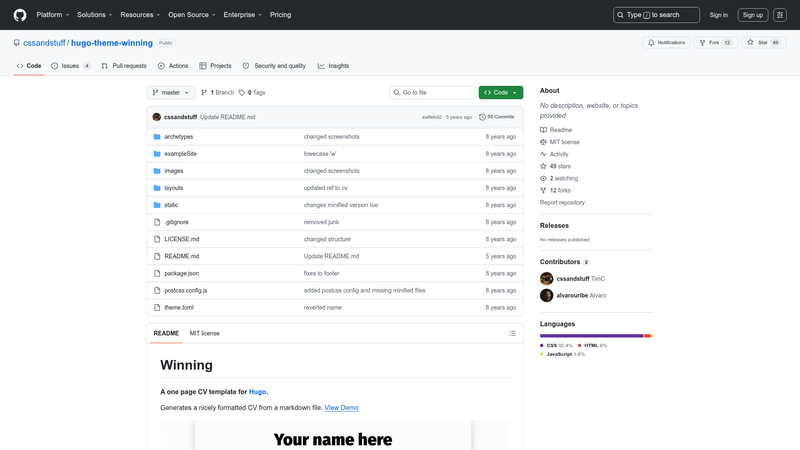
A one-page Hugo CV theme that renders a markdown résumé as a formatted page with optional PDF export.
Notrack is a libre Hugo theme for personal webpages whose core function is to build a fully self-hosted site that never depends on third-party services or tracking.
Notrack is a minimal, original Hugo theme focused on self-sufficiency and decentralization, created by gevhaz. It runs on the extended edition of Hugo (v0.115.4+) and outputs static HTML pages. The theme takes no external requests by default: all fonts, icons, and JavaScript are bundled in the theme folder. Input is standard Hugo content files (markdown with front matter), and output is a complete personal website that can include a home page, blog, gallery, resume, tags, categories, and an archive.
contact-box, social, gallery-category, gallery-photo, gallery-modal, gallery-script, image, video, rawhtml, and resume components (container, resume-section, resume-entry).static/img/thumbnails and full-size images in static/img/fullsize; gallery shortcodes render a grid with modal zoom.what, where, and when; markdown or HTML content is accepted inside entries.data/notrack/social.yaml file; you set your handles under [params.social].nBlogLatest and blogLatestHeading), and the theme adds buttons for tags, categories, and an optional archive.assets/css/userstyles.css, set a footer via footer in config, and control navigation via menu front matter.image shortcode, set a footer in config, and show the latest posts automatically.hugo new blog/..., tag them, and Notrack generates taxonomy pages with menu buttons.gallery-category and gallery-photo with gallery-modal and gallery-script to get a full-screen photo viewer.contact-box shortcode to show social links in a framed box with floating text.Set up is either top-down (clone the example site and modify) or bottom-up (start with hugo new site). Add the theme as a git submodule, configure hugo.toml with theme = 'notrack' and [params], then create content pages. The README provides step-by-step instructions for each page type, with a local preview via hugo server.
cd into the theme directory and run git pull.
You can add your own CSS by creating a file assets/css/userstyles.css. The theme automatically picks it up.
Check that you have removed draft = true, added the page to a menu, and restarted hugo server.