Newsletter
Join the Community
Subscribe to our newsletter for the latest news and updates

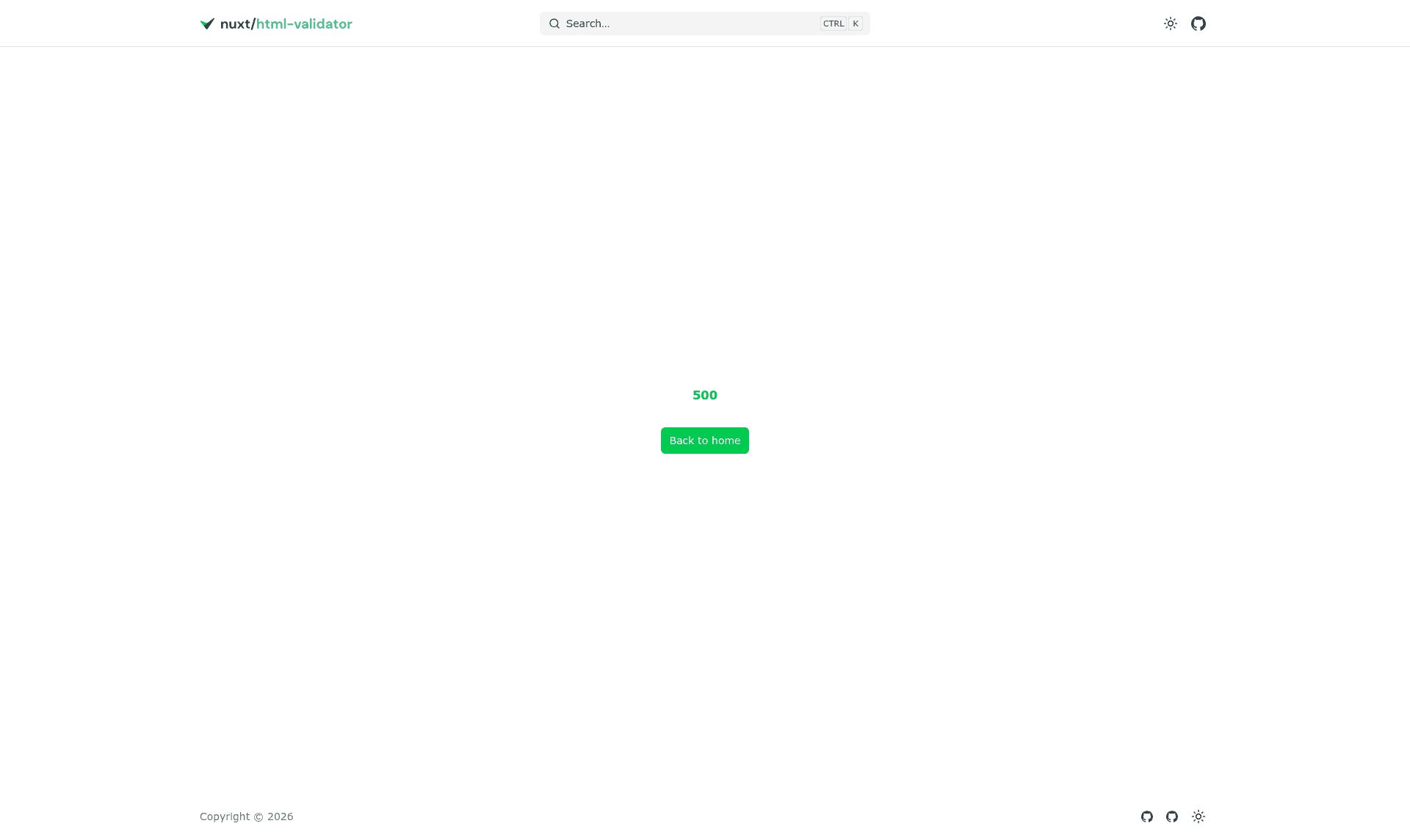
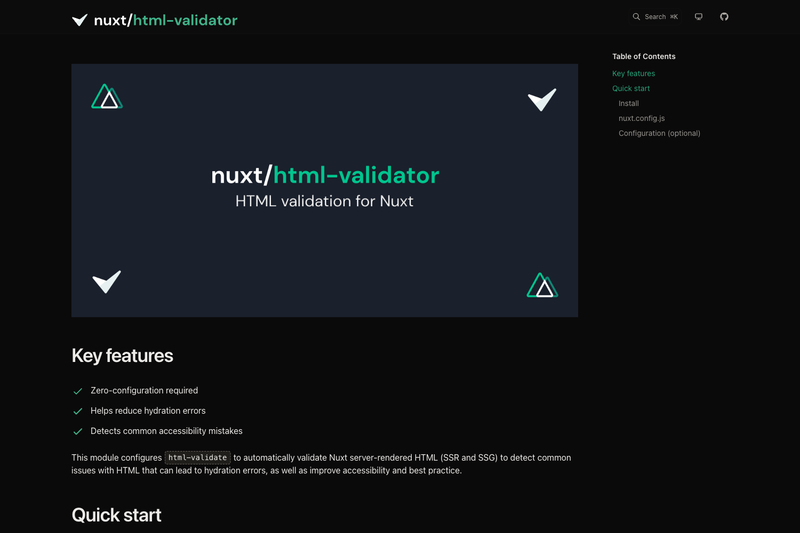
Nuxt module that validates rendered HTML using html-validate to catch errors and accessibility issues.

Modular and customizable Material Design UI components for the web
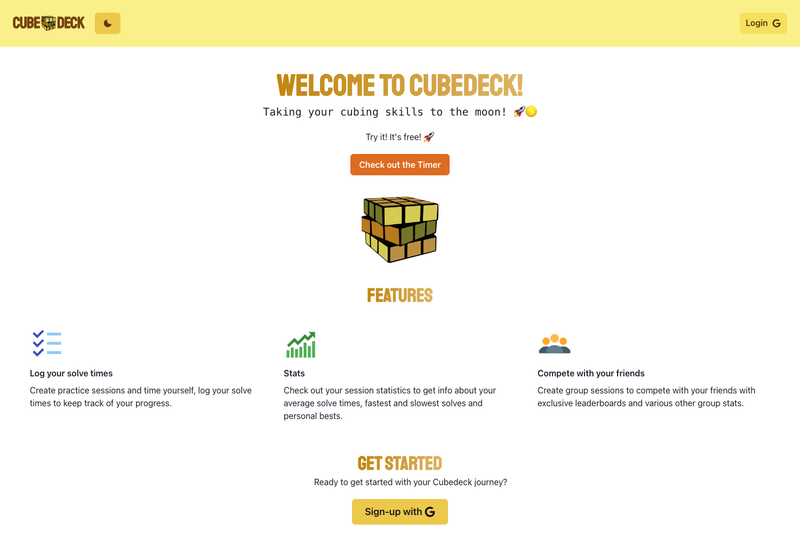
Open-source Next.js app for speedcubers to log solve times, organize practice sessions, and compete in friend groups.
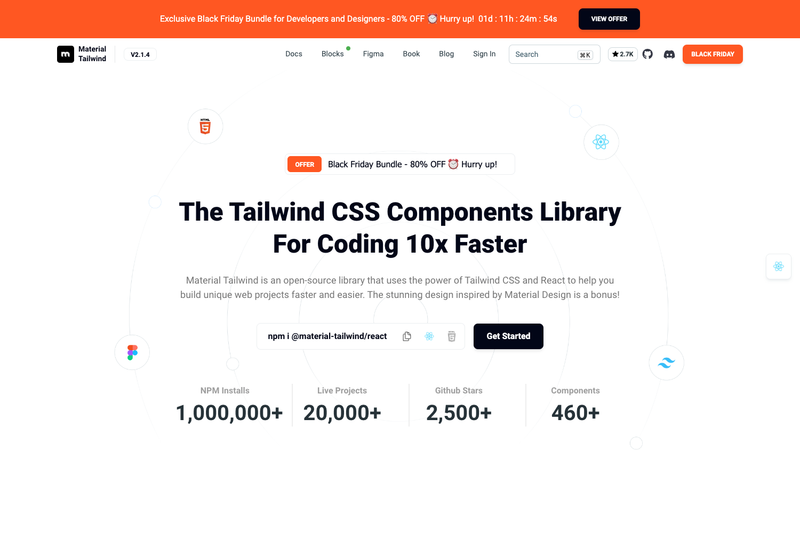
@material-tailwind is an easy-to-use components library for Tailwind CSS and Material Design.
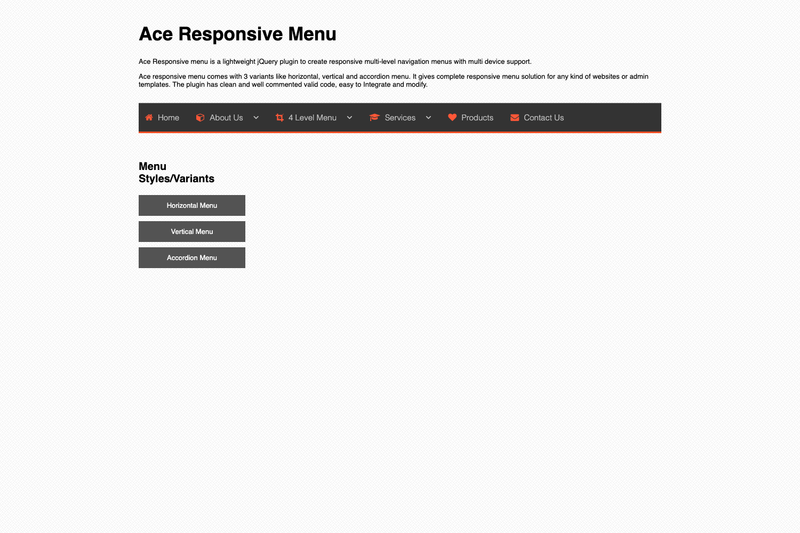
Ace responsive menu is a lightweight jQuery plugin to create responsive multi-level navigation menus with multi device support.
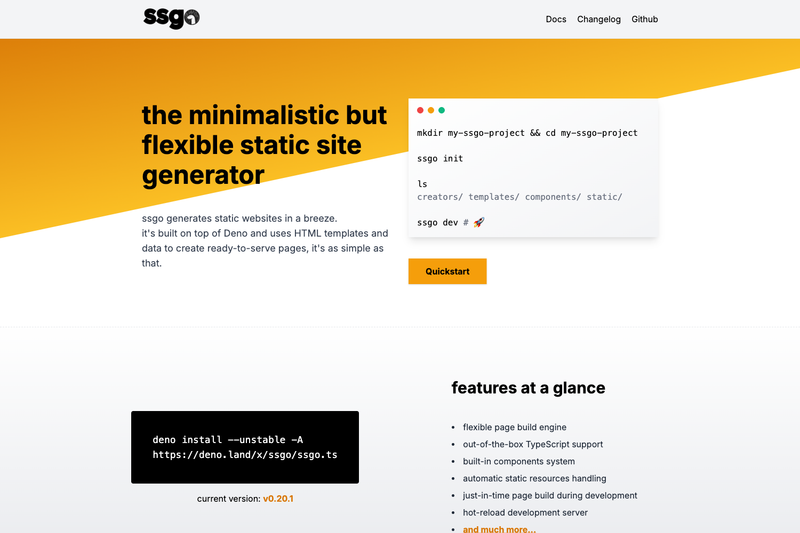
The minimalistic but flexible static site generator for Deno 🦕.
@nuxtjs/html-validator is an open-source Nuxt module that validates the HTML rendered by Nuxt applications using html-validate, giving developers a zero-config way to catch markup errors and accessibility problems during development and in CI.
@nuxtjs/html-validator is a module for NuxtJS that runs the html-validate linter on the output HTML of your Nuxt application. It takes a Nuxt project as input and produces validation reports for the HTML that Nuxt generates. The module is maintained under the nuxt-modules GitHub organization and is released under the MIT License, making it free to use in any project.
npx nuxi@latest module add html-validator.Nuxt developers who want to enforce HTML quality without extra configuration will find the module useful. Teams working on accessibility compliance can add it to the build pipeline to catch common issues automatically. Developers who see hydration warnings in their console can use this validation to locate the offending markup quickly.
Installation is a single command: npx nuxi@latest module add html-validator. The module hooks into Nuxt's build process and validates the rendered HTML using html-validate's default rules. Since it's zero-config, there's no extra setup — the validation runs behind the scenes and reports issues in the build output.
Yes. The module is published on npm under the MIT License, so it is free to use, modify, and redistribute in both open-source and commercial projects.
No. The module is designed to be zero-configuration. After installing it, HTML validation runs with html-validate's default rules. If you later want custom rules, you can extend the configuration, but it is not required to get value out of the module.
It catches invalid HTML markup and common accessibility issues, like missing required attributes or improper element nesting. Because Nuxt renders HTML both on the server and in the client, catching these errors helps reduce hydration mismatches.