Newsletter
Join the Community
Subscribe to our newsletter for the latest news and updates

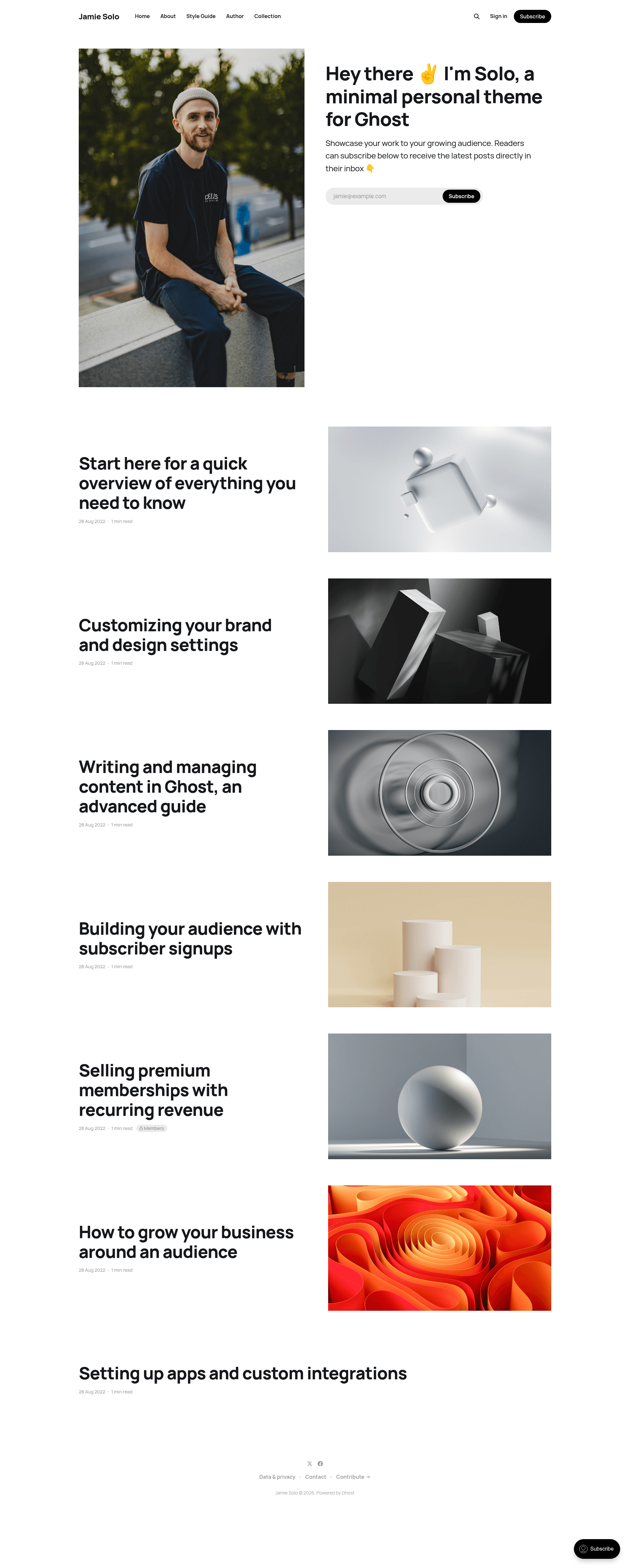
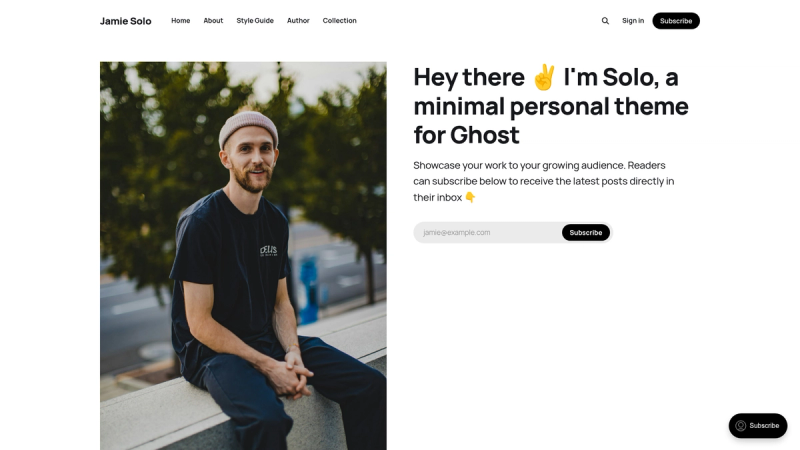
A minimal Ghost theme for showcasing the work of an individual writer or creator.
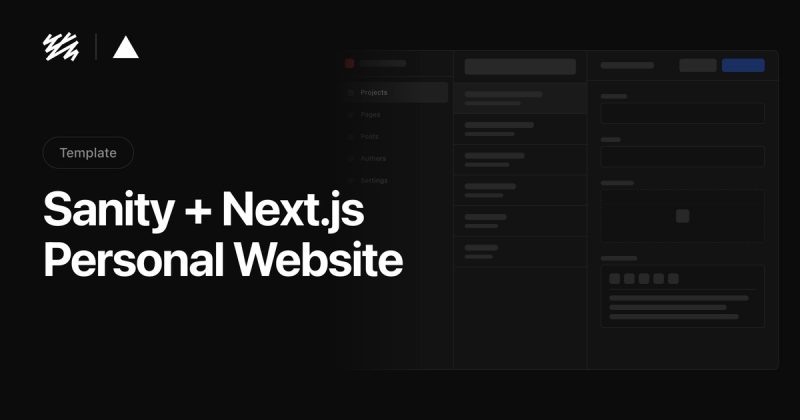
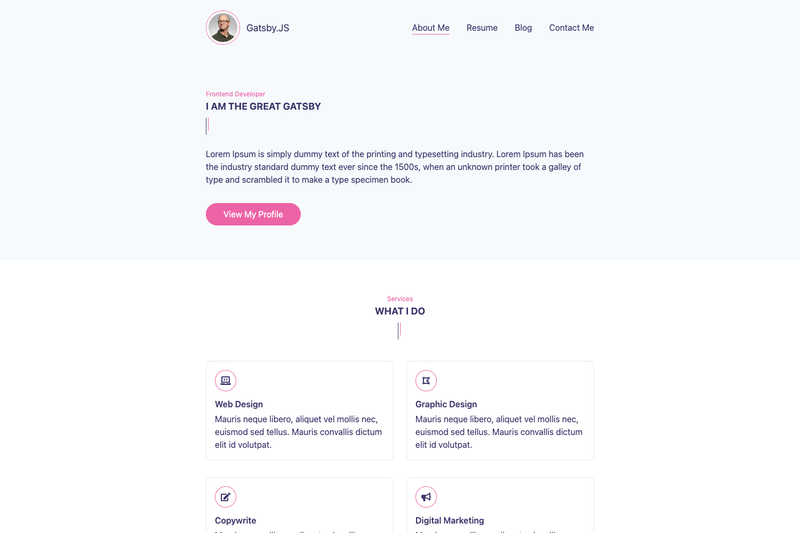
Next.js personal website with embedded Sanity CMS, live previews, and real-time collaboration.
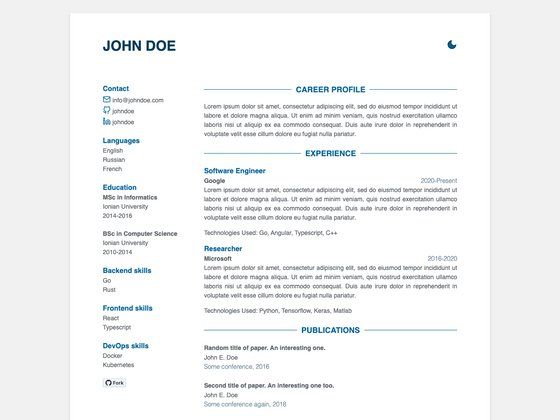
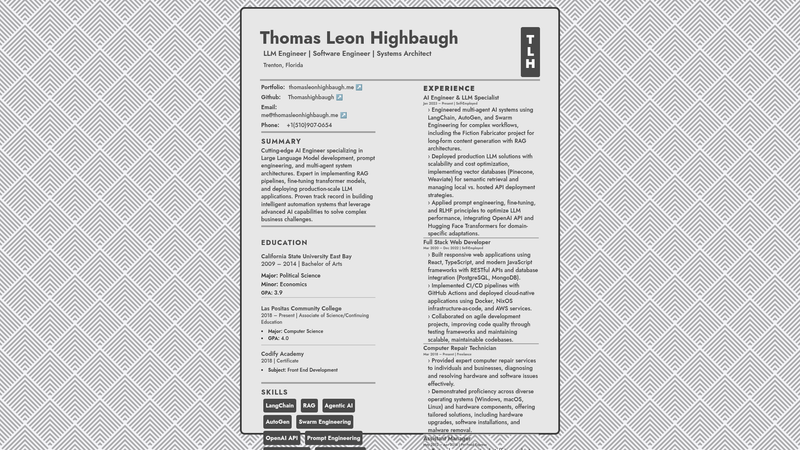
A free, lightweight Jekyll theme for creating a mobile-responsive CV with dark mode support.
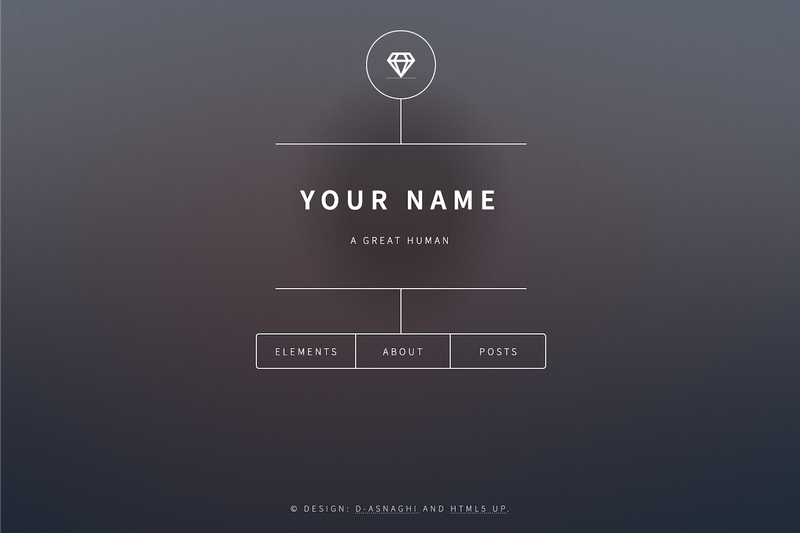
A CMS-friendly Hugo port of HTML5UP's minimal and responsive Dimension theme with Netlify CMS support.
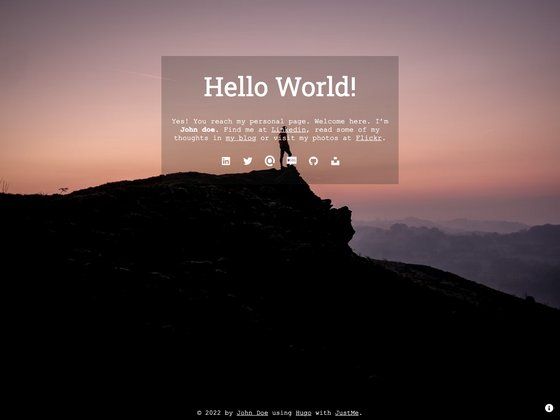
A minimal Hugo theme for personal pages with rotating fullscreen backgrounds and social profiles.
Solo is a minimal theme for the Ghost publishing platform, designed to showcase the work of an individual writer or creator through a clean, personal site. It is maintained by the Ghost Foundation, released under the MIT license, and a live demo is available at https://solo.ghost.io.
Solo is a minimal theme for Ghost, the open-source publishing platform. Its core function is to present a single author's articles, pages, and other content in a simple, readable layout. You install it by downloading the zip and uploading it to Ghost's Design settings area. The theme is part of the TryGhost/Themes monorepo, and its repository topics include blog, ghost, ghost-theme, newsletter, and personal.
/assets/built/.Solo is for individual writers and creators who want a straightforward personal blog without extra visual clutter. It also suits developers who need a clean base Ghost theme to customize for a client or personal project. Because it runs on Ghost, it's also useful for newsletter authors who publish through Ghost's subscription features.
The theme's styles are compiled with Gulp and PostCSS. You need Node, pnpm, and Gulp installed globally. From the theme root, run pnpm install to set up dependencies, then pnpm dev to build and watch for changes. The pnpm zip command packages the theme into dist/solo.zip for upload. Source files live in /assets/css/ and are compiled to /assets/built/.
Yes, Solo is released under the MIT license. You can download, modify, and use it without charge.
Solo is a theme for Ghost, so it requires a Ghost site (self-hosted or via Ghost(Pro)). It does not work on WordPress or other CMSs.
Because it's a Ghost theme, Solo works with Ghost's built-in membership and newsletter features. You can enable subscriptions and send newsletters through Ghost's member management.
You can adjust a few simple settings in Ghost's Design panel to apply your personal style. For deeper changes, edit the CSS files in /assets/css/, which are compiled by Gulp/PostCSS.