Newsletter
Join the Community
Subscribe to our newsletter for the latest news and updates

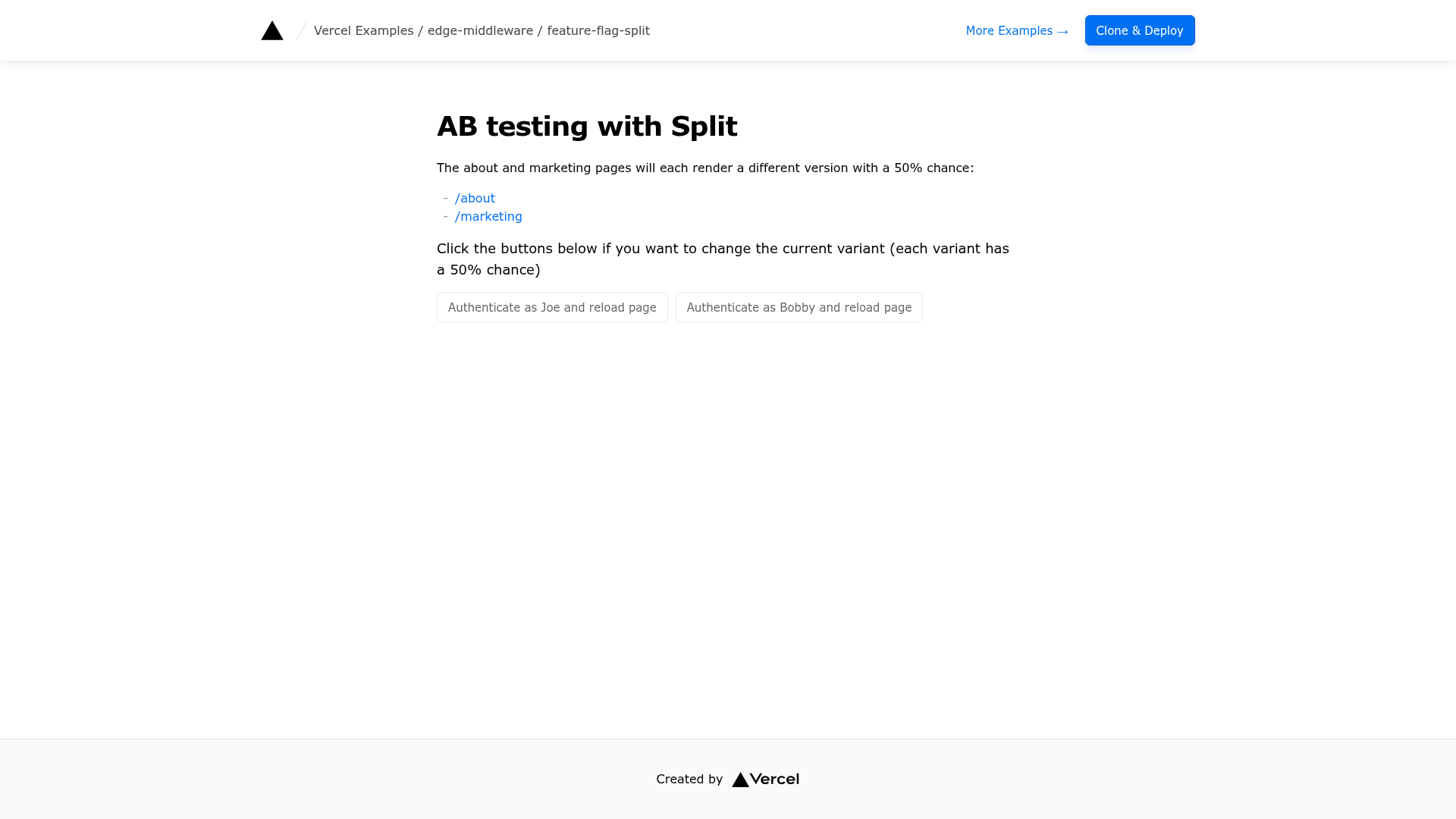
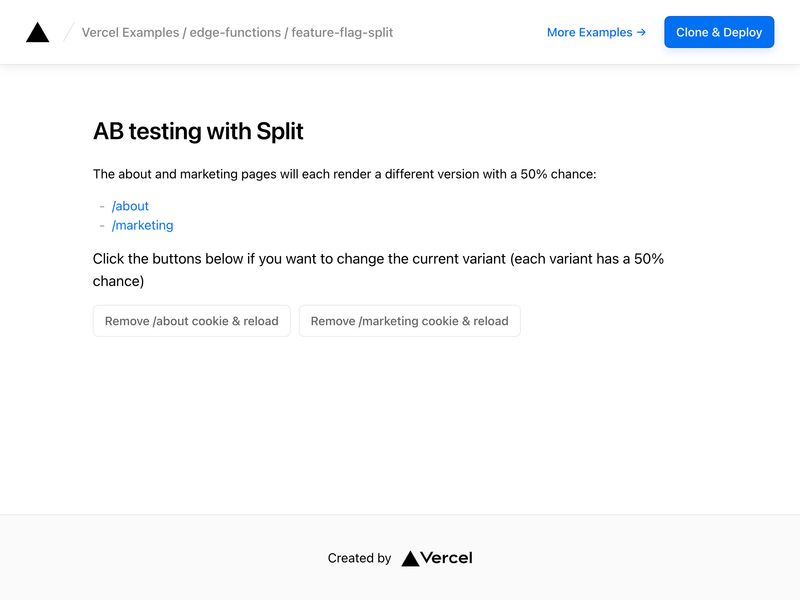
Next.js Edge Middleware example that uses Split feature flags to A/B test a marketing page and an about page, styled with Tailwind CSS.
Vercel example wiring OpenFeature providers into the Flags SDK, with two 50/50 banner flags and Flags Explorer overrides.
MIT-licensed NestJS TypeScript starter repository that scaffolds a Node.js server-side application with pnpm build, watch, production, and test scripts.
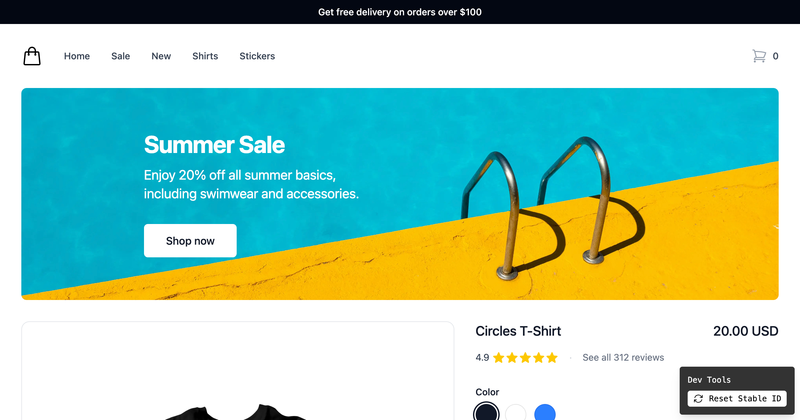
Next.js ecommerce demo by Vercel that toggles two promotional banners with code-defined Flags SDK feature flags, Flags Explorer, and Vercel Analytics.
Minimal Flask example that runs a WSGI Python API on Vercel Serverless Functions using the Python Runtime.
Vercel example boilerplate that runs an AI SDK backend on a Hono server and deploys with the Vercel CLI.
The Split Integration example is a Next.js Edge Middleware template that routes visitors to different page variants by evaluating Split feature flags before a request reaches the page.
The Split Integration example is an Edge Middleware starter from the vercel/examples repository that connects a Next.js app to Split, a feature delivery platform for feature flag management, software experimentation and continuous delivery. It takes a visitor's traffic identifier, evaluates two flags named New_Marketing_Page and New_About_Page in Split, and renders the matching page variant. Configuration is handled entirely through three environment variables: SPLIT_SDK_CLIENT_API_KEY, GLOBAL_CONFIG and GLOBAL_CONFIG_SPLIT_ITEM_KEY. Styling is Tailwind CSS, and the example deploys to Vercel with a one-click button or a pnpm bootstrap command.
New_Marketing_Page and New_About_Page, with sample targeting for two users, Joe and Bobby.pnpm create next-app --example bootstraps the same code locally, and pnpm dev starts the development server..env.local.New_Marketing_Page variant to targeted users and keep the default page for everyone else, then read the results in Split.New_About_Page as a kill switch so an unfinished about page is only visible to the users you target..env.example to .env.local and fill in the Split key, the Global Config Item Key and the Global Config Connection String from Vercel Storage.New_Marketing_Page and New_About_Page in Split, targeting Joe and Bobby as required by the sample.pnpm dev locally or deploy through the Vercel button, which passes the same variables and the Split integration id.For the flag provider role, LaunchDarkly and Flagsmith are other feature-flag platforms. Within the same vercel/examples repository, feature-flag-apple-store and maintenance-page are related examples listed alongside this one.
The template itself is an open example in the vercel/examples repository, so you can clone and modify it freely. Running it against live flags requires a Split account, and hosting the deployed middleware uses a Vercel project.
Yes. The example reads flags from Split, so you need an account, an SDK API Key and two flags named New_Marketing_Page and New_About_Page created with targeting for the sample users Joe and Bobby.
Three values are required: SPLIT_SDK_CLIENT_API_KEY from the Split console, GLOBAL_CONFIG_SPLIT_ITEM_KEY supplied by the Split Vercel Integration, and GLOBAL_CONFIG as the Vercel Global Config connection string.
The Next.js app and Edge Middleware run through pnpm dev or a standard build, but the Global Config connection string is issued from Vercel Storage, so the documented setup assumes a Vercel project tied to the Split integration.