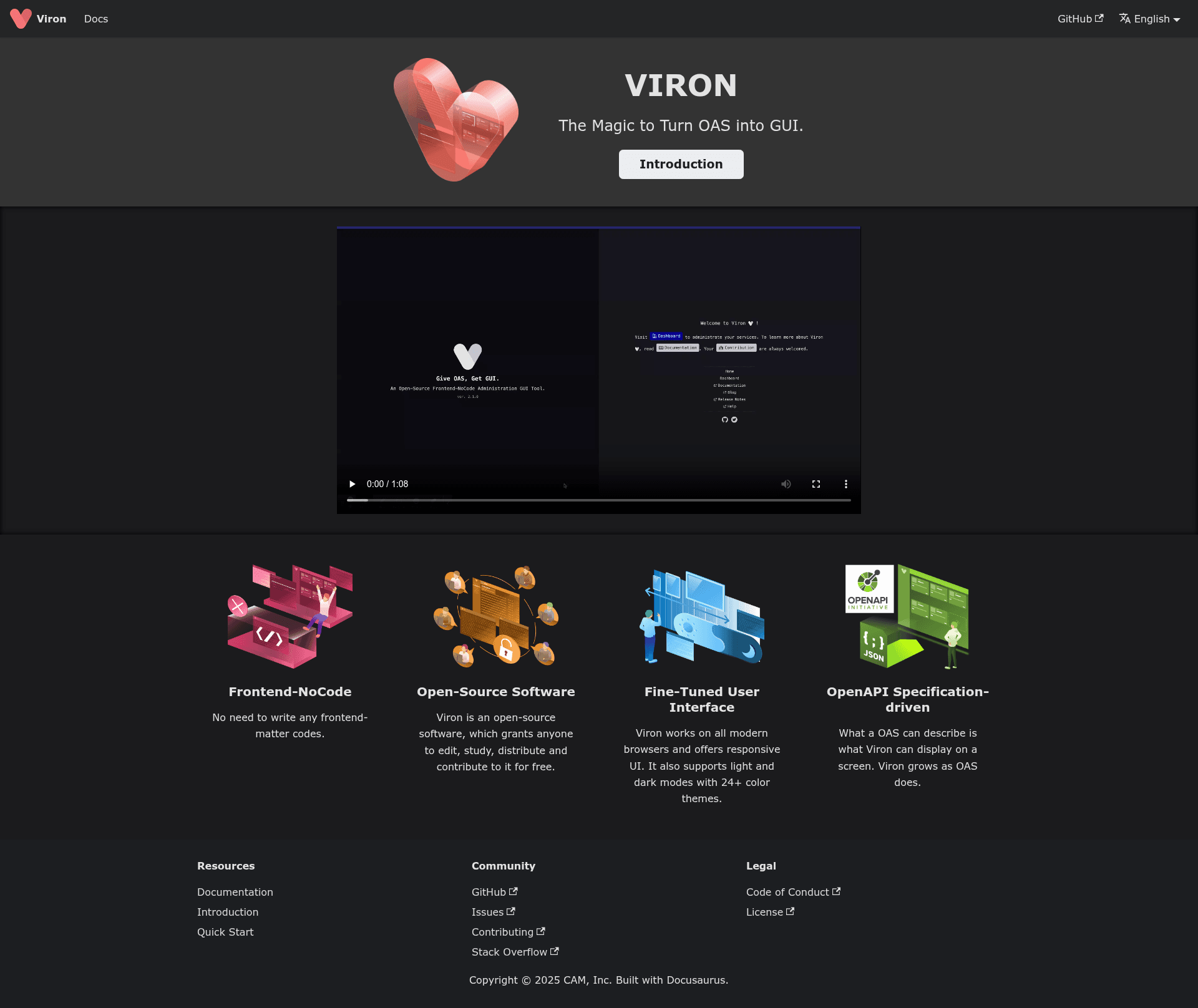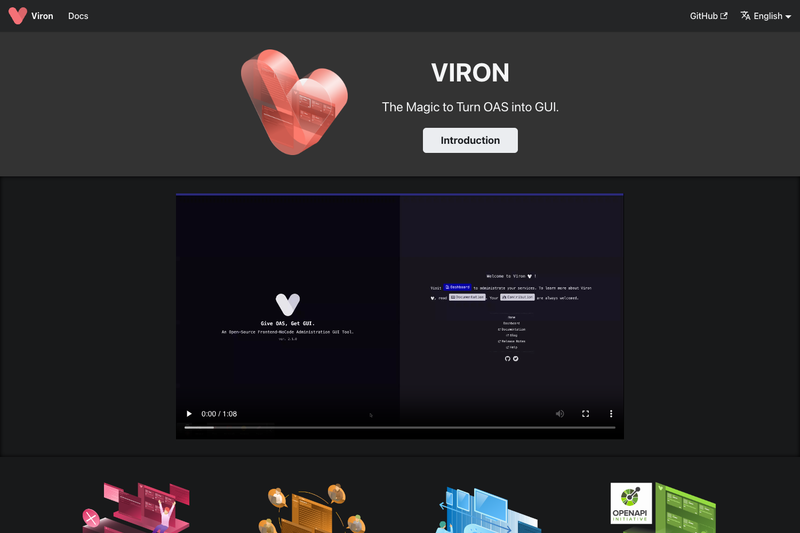
Viron is an open-source, OAS-driven frontend-no-code administration console that automatically generates a web GUI for managing RESTful API servers directly from an OpenAPI Specification document.
What is Viron?
Viron is a web-based administration tool that uses your OpenAPI Specification (OAS) as the single source of truth to produce an entire admin console without writing frontend code. It takes a YAML or JSON OAS file as input and outputs a GUI with navigation, forms, modals, tables, an app bar, endpoint cards, and an information panel. The project is maintained by cam-inc and is licensed under the MIT License. The Go implementation has been moved to a separate repository, viron-go, leaving the main repo focused on the Node.js frontend.
Key Features
- OpenAPI-driven generation — Viron reads a YAML or JSON OAS document and constructs UI components that match the defined endpoints, schemas, and authentication methods, so the console stays in sync with your API description.
- Frontend-NoCode approach — You only maintain the OAS file; Viron interprets it and generates the admin screens, eliminating the need to hand-code HTML, CSS, or JavaScript for administration tasks.
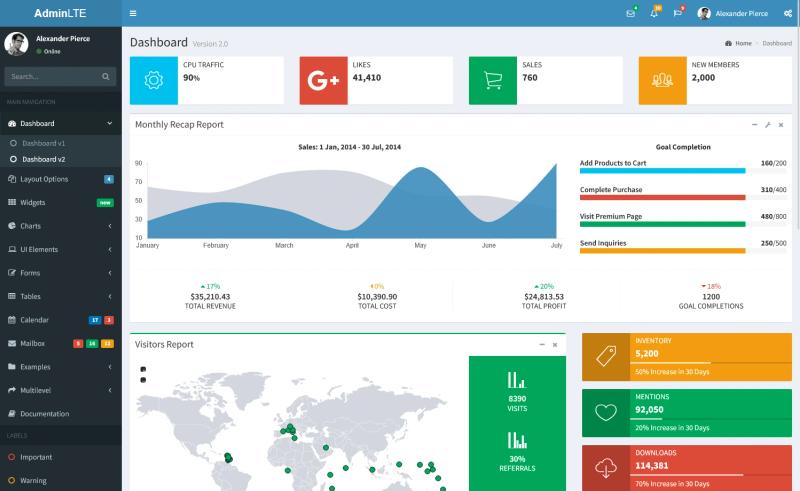
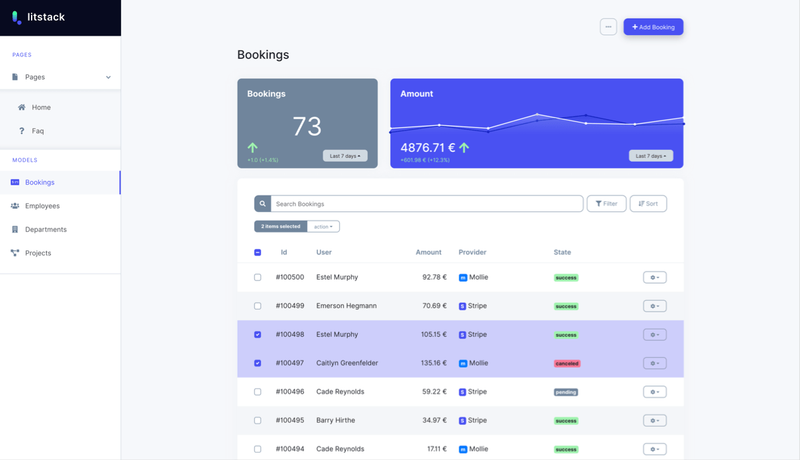
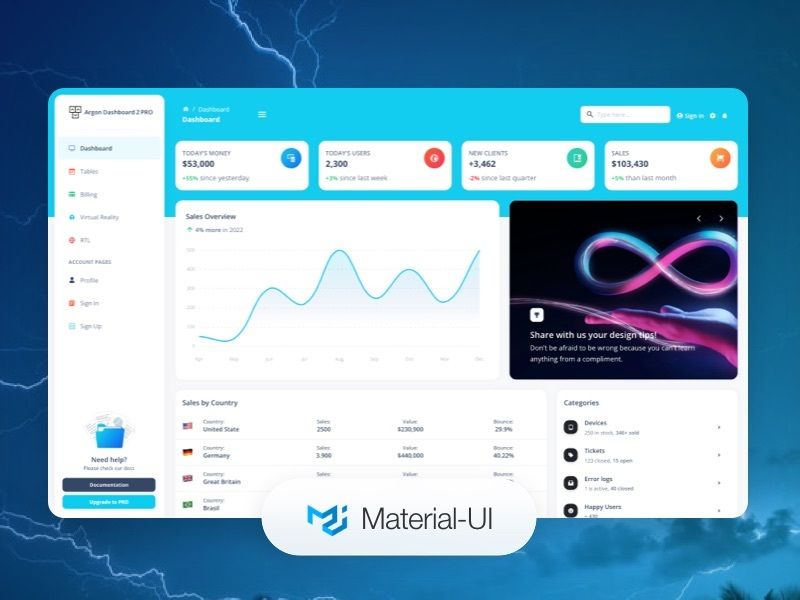
- Fine-tuned GUI components — The generated console includes navigation, a data table, form dialogs, modal windows, an app bar, endpoint cards, and an information view, as shown in the repository screenshots.
- Responsive layout — Dedicated screenshots demonstrate the UI on both desktop and mobile, ensuring the admin tool is usable from any device.
- Theme customization — The repository shows five color themes and six pattern themes, letting you switch the visual style of the console to match your brand.
- Open source with clear governance — The project provides a code of conduct, a changelog, and is released under MIT, so you can legally use, modify, and redistribute it.
Who is it for?
- Backend engineers who maintain a RESTful API server and need an admin dashboard quickly without spending time on frontend development.
- API teams that already document their endpoints with OpenAPI Specification and want a ready-made internal console that follows that documentation.
- Startups and small teams with limited resources who need a functional admin panel and prefer to keep the API definition as the single source of truth.
What can you do with Viron?
- API administrators: create, update, and delete resources through forms and tables generated from your OAS schemas, giving you a point-and-click interface to manage backend data.
- Support and operations staff: use the mobile-friendly console to perform simple administrative actions and check endpoint status on the go.
- Developers: keep the admin UI always up to date by editing the OAS document — any change to the API contract automatically reflects in the console.
How does Viron work?
Viron evaluates your OpenAPI Specification file by interpreting the RESTful endpoints, request payloads, response schemas, and authentication methods, then constructs a navigation-based GUI. You point Viron at the OAS document and it maps operations to UI components such as tables, forms, and modals. The README notes that this approach is tailored to RESTful APIs and is not intended for GraphQL APIs or complex admin interfaces that cannot be expressed in OAS.
Pros and cons
- Pros: No frontend code to maintain, stays in sync with your OAS, offers a responsive and themeable UI, and is free/open-source.
- Cons: Not suitable for GraphQL APIs; not designed for complex admin workflows that go beyond what an OpenAPI document can define.
Pricing
Viron is open-sourced under the MIT License, so it is free to use, modify, and distribute, with no paid tiers or license fees.
FAQ
Is Viron free?
Yes, Viron is released under the MIT License, which permits free commercial and personal use, modification, and redistribution.
What input does Viron need?
Viron requires an OpenAPI Specification file in YAML or JSON format that describes your RESTful API, including endpoints, schemas, and authentication methods.
Does Viron support GraphQL?
No. Viron is designed around the OpenAPI Specification for RESTful APIs, and the README explicitly states it is not for GraphQL administration API servers.