Newsletter
Join the Community
Subscribe to our newsletter for the latest news and updates

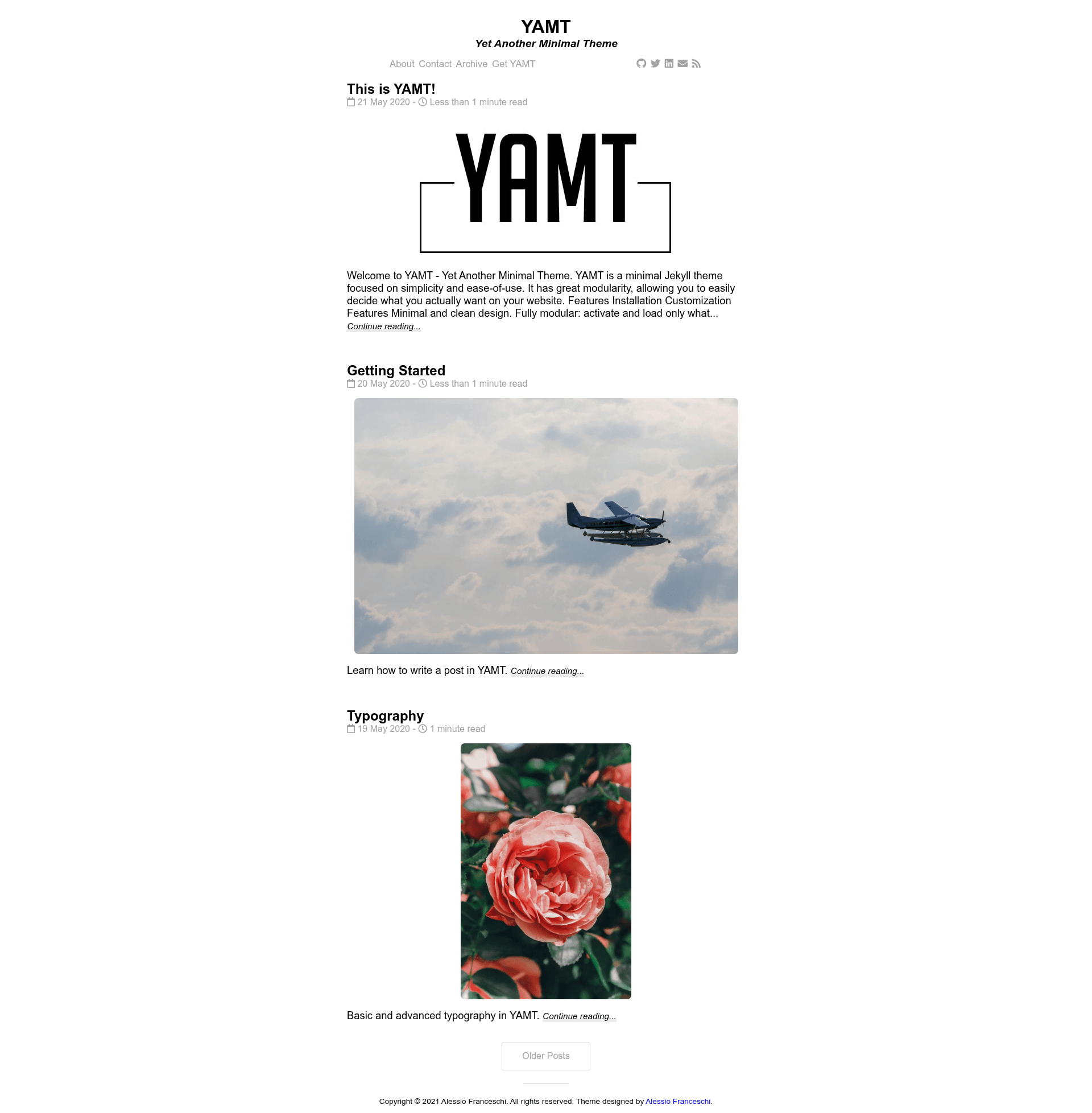
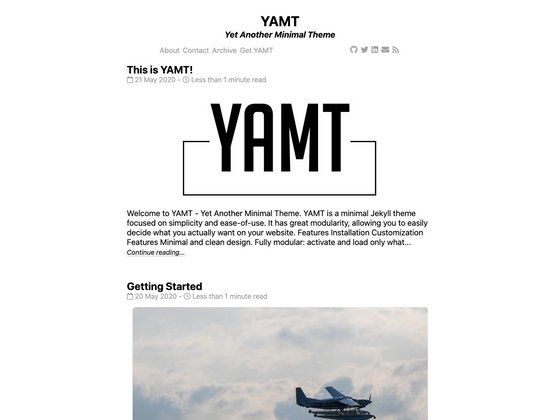
YAMT is a minimal Jekyll theme focused on simplicity and ease-of-use.
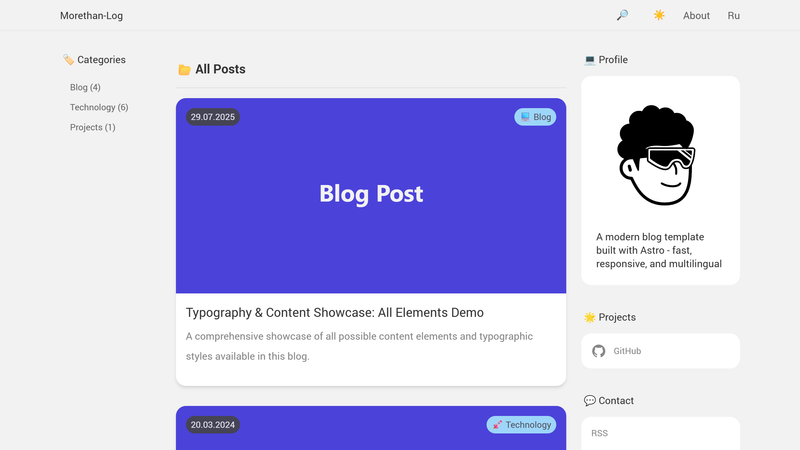
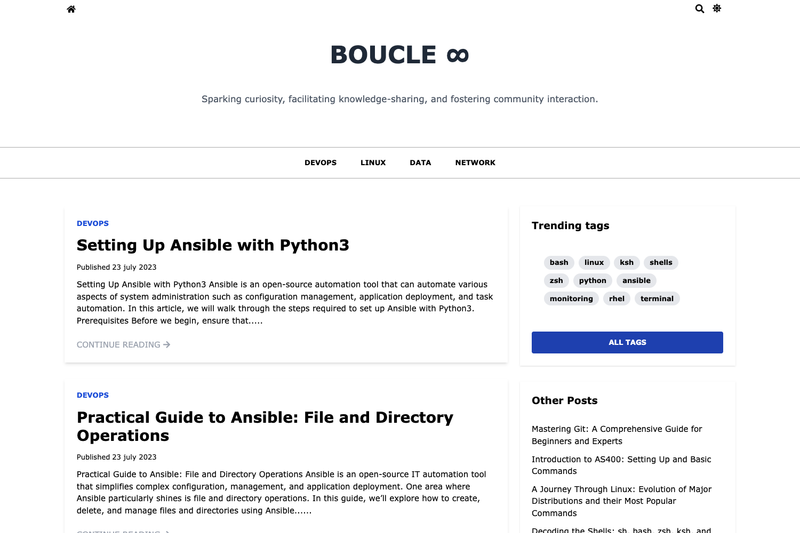
A multilingual Astro blog template with dark mode, full-text search, PWA, and SEO, ported from the popular morethan-log Next.js design.

A concise Hexo blog theme built with Ejs, Sass, and Webpack, offering a minimal single-column layout.
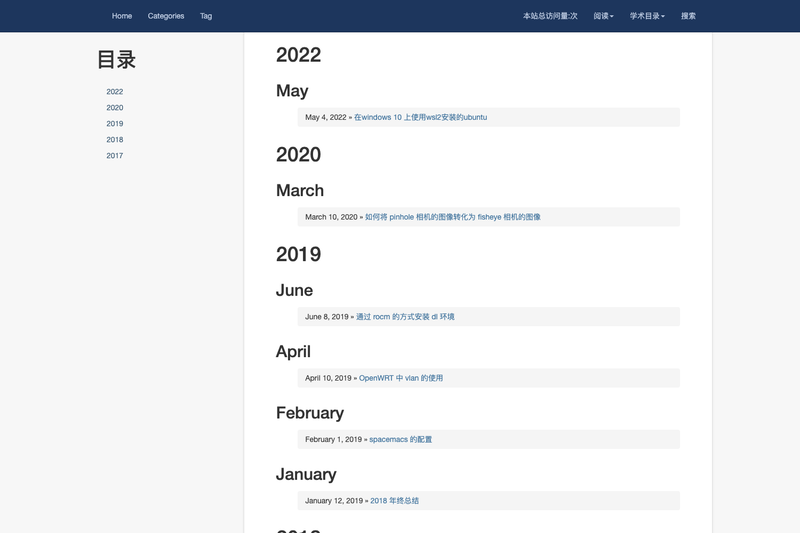
A Jekyll blog theme for note-taking, forked from LessOrMore, using Collections and a Python menu builder.
YAMT (Yet Another Minimal Theme) is an open-source Jekyll theme focused on simplicity and modularity, giving you a clean blog that loads only the features you actually enable. Based on a minimal design with a System Font Stack, it runs on Jekyll and deploys to Netlify or GitHub Pages, and it is created by Alessio Franceschi (PandaSekh).
YAMT is a minimal Jekyll theme for building fast, simple blogs and personal sites. It takes a standard Jekyll site structure (posts in _posts, configuration in _config.yml) and renders it into a static site with a homepage, post pages, category archives, and an optional contact page. You control which components appear by toggling settings in _data/settings.yml. The theme was designed by Alessio Franceschi and is inspired by Lagrange by LeNPaul; it is released under the MIT License.
_data/settings.yml, so the generated HTML contains only what you choose.jekyll-feed plugin to generate a standard RSS feed for your readers.data-netlify="true" attribute; you can remove that line if you don't use Netlify.YAMT is designed for developers and bloggers who want a straightforward Jekyll site without extra bloat. It suits personal bloggers who want a fast, minimal layout with optional social links and comments, and developers who prefer to customize a theme by editing YAML data files rather than overriding many templates. It's also a good fit for project documentation or portfolios that need a clean, content-first page.
_data/settings.yml.YAMT works like a standard Jekyll theme: you add it as a gem (gem "jekyll-yamt"), use it as a remote theme, fork the repository, or copy the files into your existing Jekyll directory. After running bundle exec jekyll serve you can preview the site locally at localhost:4000. For production, the README suggests deploying to Netlify (where the built-in contact form works out of the box) or GitHub Pages (note that Pages uses the --safe flag, which disables custom plugins).
Yes. YAMT is open source and released under the MIT License, so you can use, modify, and redistribute it freely, including for commercial projects.
Yes, but with a caveat: GitHub Pages builds with the --safe flag, which disables custom plugins. The theme's core works, but Netlify is recommended for full functionality, especially the contact form.
Most customization happens in _data/settings.yml, where you can toggle the subtitle, navigation, social icons, post infos, categories, related posts, and comments. To change typography, edit assets/main.scss to switch from the system font stack to the old font stack.
Yes, Disqus comments are supported. When enabled, comments are only loaded after the reader presses a button, which keeps the initial page load lighter.
Yes. Although YAMT is blog-focused, its modular home page can display a minimal list of posts, and you can add extra pages through _data/pages.yml. The contact form works on Netlify.